
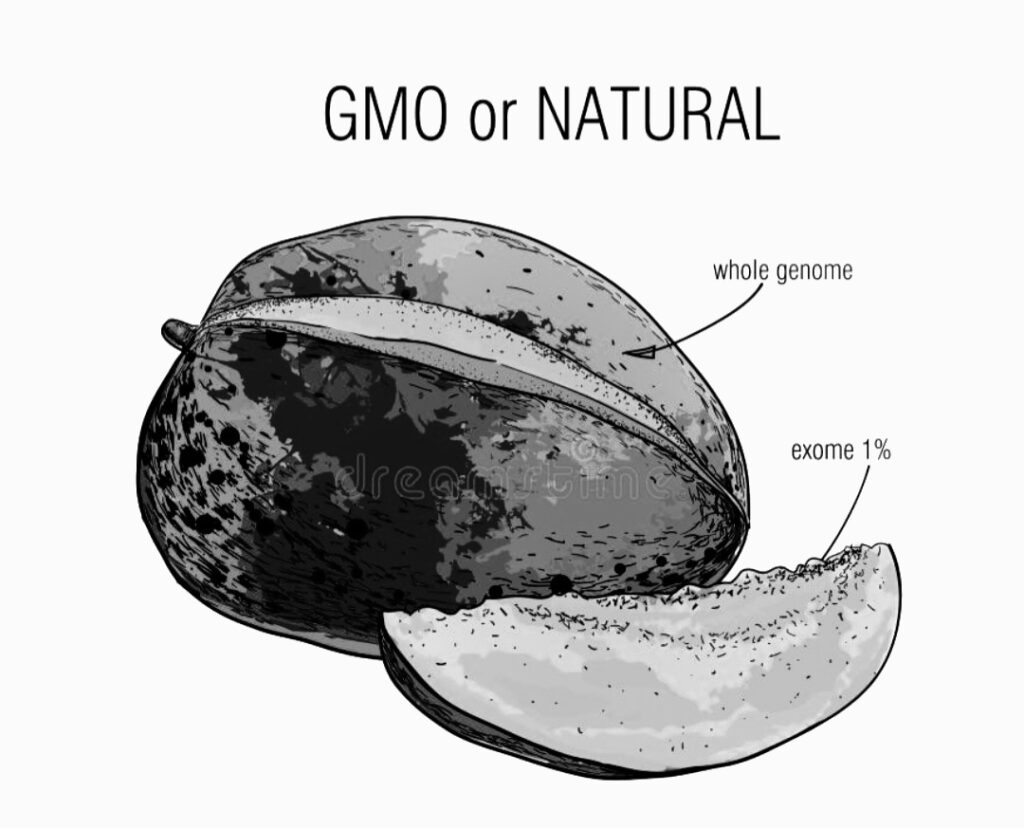
What Are GMOs?
Genetically Modified Organisms (GMOs) are plants, animals, or microbes whose DNA has been altered using genetic engineering techniques.
Another definition States that Genetically modified organism (GMO) are organism whose genome has been engineered in the laboratory in order to favour the expression of desired physiological traits or the generation of desired biological products. Britannica ( 2026).
The DNAs are altered through precise techniques like gene insertion or editing. This allows scientists to introduce traits like pest resistance or faster growth. Common examples include Bt corn (resists insects) and Roundup Ready soybeans (tolerate herbicides). Over 90% of U.S. corn, soy, and cotton are GMOs, and they’re widely used globally for food, feed, and fuel.
GMOs represent a key biotech advancement, with ongoing global use in agriculture and medicine. But primarily, it usage is in agriculture, GMOs enhance traits like pesticide resistance, herbicide tolerance, and nutritional value. Other common GMO crops apart from those listed above include canola and sugar beets.
Building on prior notes about benefits, risks, and fruit diagrams, here’s expanded content covering history, regulation, and examples.
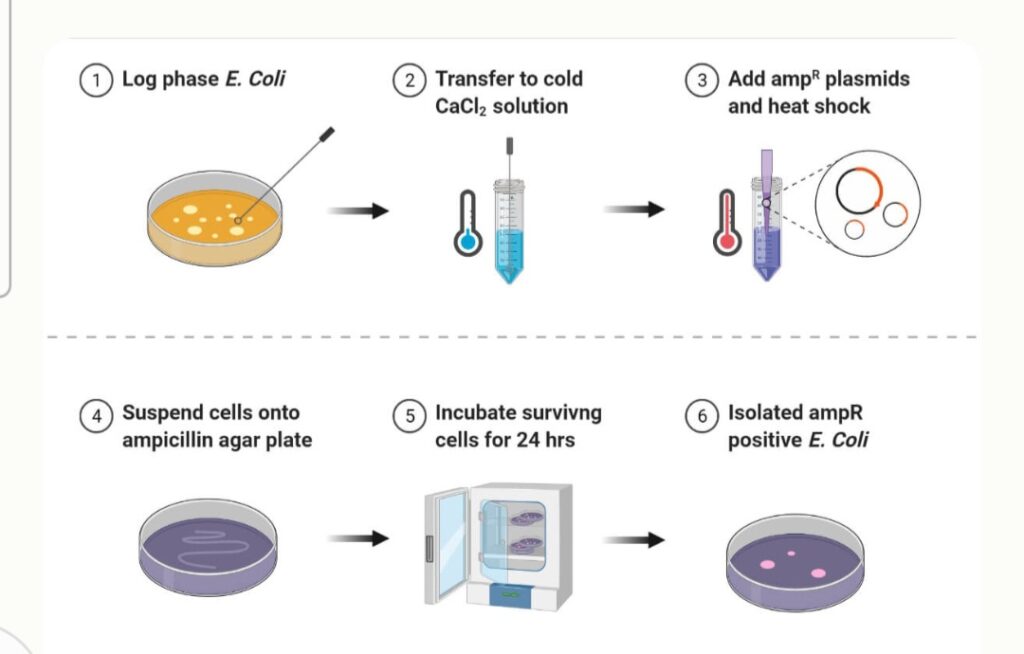
Diagrams illustrate these processes, from identifying genes to creating modified crops. These visuals clarify the multi-step science behind GMOs.
This diagram shows bacterial transformation, a key step in GMO development using E. coli: cells are treated with calcium chloride, mixed with plasmids, heat-shocked, plated on selective agar, and grown to isolate modified colonies.[1]
Here, Agrobacterium-mediated transformation is depicted, where bacteria transfer engineered T-DNA into plant cells, leading to transgenic plants—a common method for crops like corn.[1]
GMO CREATION STEPS
The process typically includes:
- Identify desired trait (e.g., pest resistance).
- Isolate gene from source organism.
- Insert into plasmid/vector.
- Deliver to host (e.g., via gene gun or bacteria).
- Select and regenerate modified organism.
- Test for safety and efficacy.[2][3]
This infographic outlines genetic engineering stages around a DNA helix, with icons for lab tools and plants, emphasizing the structured workflow.
For examples like Bt corn protecting against borers, see field tests and real crops in prior notes.
ASPECTS OF GMOs
World Health Organization (WHO) stated the following as key aspects of GMOs.
Key Aspects of GMOs:
1. PURPOSE:
To create crops that are more resilient, require less pesticide, and help maintain food security by reducing waste.
Common Examples: Corn, soybeans, canola, sugar beets, alfalfa, cotton, potatoes, papaya, pink pineapple, summer squash, and apples.
2. SAFETY:
Current research and major health organizations suggest that GMO foods are safe for consumption, although some concerns remain regarding long-term effects.
3. LABELING:
In the United States, foods containing GMO ingredients are required to be labeled as “bioengineered food”.
4. REGULATION:
GMOs are heavily regulated and monitored for safety and environmental impact by agencies like the FDA and EFSA
GMO HISTORY
Genetic modification began in the 1970s with pioneers like Herbert Boyer creating recombinant DNA. The first GMO for food was the 1994 Flavr Savr tomato, engineered for longer shelf life. This tomato also became available for sale in the same year (1994), and since then, GMOs have become a significant part of the food supply chain in many parts of the world.
Today, over 190 million hectares of GMO crops are grown worldwide, mainly in the Americas.[11]
While the first GMO animal produced was a sheep named Dolly, born in 1996. Since then a number of other animals, including pigs, horses, and dogs, have been generated by reproductive cloning technology, a method of producing GMO organisms.
Genetically modified (GM) foods were first approved for human consumption in the United States in 1994, and by 2014–15 about 90 percent of the corn, cotton, and soybeans planted in the United States were GM. By the end of 2014, GM crops covered nearly 1.8 million square kilometres (695,000 square miles) of land in more than two dozen countries worldwide. The majority of GM crops were grown in the Americas.
COMMON GMO CROPS
Top examples include corn (insect-resistant Bt varieties), soybeans (herbicide-tolerant), and cotton. Apples like Arctic prevent browning via gene silencing. Papaya resists ringspot virus, saving Hawaii’s iindustry.[12][20]
This infographic summarizes GMO basics, traits, and environmental claims.
PROS AND CONS OF GMOs:
Pros: Increased crop yields, enhanced nutritional content, greater resistance to pests and diseases, and better food security.
Cons: Potential environmental impacts (e.g., impact on non-target species) and concerns over long-term health effects due to limited long-term human studies.
TABLE 1: PROS AND CONS OF GMOs
| Aspect | Pro | Con |
| Yield | 20-30% boost | Potential superweeds |
| Health | Nutrient-enhanced | Unproven allergy fears |
| Pesticides | 37% reduction | Herbicide overuse |
| Econ/Access | Farm savings | Corporate control |
GMOs are not a silver bullet but a tool with strong evidence for benefits outweighing risks when managed well. For deeper reading, check WHO’s GMO FAQ or ISAAA.org.
MAJOR BENEFITS OF GMO
GMOs offer practical advantages backed by decades of research and real-world use:
a. Higher Yields and Food Security: Crops like drought-tolerant maize increase output by 20-30% in harsh conditions, helping feed growing populations (e.g., in Africa and Asia).
b. Reduced Pesticide Use: Bt crops produce their own insecticide, cutting chemical sprays by up to 37% worldwide, per a 2020 meta-analysis in Nature.
c. Nutritional Boosts: Golden Rice is engineered with vitamin A to combat blindness in rice-dependent regions; biofortified crops address micronutrient deficiencies.
d. Environmental Gains: Herbicide-tolerant plants enable no-till farming, reducing soil erosion and carbon emissions by preserving topsoil.
e. Economic Savings: Farmers save on inputs; global GMO adoption has added $186 billion in value since 1996 (ISAAA report).
POTENTIAL SIDE EFFECTS AND RISKS
While regulatory bodies like the FDA, WHO, and EFSA deem approved GMOs safe after rigorous testing, debates persist. Here’s a balanced view:
a. HEALTH CONCERNS : No verified evidence links GMOs to cancer, allergies, or toxicity in humans after 25+ years of consumption. A 2013 National Academies review found no differences from conventional foods. Rare allergenicity risks are tested pre-market.
b. ANTIBIOTIC RESISTANCE : Early GMOs used antibiotic markers, raising theoretical concerns, but modern ones avoid this, and WHO states risks are negligible.
c. ENVIRONMENTAL IMPACTS: Gene flow to wild plants could create “superweeds” (e.g., glyphosate-resistant strains), prompting herbicide rotation. Biodiversity loss is debated but not conclusively tied to GMOs.
d. MONOPOLY AND ACCESS: A few companies (e.g., Bayer-Monsanto) control seeds, raising costs for small farmers; patent issues limit sharing.
e. UNKNOWN LONG-TERM EFFECTS: Critics call for more multi-generational studies, though animal trials show no issues.
METHODS USED FOR GENETICALLY MODIFIED ORGANISMS
Genetically modified organisms (GMOs) are produced using scientific methods that include recombinant DNA technology and reproductive cloning.
REPRODUCTIVE CLONING
In reproductive cloning, a nucleus is extracted from a cell of the individual to be cloned and is inserted into the enucleated cytoplasm of a host egg (an enucleated egg is an egg cell that has had its own nucleus removed). The process results in the generation of an offspring that is genetically identical to the donor individual. The first animal produced by means of this cloning technique with a nucleus from an adult donor cell (as opposed to a donor embryo) was a sheep named Dolly, born in 1996. Since then a number of other animals, including pigs, horses, and dogs, have been generated by reproductive cloning technology.
RECOMBINANT DNA TECHNOLOGY
Recombinant DNA technology, on the other hand, involves the insertion of one or more individual genes from an organism of one species into the DNA (deoxyribonucleic acid) of another. Whole-genome replacement, involving the transplantation of one bacterial genome into the “cell body,” or cytoplasm, of another microorganism, has been reported, although this technology is still limited to basic scientific applications.
GMOs produced through genetic technologies have become a part of everyday life, entering into society through agriculture, medicine, research, and environmental management. However, while GMOs have benefited human society in many ways, some disadvantages exist; therefore, the production of GMOs remains a highly controversial topic in many parts of the world.
REGULATION OVERVIEW
Agencies like FDA, USDA, and EFSA require safety testing for traits like allergenicity and nutrition. WHO deems approved GMOs safe based on composition equivalence to non-GMOs. Labeling is mandatory in 60+ countries but voluntary in the US.[17]
GLOBAL ADOPTION STATES
In 2024, 28 countries grew GM crops on 190M hectares; Brazil and US lead. Traits focus on yield (22% higher), pesticide reduction (37% less insecticide), and nutrition (e.g., Golden Rice for vitamin A).[12]
TABLE 2: GLOBAL ADOPTION STATES
| Crop | Key Trait | Share GM |
| Corn | Bt insect resistance | 92% US [15] |
| Soy | Glyphosate tolerance | 94% US [18] |
| Cotton | Herbicide/insect | 96% US |
| Canola | Herbicide tolerance | 95% Canada |
ONGOING DEBATES
Proponents highlight $224B economic gains since 1996; critics cite herbicide overuse (15x rise) and corporate control. Long-term studies show no health impacts, but calls persist for transparency.[16][19]
Environmental impacts of GMO farming
GMO farming influences the environment through pesticide shifts, soil practices, and biodiversity effects. Studies show mixed outcomes: some benefits like reduced tillage emissions, but challenges from herbicide reliance. Overall impacts depend on management and crop type.
POSITIVE IMPACTS
GM herbicide-tolerant (HT) and insect-resistant (Bt) crops cut insecticide use by 37% globally since 1996, sparing beneficial insects.[24] No-till farming with HT varieties sequesters soil carbon, equivalent to removing 11.9 million cars’ emissions yearly.[24] Bt corn protects against borers, preserving yields without broad sprays.
This diagram illustrates Bt gene insertion from bacteria into cotton, enabling self-protection and lower external pesticides.
NEGATIVE IMPACTS
HT crops boosted glyphosate use (e.g., 270% rise in Canada since 1994), fostering 59 glyphosate-resistant “superweeds” and prompting more cchemicals.23] Drift harms pollinators and wild plants; residues contaminate water, linking to health issues like preterm births.[21] Gene flow risks contaminating wild relatives or organics.[25]
KEY DATA COMPARISON
TABLE 3:
| Impact Area | Benefit | Drawback |
| Pesticides | -8.1% total volume sprayed[4] | +15x glyphosate; superweeds[3] |
| GHG Emissions | No-till saves fuel[4] | Expansion increases footprint[22] |
| Biodiversity | Fewer broad insecticides | Habitat loss from monocrops[21] |
| Soil/Water | Erosion reduction | Runoff pollution[21] |
Long-term monitoring is key; EU studies call for integrated pest management to balance gains.[22]
GMO FARMING vs CONVENTIONAL FARMING ENVIRONMENTAL COMPARISON
During the birthe of conventional agriculture, livestock, crops, and even pet have been selected and bred, in order to produce offspring that have desirable traits. In genetic modification, however, recombinant genetic technologies are employed to produce organisms whose genomes have been precisely altered at the molecular level, usually by the inclusion of genes from unrelated species of organisms that code for traits that would not be obtained easily through conventional selective breeding.
GMO farming often edges out conventional in key environmental metrics like pesticide reduction and emissions, but results vary by crop and region. Conventional relies more on tillage and broad-spectrum chemicals, while GMOs enable targeted traits and no-till practices.[31][3]
PESTICIDE USE
GM insect-resistant (Bt) crops cut insecticide applications by 8.3-37% globally since 1996, protecting non-target species. Herbicide-tolerant GMOs initially lowered overall sprays but increased specific herbicides like glyphosate, leading to resistance issues not unique to GMOs.[24][3]
GREENHOUSE GAS EMISSIONS
No-till GM soybean systems save 16.8M metric tons of CO2 yearly via less fuel (6.3B liters reduced). Conventional tillage releases more soil carbon; organic (a conventional subset) emits up to 70% more due to expanded land needs.[31][24]
COMPARISON TABLE
TABLE 4.
| Metric | GMO Farming | Conventional Farming |
| Insecticides | -37% use[24] | Higher broad applications |
| Fuel/CO2 | 920M liters saved yearly[24] | More tillage emissions |
| Land Use | Higher yields on less land | Often requires expansion |
| Weeds/Pests | Superweeds from HT traits | More tillage/rotation needed |
| Biodiversity | Mixed; fewer sprays help insects | Soil health focus but chemical reliance[32] |
Integrated management maximizes GMO benefits over pure conventional approaches.[22]
LONG-TERM HUMAN TRIALS ON GMO FOOD CONSUMPTION
No long-term randomized controlled human trials exist specifically testing GMO food consumption, as GMOs are regulated as substantially equivalent to conventional foods rather than drugs. Instead, safety relies on animal studies (90 days to multi-generational), composition analysis, and 30+ years of population-level data showing no health signals.[39][41][33]
WHY NO MAN TRIALS?
Human clinical trials aren’t required for foods (GMO or not) due to ethics, logistics, and GRAS status of DNA/RNA. Drugs test for intended changes; GMOs aim for equivalence, so high-dose, long-term exposure studies would be impractical and unethical without prior red flags.[39][41] Regulatory bodies like FDA/WHO use 90-day rodent trials plus allergenicity checks as standard.[8]
AVAILABLE EVIDENCE
– ANIMAL STUDIES: Lifetime feeding trials on pigs, mice, salmon fed Bt MON810 maize or GM peas found no metabolic, growth, or reproductive effects across generations.[30] Multi-year rat studies (e.g., 7-year GM potato/soy) showed no gut microbiota shifts or toxicity.[34]
– HUMAN DATA: One small 2004 trial (7 ileostomy patients) detected no increased gene transfer from GM soy to gut bacteria.[32] Epidemiology over 28 years (since 1995) links no rise in allergies, cancer, or chronic diseases to GMO intake; US/EU rates stable.[34]
– INDIRECT MONITORING: Over 2,000 studies and billions of GMO meals consumed show no verified harms; golden rice trials confirmed vitamin A delivery without issues.[39]
TABLE 5: CONSENSUS TABLE ON GMO
| Evidence Type | Duration | Key Finding |
| Rodent Trials | 90 days-multi-gen | No toxicity |
| Pig/Salmon Lifetime | Full lifespan | Normal metabolism[39] |
| Human Gene Transfer | Short-term | No transfer[42] |
| Population | 30 years | No disease links[42] |
Consensus bodies (NAS, WHO) deem this sufficient; calls for human trials stem from precaution, not evidence of harm.[9]
Comparison of Vienna GMO studies with Seralini rat research
Vienna GMO studies and Séralini rat research represent contrasting approaches to GMO safety testing, with Vienna’s multi-species work supporting equivalence and Séralini’s criticized for methodological flaws.[10][49]
VIENNA STUDIES (Gruber et al., 2012-2013)
– DESIGN: Lifetime feeding trials across mice, pigs, salmon using Bt maize MON810/NK603 and GM peas; biomarkers for reproduction, organs, metabolism.
– FINDINGS: No differences in growth, litter sizes, blood chemistry, histopathology, or gut microbiota vs. controls.
– STRENGTHS: Rigorous controls, peer-reviewed consortium (Austria/Norway/Ireland), full lifespan exposure.[56]
SÉRALINI STUDIES (2007, 2012)
– DESIGN: 90-day reanalysis of Monsanto MON863 data (2007); 2-year Sprague-Dawley rats on NK603 maize ± Roundup (2012), n=10/sex/group.
– FINDINGS: Claimed hepatorenal toxicity (2007), tumors/mortality (2012); non-dose-dependent patterns.
– ISSUES: Small sample (underpowered for rare tumors), tumor-prone rat strain without controls showing similar rates, high mortality in all groups (including controls), retracted 2013/republished elsewhere.[47][49]
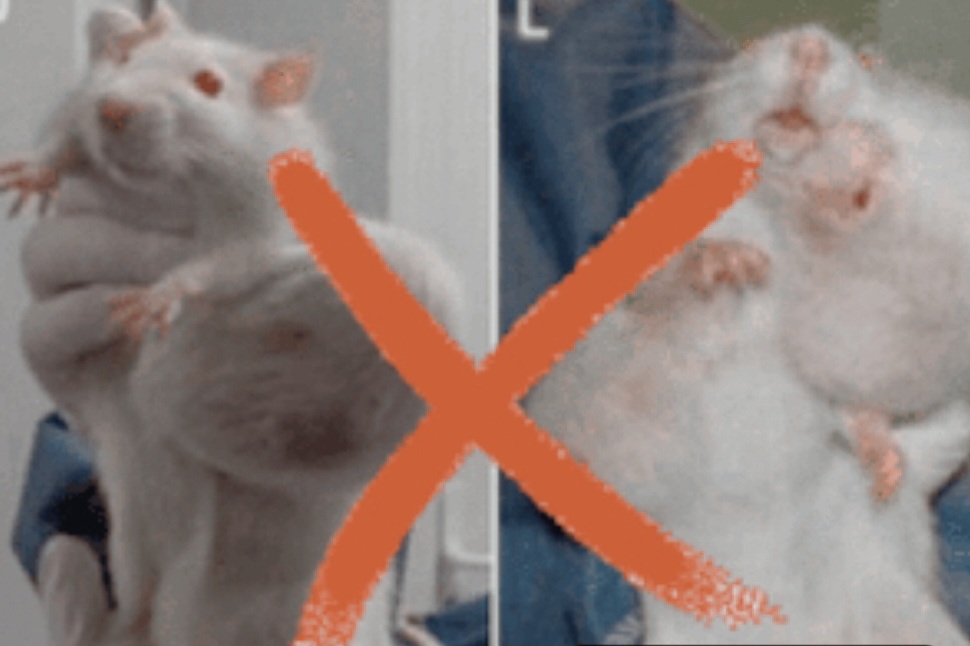
Séralini images of tumorous rats fueled debate but lacked statistical validation vs. controls.
DIRECT COMPARISON
TABLE 6: COMPARISON TABLE
| Aspect | Vienna | Séralini |
| Duration | Lifetime | 2 years (longer than standard 90-day) |
| Sample Size | Adequate per species | N=10/sex (insufficient for tumors) |
| Controls | Isogenic non-GM | Non-GM maize; all groups prone to tumors |
| Outcome | No effects | Toxicity/tumors (retracted) |
| Peer Review | Accepted | Retracted for poor design[49] |
Vienna affirms regulatory standards; Séralini highlights precaution needs but failed replication.[56][48]
IMPLICATIONS OF THESE STUDIES FOR GMO REGULATORY APPROVAL
Vienna and Séralini studies reinforce current GMO regulatory frameworks** by highlighting the need for rigorous, reproducible animal data over outlier claims. Vienna’s clean lifetime results across species validate the “substantial equivalence” principle used by FDA/USDA/EFSA/WHO: 90-day rodent trials plus composition analysis suffice when long-term biomarkers show no flags.[66][67]
SUPPORT FOR STATUS QUOTES
– VIENNA IMPLICATIONS: Demonstrates multi-generational safety in relevant animals (mice/pigs), aligning with OECD/FDA guidelines. No regulatory changes needed; strengthens case against requiring impractical human trials.
– SÉRALINI IMPLICATIONS: Retracted due to underpowered design and poor controls, it prompted temporary EU scrutiny but ultimately affirmed peer review’s role. Regulators dismissed it, as it failed replication; no new standards adopted.
REGULATORY TAKEAWAYS
TABLE 7: REGULATORY IMPACTS OF OUTCOMES
| Study Outcome | Regulatory Impact |
| Vienna: No effects | Confirms 90-day + biomarkers adequate; speeds approvals for equivalent traits |
| Séralini: Retracted claims | Emphasizes statistical power, controls; no shift to 2-year mandates |
| Consensus | Over 2,000 studies = no population harms; focus on trait-specific risks (e.g., allergens) |
These affirm process efficacy: Vienna builds confidence, Séralini shows self-correction. No major reforms; future may emphasize gene-edited crops’ lighter oversight.[68][69]
GMO STUDIES
Medical University of Vienna GMO Animal Studies
· Long-term feeding trials (mice, pigs, salmon): No negative effects on metabolism, reproduction, or organs [66]
· Gruber et al. (2012-2013): Lifetime exposure to Bt maize MON810/NK603 showed normal biomarkers [66]
· Austrian mouse fertility study (Velimirov, 2008): Initial fertility claims retracted due to design flaws [79][72]
SÉRALINI RAT RESEARCH
· 2007 MON863 reanalysis: Claimed organ toxicity; criticized for poor statistics [80][81]
· 2012 NK603/Roundup 2-year study: Tumor/mortality claims retracted (2013) for underpowered design, tumor-prone rats [47][48][70][73][76]
· Republished 2014: Same flaws persisted; unethical animal welfare issues noted
REGULATORY APPROVAL IMPLICATIONS
· Vienna supports “substantial equivalence” principle (FDA/USDA/EFSA/WHO): 90-day rodent + composition analysis sufficient [74][77]
· Séralini retraction reinforces peer review, statistical power requirements; no regulatory changes [14]
· No human trials needed for food equivalence; trait-specific risks (allergens) addressed pre-market [82]
ADDITIONAL SOURCES
· GMO regulatory frameworks [47][71]
· Animal agriculture GMO use [78]
GMOs IN AGRICULTURE
Plants can be genetically engineered to acquire traits that are not naturally present in them or are inefficiently expressed.
From researches, engineered crops have been proven to dramatically increase per area crop yields. It has also been reported that in some cases, some of these engineered crops reduce the use of chemical insecticides. For example, the application of wide-spectrum insecticides declined in many areas growing plants, such as potatoes, cotton, and corn, that were endowed with a gene from the bacterium Bacillus thuringiensis, which produces a natural insecticide called Bt toxin.
This had been supported by field studies conducted in India. Here, the yield of Bt cotton were compared with non-Bt cotton. The Bt cotton demonstrated a 30–80 percent increase in yield from the GM crop. This increase was attributed to marked improvement in the GM plants’ ability to overcome bollworm infestation, which was otherwise common in india.
Also, studies were carried out on Bt cotton in Arizona, U.S.,. The research reported that only small gains in yield—about 5 percent—with an estimated cost reduction of $25–$65 (USD) per acre were recorded, also with decreased pesticide applications.
In Asia, China specific, farmers first gained access to Bt cotton in 1997, the GM crop was initially successful. Farmers who had planted Bt cotton reduced their pesticide use by 50–80 percent and increased their earnings by as much as 36 percent. By 2004, however, farmers who had been growing Bt cotton for several years found that the benefits of the crop eroded as populations of secondary insect pests, such as mirids, increased. Farmers once again were forced to spray broad-spectrum pesticides throughout the growing season, such that the average revenue for Bt growers was 8 percent lower than that of farmers who grew conventional cotton. Meanwhile, Bt resistance had also evolved in field populations of major cotton pests, including both the cotton bollworm (Helicoverpa armigera) and the pink bollworm (Pectinophora gossypiella).
Other GM plants were engineered for resistance to a specific chemical herbicide, rather than resistance to a natural predator or pest. Herbicide-resistant crops (HRC) have been available since the mid-1980s; these crops enable effective chemical control of weeds, since only the HRC plants can survive in fields treated with the corresponding herbicide. Many HRCs are resistant to glyphosate (Roundup), enabling liberal application of the chemical, which is highly effective against weeds. Such crops have been especially valuable for no-till farming, which helps prevent soil erosion. However, because HRCs encourage increased application of chemicals to the soil, rather than decreased application, they remain controversial with regard to their environmental impact. In addition, in order to reduce the risk of selecting for herbicide-resistant weeds, farmers must use multiple diverse weed-management strategies.
Another example of a GM crop is the golden rice, which originally was intended for Asia and was genetically modified to produce almost 20 times the beta-carotene of previous varieties. Golden rice was created by modifying the rice genome to include a gene from the daffodil Narcissus pseudonarcissus that produces an enzyme known as phyotene synthase and a gene from the bacterium Erwinia uredovora that produces an enzyme called phyotene desaturase. The introduction of these genes enabled beta-carotene, which is converted to vitamin A in the human liver, to accumulate in the rice endosperm—the edible part of the rice plant—thereby increasing the amount of beta-carotene available for vitamin A synthesis in the body. In 2004 the same researchers who developed the original golden rice plant improved upon the model, generating golden rice 2, which showed a 23-fold increase in carotenoid production.
Apart from this golden rice, another form of modified rice was generated to help combat iron deficiency, which impacts close to 30 percent of the world population. This GM crop was engineered by introducing into the rice genome a ferritin gene from the common bean, Phaseolus vulgaris, that produces a protein capable of binding iron, as well as a gene from the fungus Aspergillus fumigatus that produces an enzyme capable of digesting compounds that increase iron bioavailability via digestion of phytate (an inhibitor of iron absorption). The iron-fortified GM rice was engineered to overexpress an existing rice gene that produces a cysteine-rich metallothioneinlike (metal-binding) protein that enhances iron absorption.
Today, lots of GM crops are available in the market for consumption. A variety of other crops modified to endure extreme weather conditions common in other parts of the globe are in production.
GMOs IN MEDICINE AND RESEARCH
GMOs have emerged as one of the mainstays of biomedical research since the 1980s. For example, GM animal models of human genetic diseases enabled researchers to test novel therapies and to explore the roles of candidate risk factors and modifiers of disease outcome. GM microbes, plants, and animals also revolutionized the production of complex pharmaceuticals by enabling the generation of safer and cheaper vaccines and therapeutics. Pharmaceutical products range from recombinant hepatitis B vaccine produced by GM baker’s yeast to injectable insulin (for diabetics) produced in GM Escherichia coli bacteria and to factor VIII (for hemophiliacs) and tissue plasminogen activator (tPA, for heart attack or stroke patients), both of which are produced in GM mammalian cells grown in laboratory culture. Furthermore, GM plants that produce “edible vaccines” are under development.
An edible vaccine is an antigenic protein that is produced in the consumable parts of a plant (e.g., fruit) and absorbed into the bloodstream when the parts are eaten. Once absorbed into the body, the protein stimulates the immune system to produce antibodies against the pathogen from which the antigen was derived. Such vaccines could offer a safe, inexpensive, and painless way to provide vaccines, particularly in less-developed regions of the world, where the limited availability of refrigeration and sterile needles has been problematic for some traditional vaccines. Novel DNA vaccines may be useful in the struggle to prevent diseases that have proved resistant to traditional vaccination approaches, including HIV/AIDS, tuberculosis, and cancer.
Genetic modification of insects has become an important area of research, especially in the struggle to prevent parasitic diseases. For example, GM mosquitoes have been developed that express a small protein called SM1, which blocks entry of the malaria parasite, Plasmodium, into the mosquito’s gut. This results in the disruption of the parasite’s life cycle and renders the mosquito malaria-resistant. Introduction of these GM mosquitoes into the wild could help reduce transmission of the malaria parasite. In another example, male Aedes aegypti mosquitoes engineered with a method known as the sterile insect technique transmit a gene to their offspring that causes the offspring to die before becoming sexually mature. In field trials in a Brazil suburb, A. aegypti populations declined by 95 percent following the sustained release of sterile GM males of this mosquitoe.
Finally, genetic modification of humans via gene therapy is becoming a treatment option for diseases ranging from rare metabolic disorders to cancer. Coupling stem cell technology with recombinant DNA methods allows stem cells derived from a patient to be modified in the laboratory to introduce a desired gene. For example, a normal beta-globin gene may be introduced into the DNA of bone marrow-derived hematopoietic stem cells from a patient with sickle cell anemia; introduction of these GM cells into the patient could cure the disease without the need for a matched donor.
ROLE OF GMOs IN ENVIRONMENTAL MANAGEMENT
Are genetically modified organisms safe for human and animal environment?
Another application of GMOs is in the management of environmental issues. For example, some bacteria can produce biodegradable plastics, and the transfer of that ability to microbes that can be easily grown in the laboratory may enable the wide-scale “greening” of the plastics industry.
In the early 1990s, Zeneca, a British company, developed a microbially produced biodegradable plastic called Biopol (polyhydroxyalkanoate, or PHA). The plastic was made with the use of a GM bacterium, Ralstonia eutropha, to convert glucose and a variety of organic acids into a flexible polymer. GMOs endowed with the bacterially encoded ability to metabolize oil and heavy metals may provide efficient bioremediation strategies.
Also, of recent, GM organisms have being developed that can help degrade non biodegradable materials like plastics, nylons etc that are causing environmental pollution in human society. This, will help manage all Non biodegradable materials in our society and water environment for safer livelihood.
SOCIOPOLITICAL RELEVANCE OF GMOs
While GMOs offer many potential benefits to society, the potential risks associated with them have fueled controversy, especially in the food industry. Many skeptics warn about the dangers that GM crops may pose to human health. For example, genetic manipulation may potentially alter the allergenic properties of crops. Whether some GM crops, such as golden rice, deliver on the promise of improved health benefits is also unclear. The release of GM mosquitoes and other GMOs into the environment also raised concerns. More-established risks were associated with the potential spread of engineered crop genes to native flora and the possible evolution of insecticide-resistant “superbugs.”
SOME PROFFERED SOLUTIONS TO THESE SKEPTICISM
From the late 1990s, the European Union (EU) addressed such concerns by implementing strict GMO labeling laws. In the early 2000s, all GM foods and GM animal feeds in the EU were required to be labeled if they consisted of or contained GM products in a proportion greater than 0.9 percent.
By contrast, in the United States, foods containing GM ingredients did not require special labeling, though the issue was hotly debated at national and state levels. Many opponents of GM products focused their arguments on unknown risks to food safety. However, despite the concerns of some consumer and health groups, especially in Europe, numerous scientific panels, including the U.S. Food and Drug Administration, concluded that consumption of GM foods was safe, even in cases involving GM foods with genetic material from very distantly related organisms.
VIEW OF WORLD TRADE ORGANIZATION
The strict regulations on GM products in the EU have been a source of tension in agricultural trade. In the late 1990s, the EU declared a moratorium on the import and use of GM crops. However, the ban—which led to trade disputes with other countries, particularly the United States, where GM foods had been accepted openly—was considered unjustified by the World Trade Organization. In consequence, the EU implemented regulatory changes that allowed for the import of certain GM crops. Within Europe, however, only one GM crop, a type of insect-resistant corn (maize), was cultivated. Some countries, including certain African states, had likewise rejected GM products. Still other countries, such as Canada, China, Argentina, and Australia, had open policies on GM foods.
PUBLIC VIEW
The use of GMOs in medicine and research has produced a debate that is more philosophical in nature. For example, while genetic researchers believe they are working to cure disease and ameliorate suffering, many people worry that current gene therapy approaches may one day be applied to produce “designer” children or to lengthen the natural human life span. Similar to many other technologies, gene therapy and the production and application of GMOs can be used to address and resolve complicated scientific, medical, and environmental issues, but they must be used wisely.
VIEWS OF REGULATORY AGENCIES RESPONSIBLE FOR ENSURING THE SAFETY OF GMO AND NON-GMO FOODS FOR HUMAN AND ANIMALS.
Who makes sure animal food is safe?
All countries all over the world have agencies that are responsible for the safety of foods for human and animals. For example, NAFDAC is designed to ensure food safety in Nigerian. While in USA, FDA ensures food safety.
The U.S. Food and Drug Administration (FDA), the primary regulatory agency responsible for ensuring the safety of GMO and non-GMO food for animals has a Center for Veterinary Medicine that manages this responsibility on animal safety. FDA requires that all food for animals, like food for human foods, be safe for animals to eat, be produced under clean conditions, contain no harmful substances, and be accurately labeled.
Today, FDA has approved an application allowing the sale of the AquAdvantage Salmon to consumers. The AquAdvantage Salmon has been genetically modified to reach an important growth point faster. FDA has also approved an alteration in the GalSafe pig for human food consumption and potential therapeutic uses. The GalSafe pig was developed to be free of detectable alpha-gal sugar on its cell surfaces. People with Alpha-gal syndrome (AGS) may have allergic reactions to alpha-gal sugar found in red meat (e.g., beef, pork, and lamb). FDA has determined that food from the AquAdvantage Salmon and the GalSafe pig are as safe and nutritious to eat as food from non-GMO salmon and pigs
Citations:
[1] Genetically Modified Organisms (GMOs)- Process, Examples https://microbenotes.com/genetically-modified-organism/
[2] 5. THE PROCESS OF GENETIC MODIFICATION https://www.fao.org/4/y4955e/y4955e06.htm
[3] [PDF] How ARE GMOS Made? – FDA https://www.fda.gov/media/135277/download
[4] 10075 Genetically Modified Crops Images and Stock Photos – iStock https://www.istockphoto.com/photos/genetically-modified-crops
[5] GMOs Revealed – New Infographics! – Biofortified https://biofortified.org/2017/03/01/gmos-revealed-new-infographics/
[6] GMO Production Process Overview | Genetically Modified Organism https://www.scribd.com/document/690248503/Chapter-4-Lesson-3
[7] Gmo-Examples | GMOExamples – GitHub Pages https://wdeaton.github.io/GMOExamples/
[8] Infographics & Downloadables – GMO Answers https://gmoanswers.com/information-and-resources/infographics-and-downloadables
[9] Genetically modified organism (GMO) | Definition, Examples, & Facts https://www.britannica.com/science/genetically-modified-organism
[10] How does a GMO get developed? How does it go from an idea in … https://www.instagram.com/p/B8wV0CyFZON/
[11] Genetically Modified Organism (GMO) – Genome.gov https://www.genome.gov/genetics-glossary/Genetically-Modified-Organism-GMO
[12] List of genetically modified crops – Wikipedia https://en.wikipedia.org/wiki/List_of_genetically_modified_crops
[13] Conclusions https://pmc.ncbi.nlm.nih.gov/articles/PMC7164548/
[14] What Is a GMO? – The Non-GMO Project https://www.nongmoproject.org/gmo-facts/what-is-gmo/
[15] The GMO High-Risk List: Corn https://www.nongmoproject.org/blog/the-gmo-high-risk-list-corn/
[16] Pros and Cons of GMOs: Understanding the Benefits, Risks, and Future of Genetically Modified Foods https://www.allinthedifference.com/pros-and-cons-of-gmos/
[17] Food, genetically modified – World Health Organization (WHO) https://www.who.int/news-room/questions-and-answers/item/food-genetically-modified
[18] 10 Common Genetically Modified Foods | HowStuffWorks https://recipes.howstuffworks.com/5-common-genetically-modified-foods.htm
[19] Beyond risk. A more realistic risk–benefit analysis of … https://pmc.ncbi.nlm.nih.gov/articles/PMC2288773/
[20] GMO Crops, Animal Food, and Beyond – FDA https://www.fda.gov/food/agricultural-biotechnology/gmo-crops-animal-food-and-beyond
[21] GMOs – Environmental Concerns – Garden Organic https://www.gardenorganic.org.uk/our-views/gmos-genetically-modified-organisms/gmos-environmental-concerns
[22] Environmental impacts of genetically modified crops https://www.science.org/doi/10.1126/science.ado9340
[23] Environmental Impacts | CBAN https://cban.ca/gmos/issues/environmental-impacts/
[24] Environmental impacts of genetically modified (GM) crop use … https://pmc.ncbi.nlm.nih.gov/articles/PMC5443613/
[25] GMOs and the environment https://www.nongmoproject.org/blog/gmofacts/gmos-and-the-environment/
[26] Gm Herbicide Resistance https://nios.montana.edu/fsnk/graduate/dietetics/blog_posts/GMO_environment.html
[27] GMOs and the Environment – FDA https://www.fda.gov/food/agricultural-biotechnology/gmos-and-environment
[28] Environmental impacts of genetically modified crops – PubMed https://pubmed.ncbi.nlm.nih.gov/39208101/
[29] GMOs and the Environment https://www.fao.org/4/x9602e/x9602e07.htm
[30] Gm Herbicide Resistance https://wetlands.msuextension.org/fsnk/graduate/dietetics/blog_posts/GMO_environment.html
[31] Organic v conventional using GMOs: Which is the more sustainable … https://geneticliteracyproject.org/gmo-faq/are-organic-and-non-gmo-farming-more-sustainable-than-farming-using-gmos/
[32] is gmo “sustainable”? a review of the environmental risks of … http://doi.prz.edu.pl/pl/publ/zim/148
[33] GMO farming less profitable than conventional and … https://www.organic-center.org/research/gmo-farming-less-profitable-conventional-and-traditional-farming
[34] Benefits, concerns, and sustainable alternatives to genetically … – PMC https://pmc.ncbi.nlm.nih.gov/articles/PMC12696234/
[35] Key global environmental impacts of genetically modified (GM) crop … https://pmc.ncbi.nlm.nih.gov/articles/PMC5033182/
[36] Read “The Impact of Genetically Engineered Crops on Farm … https://www.nationalacademies.org/read/12804/chapter/4
[37] A Comparative Analysis of Conventional, Genetically … https://americansugarbeet.org/wp-content/uploads/2019/04/A-Comparative-Analysis-of-Coventional-Genetically-Modified-GM-Crops-and-Organic-Farming-Practices-and-the-Role-of-Pesticides-in-Each.pdf.
[38] How Long Has the Health Benefit / Risk of GMO in Our Foods Been … https://agbiotech.ces.ncsu.edu/how-long-has-the-health-benefitrisk-of-gmo-in-our-foods-been-studied-are-there-any-long-term-studies-examining-the-effects-of-gmo-products-on-humans/
[39] Long-term study finds no negative effects from GM food https://www.farmprogress.com/management/long-term-study-finds-no-negative-effects-from-gm-food
[40] Why There Are No Long Term GMO Studies on Humans https://agbiotech.ces.ncsu.edu/2016/01/390863/
[41] Genetically modified foods: safety, risks and public concerns—a … https://pmc.ncbi.nlm.nih.gov/articles/PMC3791249/
[42] Twenty-eight years of GM Food and feed without harm – PMC – NIH https://pmc.ncbi.nlm.nih.gov/articles/PMC10939142/
[43] A 7-year feed study on the long-term effects of genetically modified … https://www.sciencedirect.com/science/article/pii/S0278691525001875
[44] SENSITIZATION ON GMO Issues related to genetic engineering in … https://www.facebook.com/ntanetworknews/posts/sensitization-on-gmoissues-related-to-genetic-engineering-in-crops-have-sparked-/1127223382916010/
[45] Human Health Effects of Genetically Engineered Crops – NCBI – NIH https://www.ncbi.nlm.nih.gov/books/NBK424534/
[46]. [PDF] GMOs and your health – FDA https://www.fda.gov/media/135280/download
[47] [PDF] New Analysis of a Rat Feeding Study with a Genetically Modified … http://www.ask-force.org/web/Food/Seralini-2007e.pdf
[48] New analysis of a rat feeding study with a genetically modified … https://pubmed.ncbi.nlm.nih.gov/17356802/
[49] Retracting Inconclusive Research: Lessons from the Séralini GM … https://pmc.ncbi.nlm.nih.gov/articles/PMC4524344/
[50] Gilles-Eric Seralini: 3 GM Maize Varieties ‘Negatively Impact’ Organs https://www.gmoevidence.com/rouen-university-3-gm-maize-varieties-negatively-impact-organs/
[51] [PDF] A Comparison of the 0ffects of Three GM Corn Varieties on … https://sciencescitoyennes.org/IMG/pdf/Annexe-support-Seralini_etal_2010.pdf
[52] A Comparison of the Effects of Three GM Corn Varieties on … https://www.ijbs.com/v05p0706.htm
[53] Seralini and Science: an Open Letter https://www.independentsciencenews.org/health/seralini-and-science-nk603-rat-study-roundup/
[54] [PDF] The GMO90+ Project: Absence of Evidence for Biologically … – HAL https://hal.science/hal-02196332v1/file/Version%20finale.pdf
[55] The GMO90+ Project: Absence of Evidence for Biologically … – PMC https://pmc.ncbi.nlm.nih.gov/articles/PMC6432862/
[56] Long-term study finds no negative effects from GM food | Farm Progress https://www.farmprogress.com/management/long-term-study-finds-no-negative-effects-from-gm-food
[57] [PDF] Regulation of Genetically Engineered Plants and Foods – ISAAA.org https://www.isaaa.org/kc/Publications/pdfs/french/Country%20case%20studies.pdf
[58] The Adoption of Genetically Modified Crops in Africa: the Public’s Current … https://www.tandfonline.com/doi/full/10.1080/21645698.2024.2345401
[59] Genetically modified organisms: adapting regulatory frameworks for … https://pmc.ncbi.nlm.nih.gov/articles/PMC9583061/
[60] [PDF] A META-ANALYSIS OF GM CROPS REGULATORY APPROVAL COSTS https://www.schoolofpublicpolicy.sk.ca/csip/documents/research-paper-summaries/2023_a-meta-analysis-of-gm-crops-regulatory-approval-costs.pdf.pdf
[61] Exploring the Biotechnological Future of Genetically Modified (GM) Crops … https://auctoresonline.org/article/exploring-the-biotechnological-future-of-genetically-modified-gm-crops-in-us-agriculture-regulatory-challenges-scientific-foundations-and-pathways-forward
[62] Genetically modified Crops: Balancing safety, sustainability, and global … https://www.sciencedirect.com/science/article/pii/S0013935125021449
[63] How GMO Crops Impact Our World – FDA https://www.fda.gov/food/agricultural-biotechnology/how-gmo-crops-impact-our-world
[64] [PDF] Genetically modified crops: Advances, biosafety, and the quest … https://jabonline.in/admin/php/uploads/1419_pdf.pdf
[65] Global Regulation of Genetically Modified Crops Amid the Gene … https://pmc.ncbi.nlm.nih.gov/articles/PMC7943453/
[66] Long-term study finds no negative effects from GM food | Farm Progress https://www.farmprogress.com/management/long-term-study-finds-no-negative-effects-from-gm-food
[67] Human Health Effects of Genetically Engineered Crops – NCBI – NIH https://www.ncbi.nlm.nih.gov/books/NBK424534/
[68] [PDF] GMOs and your health – FDA https://www.fda.gov/media/135280/download
[69] Retracting Inconclusive Research: Lessons from the Séralini GM … https://pmc.ncbi.nlm.nih.gov/articles/PMC4524344/
[70] Controversial GM study republished – experts respond https://www.sciencemediacentre.co.nz/2014/06/25/controversial-gm-study-republished-experts-respond/
[71] MS04_webAppendix_SI_NTM https://static.cambridge.org/content/id/urn:cambridge.org:id:article:S1474745612000262/resource/name/S1474745612000262sup001.pdf
[72] Study Links Genetically Engineered Corn to Infertility https://beyondpesticides.org/dailynewsblog/2008/12/study-links-genetically-engineered-corn-to-infertility/
[73] Scientists react to republished Séralini GMO maize rat study https://geneticliteracyproject.org/2014/06/24/scientists-react-to-republished-seralini-maize-rat-study/
[74] Are GMO foods ‘substantially equivalent’ to non-GMO foods, as the … https://geneticliteracyproject.org/gmo-faq/are-gmo-foods-substantially-equivalent-to-non-gmo-foods-as-the-fda-maintains/
[75] Center for Food Safety | Press Releases | | AUSTRIAN STUDY FINDS EATING GENETICALLY ENGINEERED CORN MAY REDUCE FERTILITY https://www.centerforfoodsafety.org/issues/1044/rbgh/press-releases/856/austrian-study-finds-eating-genetically-engineered-corn-may-reduce-fertility
[76] Republished retracted Séralini GMO corn rat study faces harsh criticism from scientists https://geneticliteracyproject.org/2014/06/24/republished-retracted-seralini-corn-rat-study-faces-harsh-criticism-from-scientists/
[77] Substantial equivalence – Wikipedia https://en.wikipedia.org/wiki/Substantial_equivalence
[78] GMOs in animal agriculture: time to consider both costs and benefits … https://pmc.ncbi.nlm.nih.gov/articles/PMC4015968/
[79] Dr Velimirov: GM Maize Damages Mice Fertility – gmo evidence https://www.gmoevidence.com/vienna-university-of-veterinary-medicine-gm-maize-damages-mice-fertility/
[80] Gilles-Eric Seralini: 3 GM Maize Varieties ‘Negatively Impact’ Organs https://www.gmoevidence.com/rouen-university-3-gm-maize-varieties-negatively-impact-organs/
[16] 67
[81] [PDF] GMOs and your health – FDA https://www.fda.gov/media/135280/download
[82] [PDF] Regulation of Genetically Engineered Plants and Foods – ISAAA.org https://www.isaaa.org/kc/Publications/pdfs/french/Country%20case%20studies.pdf
