
Soils are living systems that change, adapt and even evolve to the different conditions that climate and human beings might be given to them. Human uses the land for different purposes, they decide what goes into it and out. Most times, these lands are missuse and excessive use of chemicals aim to boost crop yield has resulted into land degradation , destruction and alteration of the natural eco system that the soil has.Scientists are now not sure of what to expect in years to come concerning the health of the soil. But different predictions have being made based on experiences on what to expect if the soils are not replenished during its usage in this generation.Each soil has its own specific need and agricultural practices used over years have resulted to poor soil fertility, affected microbial diversity and functionality. The effects of these factors has affected the yield that is need to feed the populace. Therefore , if farmers and other agriculturists cannot promise high yield from each crops grown, then they cannot promise a sustainable future. Thus, generations to come may suffer food insecurity.Right now is the best time to improve on soil health. A lot of practices are now used nowadays and recommended to improve soil vitality and health. Such include, soil cover to prevent erosion, compost and manure using wastes, wood chips and leaves can be spread on the land and beds or cover the base of the plants and allowed to rot. They act simiarly to soil cover crops and green manure that helps improve soil structures and add nutrients to the soil etc. Well treated soils result in bountiful harvest needed to sustain the generations borne and yet unborne.
DEFINITION OF SOIL HEALTH
Soil health has many definitions. The reasons for its many definitions is due to the induatrial revolution of agriculture and regenerative approaches towards agriculture. Both approaches differ from one another. A lot of people nowadays channel their mindsets towards industrial revolution of the agricultural systems and neglecting the regenerative approach aspect. They base their knowledge only on increasing yield of their crop to sustain the needs of the present population and to make profit. For example, a lot of farmers apply chemical fertilizers, not knowing that only half of the fertilizers will be used by their crops. Others will become eroded into nearby streams, while others like nitrogeneous fertilizers will be turned into nitrous oxides and goes into the atmosphere, thus, contributing to climate change.But the birth of regenerative agriculture brought about a merging between it and industrial revolution. Regenerative agriculture brought about different ways of managing agricultural system, nutrients and its application and it makes farmers and agriculturist understand that each part of the soil performs different roles to make a whole system. It support the soils food web, plant health and productivity and even the food produced from the plants and other eco system services.Soil health is defined as the continued capacity of soil to function as a vital living ecosystem that sustains plants, animals, and humans. That is, the soil is in good physical, chemical and biological condition. It is characterized by properties such as tilth, aggregation and microbial activity which are subjective to measurement. For a soil to be considered healthy, there must be interaction between all soil components (living and non-living), that is, microbiota, plants and animals. A soil can be said to be healthy in terms of eco-system functioning but not healthy in performing the function of crop production or human nutrition directly. Furthermore, A soil rich in organic carbon and nutrients ( considered as high quality soil) may not be healthy soil especially when it causes injury to crops or support large parasite population.Soil health focuses on the biotic factor of the soil. When there is a deterioration of soil health, the vital functioning part of the soil is lost. Such functioning part of the soil include: the parts that provide physical support, water and essential nutrients required for plant growth, regulation of water flow in the environment, and elimination of harmful effects by contaminants by means of physical, chemical and biological processes. Soil health is affected by farming practices that disturb the natural soil processes and nutrient cycle (that is, release and uptake of nutrients). Farmers need to adhere to soil health principles and systems that include no-till, cover cropping, crop rotation, increase soil organic matter, control erosion and improving microbial activities inorder to keep the soil healthy . Hence, these effects would help increase water infiltration, reduce leaching, improve soil structure and texture, improving wildlife and pollinator habitat and bring about better harvest, higher profit and better yields.
IMPORTANCE OF SOIL HEALTH TO AGRICULTURAL PRODUCTION
1. A healthy soil provides nutrients and habitat to living soil organisms
2. It raduces runoff and erosion
3. The rich organic matter helps bind soil particles together into aggregates
4. Healthy soil improves water holding capacity of the soil
5. It improves soil porosity etc.
PRINCIPLES OF SOIL HEALTH
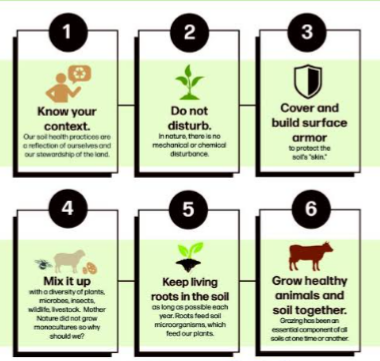
Principles of soil health help protect soil from erosion, improve water infiltration, and boost nutrient cycling, creating a more resilient and productive ecosystem. 1. maximize soil cover2. minimize soil disturbance3. maximize plant and animal biodiversity4. keep a living root5. integrate livestock.
1. MAXIMIZE SOIL COVER: The soil surface can be kept covered with materials like plants, mulch, or crop residue, to protect it from erosion and the impact of rain. It also improve the habitat of the microbes and as the covers decompose, they release nutrients into the soil etc.
2. MINIMIZE SOIL DISTURBANCE: Soil is disturbed in many ways. There is the physical, chemical and biological disturbances. These disturbance result in destruction of soil structures, microbs and the entire soil ecosystem. For example, tillage operation, movement of animals while grazing etc. Limiting these soil-disturbing activities helps preserve soil structure, organic matter, and the living organisms within the soil.
3. MAXIMIZE PLANT AND ANIMAL DIVERSITY : Planting a variety of crops and plants, rather than monocultures, supports a wider range of beneficial organisms and improves the overall health of the soil ecosystem. Animals living within and on the soil also play a majir role in improving soil health. They improve the soil strucuture, porosity and as they die, their remains add nutrient to the soil.
4. MAXIMIZE LIVING ROOTS: The presence of living roots, whether from crops, cover crops, or perennials, helps build soil structure, feed soil microbes, and cycle nutrients throughout the year.
5. INTEGRATE LIVESTOCK: Carefully managed grazing of diverse livestock on diverse pastures can help cycle nutrients, stimulate plant growth, and build healthy soil systems.
FACTORS TO CONSIDER TO CALL A SOIL HEALTH SOIL
To determine if a soil is healthy, several factors are put to consideration by farmers and scientists . They measure the number of microorganisms present in the soil, How much nutrients are in the soil, How well does the soil retain water during drought, How much carbon can the soil sequester from the atmosphere? etc. For a soil to be considered healthy, various microscopic and large organisms must teem up to provide and convert the dead and decaying matter and minerals to form plant nutrients. The following factors are used to determine the healthiness of a soil
1. The soil has many living organisms in it such as earthworms, beetles, unseen microscopic organisms
2. It is rich in organic matter
3. It is rich in plant nutrients which are in available form
4. It is deep enough for plant roots to grow properly
5. It has a mixture of fine clay particles with coarse sand and silt particles
6. It contains lumps and clumps of different sizes
7. The surface does not seal after rain.
The following factors enhances soil health :
1. Conservation agricultural practices like no tillage or minimum tillage
2. Planting of cover crops
3. Crop rotation practices
4. Fallowing
5. Well managed crop-livestock system
SOIL HEALTH IN RELATIONS WITH SOIL ECOSYSTEM SERVICES AND SOIL FUNCTIONS
One of the most important aspect of soil health is its ecosystem services and soil functions that support the eco system services. Soil ecosystem services are the wide range of benefits that humans receive from the soil. These services are essential for human well-being and life on Earth. It encompasses various functions that support food production, regulate water, and cycle nutrients. These services include; nutrient cycling, soil formation, photosynthesis, and the maintenance of biodiversity. These processes ensure that agriculture, forestry, and other human activities can persist long-term because they provide the essential biological foundation for ecosystems.Some of these soil ecosystem services include:
a. SUPPORTING SERVICES:i. FOOD AND BIOMASS PRODUCTION: Soil is a medium for plant growth, anchoring roots and supplying essential nutrients and water, which is fundamental to agricultural crops, forest tress and other plants growing on it. The nutrients absorbed from the soil and does taken in during photosynthesis are not totally used to develop the plants organs. Some remains in the tissues and organs which when the plants die are return back to the soil when decomposition occurs.
ii. HABITAT PROVISION: Soil is one of the most biodiverse habitats on Earth. It support a vast array of organisms including bacteria, fungi, insects, and burrowing animals, all of which play crucial roles in soil ecosystem health. Both the bacteria and fungi are good decomposers of organic wastes, turning it to plant food. Insects and burrowing animals help build soil stucture and etc.
iii. RAW MATERIAL PROVISION: Soil provides essential raw materials like clay, peat, and minerals used by plants as sources of some nutrients.
b. REGULATING SERVICES:
i. WATER REGULATION AND PURIFICATION: Soil acts as a natural filter, purifying water as it percolates through the layers. It also regulates water flow, reducing flooding and drought risks that can affwct plant growth, aid decomposition and absorption of nutrients from the soil, it also assist in the process of photosynthesis.
ii. CLIMATE REGULATION (CARBON SEQUESTRATION): Soil is a major global carbon sink, storing more carbon than the atmosphere and all vegetation combined. Healthy soils help mitigate climate change by sequestering atmospheric carbon dioxide in the form of soil organic matter.
iii. NUTRIENT CYCLING AND WASTE DECOMPOSITION: Soil organisms are responsible for decomposing dead organic matter, breaking down waste and pathogens, and recycling essential nutrients (like nitrogen, phosphorus, and potassium) back into the ecosystem, ensuring their availability for future life.
iv. DISEASE SUPRESSION: Healthy soil biodiversity can help suppress soil-borne pathogens and pests, contributing to natural disease control in agricultural systems. etc.
SOIL HEALTH INDICATORS USED TO ASSESS SOIL FUNCTION
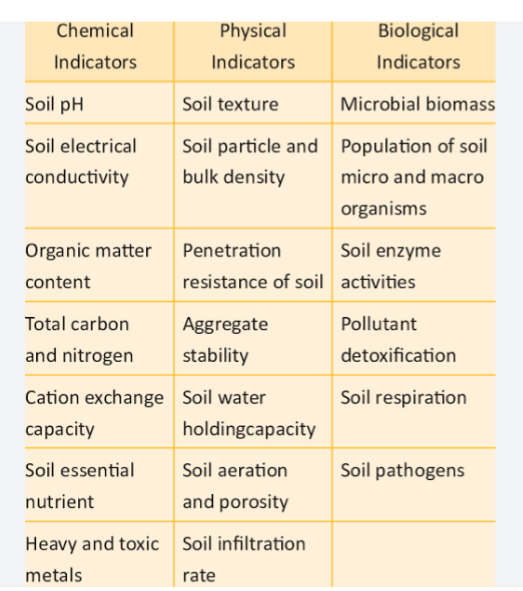
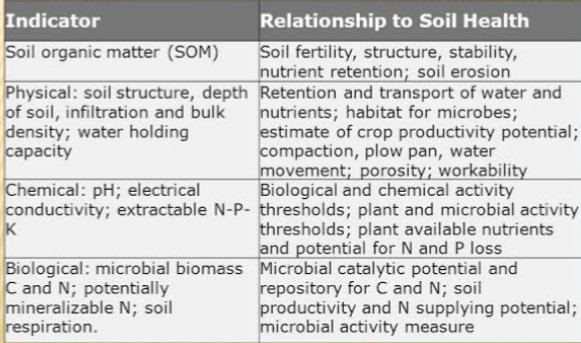
Indicators of soil health are the line of the soil used for determining whether the soil system is collapsing or moving towards a more resilience or more healthy state. The primary indicator of soil health is Soil organic matter (SOM). Other indicators include: physical ( soil aggregate stability, infiltration and bulk density), chemical ( pH, extra table soil nutrients, N, P, K and basic cations like Ca, Mg, and K), and Biological (microbial biomass, C and mineralization of N)
Soil organic matter which is the major source of plant nutrients and soil organic carbon in the agroeco system is a major representative of soil Health .
CAUSES OF POOR SOIL HEALTH
Virgin Soils under forest, bush or grasslands have a built up of organic matter. The organic matter had been built up over many years. When farmers clear such area, they initially get very good yield. But later, as the land is ploughed, crop residues are removed, and the land left bare, plant nutrients are washed away, organic matter are eroded and the soil becomes depleted. The following are the causes of poor soil health :
I) Farming for many years and Removal of nutrients without returning the nutrients back to the soil
II) soil erosion
III) Loss of soil organic matter
IV) loss of soil life
V) break down of soil structure
VI) compaction of soil
VII) exposure of bare soil to rain and sun
EFFECT OF POOR SOIL HEALTH TO AGRICULTURAL PRODUCTION
When soil is depleted of organic matter, plant nutrients and lack the major beneficial soil microorganisms that assist in decay of residues, the soil becomes sick. The negative effects of poor soil health on agricultural production include:
I) Low crop yield
II) Need of high amount of inorganic fertilisers to produce good crop
III) stunted and dwarf crops
IV) bare soil
V) fall in crop yield year after year.
HOW TO MAKE A. SOIL HEALHTY AGAIN
1. Break hard pan to allow water sink into the soil and it will also make crop roots reach nutrients and water deeper in the soil
2. Zero tillage should be practiced. Planting basins, open planting lines or plant directly using farm tools and not machines
3. Do not remove crop residues and animals should not be allowed to graze on them. Their presence on the land helps in protecting and adding organic matter to the soil
3. Add organic matter and plant nutrients in form of compost, manures, mulching and inorganic fertilisers
4. Plant crop covers to protect the soil and produce organic matter.
5. Keep rewatering the field. Built microcatchments along field contures.
6. Practice conservation agriculture.
7. Dynamic accumulator: mean buring organic matter deep into the soil to a depth of about 10inches into the soil for crops to tap the nutrients at that level and also the roots creating pores for proper aeration.
8. Mulching usage.
SOIL HEALTH AND SOIL QUALITY
Soil health is the interaction between organisms and their environment. This interaction do result in abiotic conditions in the soil. Soil health can be improved by adding phycoterra to the soil.Soil quality on the other hand is simply described as how well the soil function, physically, chemically and biologically based on its uses. In relation to farming system, soil quality leads to changes in soil structure. Both concept goes hand in hand. They aim at thesame goals which is increasing yield and improving the quality of the soil.
DIFFERENCES BETWEEN SOIL HEALHT AND SOIL QUALITY
Soil health and soil quality both play an important role in agriculture. The terms are often used synonymous.
Soil health describes the biological integrity of the soil community-the balance among organisms within a soil and between soil organisms and their environment. Soil health is a description of the condition or status of a soil and may comprise multiple factors including soil quality characteristics that come together to create an environment for soil life. These factors may include soil structure, organic matter, and the diversity or population of soil micro- and macro-fauna. Soil texture and soil fertility are examples of characteristics that enhance soil health .
Soil quality is a term that we use when we talk about the physical attributes of soil. Physical attributes include: colour. It can also be used to describe more complex soil characteristics such as soil organic matter, nutrient amounts, soil structure, etc. These attributes can all be influenced by management practices and have the capability to enhance or diminish soil health.
Soil quality is related to soil functions while soil health concept view soil as a finite and dynamic living resource.
Indicators of soil quality include soil physical quality, chemical fertility, organic matter, soil morphology and soil macro fauna that support plant growth.
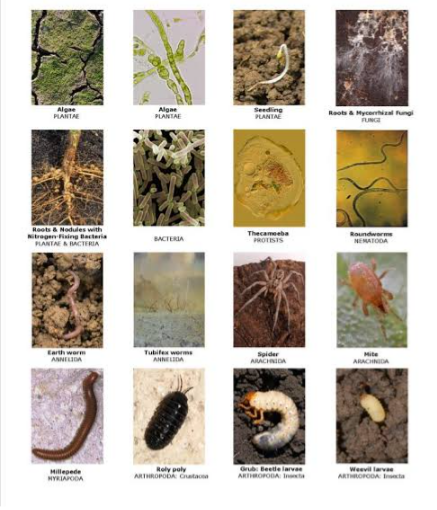
THE FUNCTIONAL GROUPS OF MICROORGANISM
There are four major functional groups of microorganisms that keeps the soil system alive.The bacteria , fungi, protozoa and nematodes. It is important to understand not only their number within the soil eco system but also their roles, diversity , how they continue and interact with each other etc.
FUNCTIONS OF EACH GROUP
All organisms living in and on the soil have their own unique contribution to soil health. They are important indicators of soil conditions.
1. BACTERIA AND FUNGI:Bacteria assist in building soil health by decomposing organic matter, improving soil structure, and promoting plant growth. They convert atmospheric nitrogen into a usable form. The nitrogen-fixing bacteria, like Rhizobium, convert atmospheric nitrogen into ammonia, which plants can absorb and use for growth. In another process called Nitrification, bacteria called nitrifiers convert the ammonia into nitrites and then nitrates, which are readily available for plant uptake etc. Also, some bacteria and fungi break down organic materials into rich humus, and produce substances that bind soil particles together, thus, improving water retention and reduces erosion. Bacteria also produce plant-growth-promoting hormones and antimicrobial compounds, which support healthy plants and suppress diseases. In summary, both assist in the decomposition of organic materials, extract and retain nutrients in the soil, build soil structure by forming aggregates etc
2. PROTOZOAN AND NEMATODES: Both organism consume fungi, bacteria and even each other, release plant available nutrients near plant roots. Protozoa improve soil health by regulating bacterial populations. They consume bacteria and excrete nutrients, such as ammonium and orthophosphate. Both substances are vital for plant growth. This process is called the microbial loop.They also help suppress soil-borne diseases by competing with and feeding on pathogenic microbes. Protozoa are a food source for other soil organisms, such as nematodes and also rotifers. This feeding process help to maintain the balance of the soil food web. Abundance of both protozoa and nematodes can be used as an indicator of the overall health of a soil ecosystem, as they are sensitive to changes in the environment. In additon, they also enhance nutrient cycling and boost plant growth. As they consume bacteria, they release essential nutrients like nitrogen and phosphorus back into the soil in a form plants can use. They also serve as a food source for other organisms and help improve soil structure and disease suppression.
3. ROTIFIER AND A WATER BEAR CALLED TARDIGRADES: Rotifiers contribute to soil health by decomposing organic matter, recycling nutrients like nitrogen and phosphorus, and improving soil structure. They act as a crucial link in the soil food web, breaking down bacteria and fungi and providing a food source for larger organisms. They are good indicators of soil oxygen, and are consumed by microathropodes. They assist in cleaning of the surface of tardigrades.They are found in the upper layers of soil, where they move by swimming, crawling, or gliding. They are also found in other moist environments, such as moss and tree bark.
4. TARDIGRADES: These are taxicabs moving (can move) around beneficial bacteria and fungi. They contribute to soil health by controlling the populations of other soil organisms, such as harmful bacteria and plant-parasitic nematodes, which helps maintain the soil’s ecosystem balance. Carnivorous tardigrade for example feed on and help control populations of plant-parasitic nematodes, which benefits soil health. Apart from this, they also play important role in nutrient cycling by consuming and breaking down other microorganisms such as bacteria to release essential nutrients such as nitrogen, phosphorus, and potassium into the soil. They assist in nutrient cycling, they are consumed by target athropodes.
5. CILIATE: These are found in low oxygen pockets in the environment. Ciliates release nutrients into the soil through their feeding habits, regulating microbial populations, and transfer biomass to larger organisms. They do this by consuming bacteria and fungi, which breaks down organic matter and makes nutrients like nitrogen and phosphorus available for plants. Ciliates also stimulate mineralization. As they graze, they accelerate the decomposition of organic matter and the turnover of microbial biomass, which stimulates processes like ammonification and nitrification. They act as bioindicators of soil health and pollution because their communities change in response to environmental conditions. They assist in nutrient cycling and are consumed by microathropodes.
6. FUNGI: The hypae of fungi assist in nutrient extraction from organic matter. They are consumed by nematodes and microathropodes. They assist in buildingbsoil structure by foeming macroaggregates and retain nutrients in the soil.
7. TESTATE AMOEBA: Testate amoebae contribute to soil health by participating in nutrient and silica cycles, regulating microbial populations, and serving as indicators of soil conditions. They break down organic matter and release vital nutrients like nitrogen back into the soil by consuming bacteria and fungi. Additionally, they are major players in the silica cycle by building their protective shells from biogenic silica. This is achieved through a process called Biosilification. They consume bacteria, release nutrients in plant available forms.
8. FUNGAL FEEDING NEMATODES: They consume fungi, and releases Nutrients in plant available formsBenefits of a thriving soil ecosystem1. It build soil structure by maintaining stable aerobic conditions, grow deeper roots, makes the soil to become like a sponge and reduce irrigation costs.
6. STORE CARBON BELOW THE GROUND: increases som, form physically protected aggregates and long term carbon sequestration.
7. RETAIN AND RECYCLE NUTRIEN: Solubulize parent material, reducing input costs.
