INTRODUCTION
Cattle farming is one of the most important agricultural activities worldwide, providing meat, milk, leather, and employment for millions of people. Successful cattle farming requires a combination of good planning, proper animal care, efficient feeding, disease control, and sound business management.
UNDERSTANDING CATTLE FARMING
Cattle farming is the practice of rearing and managing cattle for various agricultural purposes. It is a cornerstone of rural livelihoods and plays a major role in food security and economic development across the world. Cattle provide multiple products such as milk, meat, hides, manure, and draught power, making them one of the most versatile farm animals.
These animals are physically big than other domestic animals so they need more space for rearing both outdoor and indoor. Their housing unit needs more space . Therefore, constructing a house for cattles is most costly than for other animals. In addition, maintenance practices per cattle is also very costly for small farmers. Raising dairy cattle for high productivity of milk for commercial purposes is a very profitable business.
IMPORTANCE OF CATTLE FARMING
Cattle farming is a multi-purposes livestock farming business where farmers get several benefits from rearing the animal. Such benefits include: dairy production, meat production, and leather production depend on cattle rearing.
Cattle farming contributes significantly to:
i. FOOD PRODUCTION : supplying milk, dairy products, and beef
ii. INCOME GENERATION : providing regular cash flow for farmers
iii. EMPLOYMENT :creating jobs in farming, processing, and marketing
iv. SOIL FERTILITY : manure improves soil structure and crop yields
v. RURAL DEVELOPMENT : supporting mixed crop–livestock farming systems
vi. In many regions, cattle also serve as a form of financial security, as animals can be sold during emergencies.
TYPES OF CATTLE FARMING
Cattle farming systems are generally classified based on their primary production goal.
1. BEEF CATTLE FARMING
Beef cattle farming focuses on raising the animals mainly for meat production. These cattle are selected for fast growth, good feed conversion, and high-quality meat. Beef systems may include:
a. Cow-calf operation
b. Backgrounding or growing systems
c. Feedlot or finishing systems
2. DAIRY CATTLE FARMING
Dairy farming is centered on milk production. Dairy cattle are managed to maximize milk yield while maintaining good health and reproduction. This system requires:
a. Regular milking schedules
b. High-quality nutrition
c. Strict hygiene and health management
3. DUAL-PURPOSE CATTLE FARMING
Dual-purpose farming combines both milk and meat production. It is common among smallholder farmers because it offers flexibility and reduces risk by providing more than one source of income.
PRODUCTION SYSTEMS
Cattle can be raised under different management systems depending on land availability, climate, and investment level. These production systems include;
a. EXTENSIVE SYSTEM – Cattle graze on large areas of natural pasture with minimal inputs
b. SEMI-INTENSIVE SYSTEM – Combines grazing with supplementary feeding and housing
c. INTENSIVE SYSTEM – Cattle are kept in confined areas and fed prepared rations
Each system has its advantages and challenges, and farmers should choose the one that best suits their resources and goals.
SKILLS AND KNOWLEDGE REQUIRED
Successful cattle farming requires more than owning animals. Farmers need knowledge of:
Animal behavior and welfare
Basic nutrition and feeding practices
Disease prevention and control
Breeding and reproduction
Record keeping and financial management
METHODS OF CATTLE REARING
Cattle farming plays an important role in the farmers’ livelihood especially livestock farmers. This farming business has changed many small farmers life and turned them into large commercial farms. Some of the methods of cattle rearing include:
1. HANDLING:
Only skillful farmers can handle cattles. They can easily handle one or more cows at thesame time. Besides, they need to ensure good health and prevent disease in this animal. Most people’s livelihood who rear them depends on this farming business. If they provide Good health and ensure the prevention of disease, they can earn profit. Their big size makes it difficult for proper handling of the animal.
Therefore, properly trained farmers are the only individuals that can handle them.
Balanced foods and a clean water supply are also important for rearing a cattle. They need high amount of healthy food to achive good production and get better results from them. They also need to be provided time-to-time vaccines to avoid harmful diseases.
Today, farmers have taken advantage of modern technologies in handling cattles, creating easy processes for the farmers. Modern farming technologies teach farmers how to maintain overall facts about this livestovk.
2. GRAZING:
For the overall development of the animal, grazing plays a vital role. And not all farmers can easily graze cattle in the meadow. Well-trained farmers only carry out this task. Farmers should graze cattle two or three days a week in a green field to ensure better health. The animals should be taken to a meadow that contains soft, green, and nutrient-dense grass for the best manufacturing capability. Healthy green grass can help to prevent many diseases.
3. HOUSE MANAGEMENT:
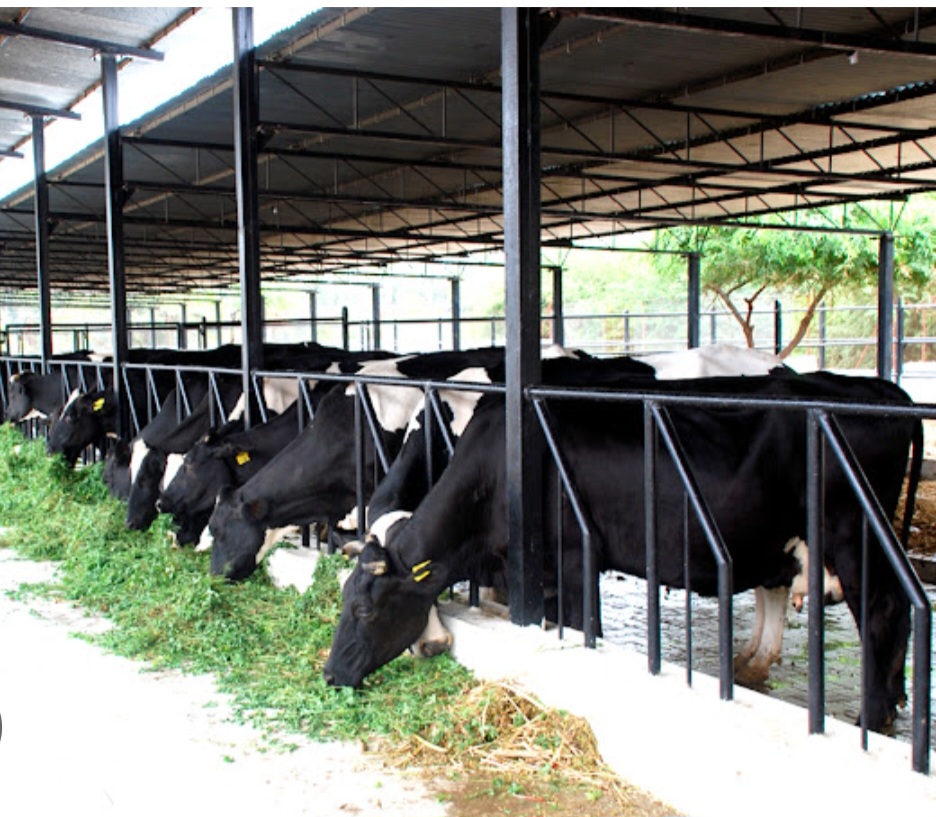
Proper housing is very important for every living animal. Small animals only require constructed houses of small space like rabbits, snails etc. But for cattle, farmers need to be serious. Cattle need well –build airy houses to take rest and live. There are various designed houses observable for the animal. Some places like in India, straw roofs and bamboo fences, some make fences with strong materials are used. While in well developed countries like US, a well enclose automated cattle shed are contructed for use.
Keeping cattle in shadowy spaces is important to save them from heat and rain. Keeping them under such harsh climatic conditions can cause dangerous health issues. The housing units must be in proper temperature so as to to give value the housing unit.
4. REPRODUCTIVE MANAGEMENT:
In most developing countries, farmers breed their cattle naturally and artificially. While in well advanced countries, artificial insemination in the main practice. Artificial insemination is currently encouraged to breed cattle because it is a modern method of reproduction that brings about fast reproductive processes. To achive this. Large sized, healthy with quality trait cattles are selected for artificial insemination, so as to achive the desired result of production. Seeds are collected from improved breeds of bulls, processed, and introduced into the cows. This prevents the transmission of various diseases from bulls to cows and at the same time increases the productivity of the cows.
5. FOOD MANAGEMENT:
To maintain the production and productivity of cattles at desired level, it is essential to provide a balanced and proper amount of food to the animal. The ingredients needed to make a balanced diet for them include; Straw, green grass, granular food, concentrates and water.
Through the adoption of modern methods of processing their food, digestion, nutritional value and production of this food can be increased. Several types of grass can be cultivated in pasture to feed during grazing. This animal need green grass occasionally. Therefore, farmers have adopted a practice that supply consistent green grasses called Rotational grazing practice.
6. CARE AND MAINTENANCE OF DAIRY COWS:
Dairy cows need to be provided with adequate green grass, hay, and balanced granular feed. They must be milked at the same time by the same person every day in the same manner. The place where the cows live and the house should be kept clean and tidy. The pen should be cleaned regularly and even if the cow is not bathed regularly.
Today, instead of using personel to milk, machines are now used. This is a more efficient method, but only rich commercial farmers can purchase such machines.
6. DISEASE MANAGEMENT:
General characteristics of a healthy animal include: Active, agile, adaptation to the surrounding conditions, and will take regular steps. Also included are good body structure; the smooth, shiny, and loose skin.
When the animal is diseased, the body temperature decreases or increases. There is a change in breathing and reluctance to eat. The spread of the disease may be different for different diseases.
The germs of some diseases can be carried in the air and even spread by contaminating the soil and water. Healthy cattle should be isolated separate from sick cattle. Necessary treatment should be taken by contacting the local veterinarian as soon as the disease is seen. Healthy animals need to be vaccinated to prevent infectious diseases. Animal safety must be ensured on the farm.
7. COW-FATTENING TECHNOLOGY:
One of the sources of animal meat is beef. Cattle fattening technology is a technology to increase the production of beef rapidly using modern technology. Cattle should be provided granular feed at the rate of one percent of their body weight and fibre at the rate of 2 percent. Food should be distributed in 2-3 portions throughout the day. The mixture of granular food should be kept correct.
ADVANTAGES OF CATTLE FARMING
1. PROVIDES ESSENTIAL NUTRIENTS:
Every living organisms need essential nutrients for livelihood. In the case of human, most of the nutrients needed for sustainable body health come from cattle. Cattles are good source of; milk, meat, leather, and essential products produced from horns. Milk foe example contain all types of nutrients, fats, and vitamins that the human body need to develop. Healthy and delicious items can be made feom meats and milk. Leather is used to prepare various essential daily useable things like shoes and bags etc.
2. PROFITABLE AND PRODUCTIVE INCOME SOURCES:
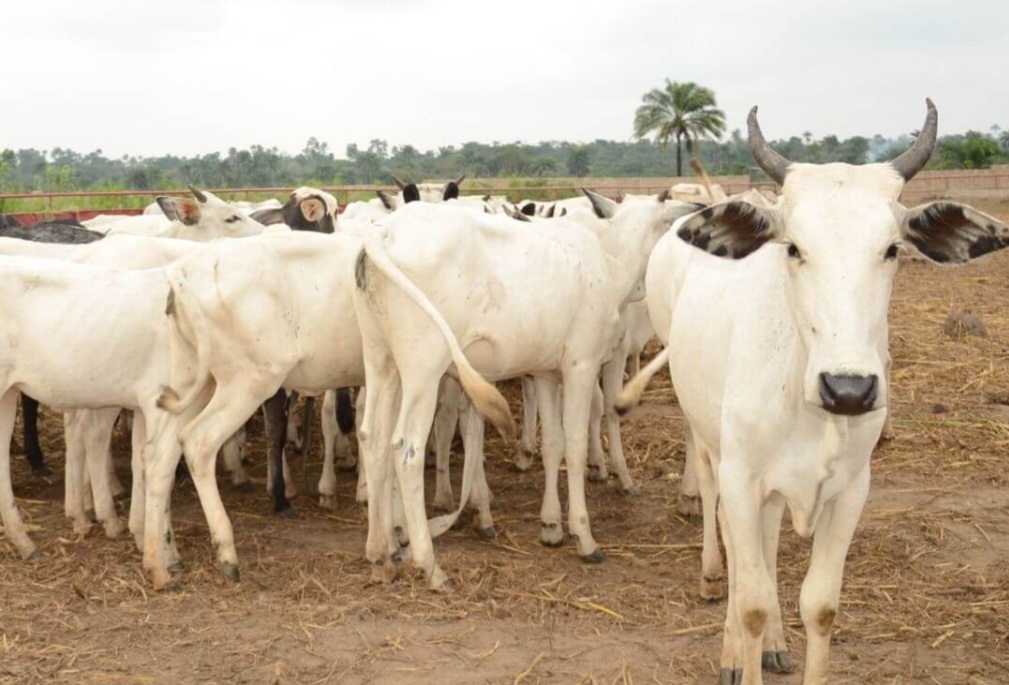
Cattle is a good source of employment for both small scale and large scale farmers and indirectly farmers, depend on cattle farming. Some families main income source comes from rearing cattle. For example, in West Africa, where the fulanis reside in Nigeria, most of them are cattle rearers, thus, providing for their family from produce realised from the sale of the animal poducts. Some factors depend on beef as a raw material in making pet food, huge demand is placed on milk all over the world. It is used for new borne infant food, pet food, bakeing, etc.
3. ONETIME INVESTMENT:
The most important advantage of cattle rearing is a good investment over time. To build a house, buying animals and caring for them require huge capital but after that, if the business goes well and farmers maintain them, they can earn good money in return.
4. KEEP MORE COWS AT ONCE:
Most farmers start little with one or two bulls and three to four cows. The bulls service the cows to give birth to calls. This multiplication continues to farm a large herd of cattle. This means that starting small with good space result in more and more cattles over time.
Most modern farmers save money through restriction of their cattles in a little place, thus, reducing wastage of food, ease of manure collection for compost making etc.
5. NATURAL GAS PRODUCE:
Today, most farmers uses cattle dung to produce natural gas (biogas). This gas is used as cooking gas. Thus, reducing the cost of purchase of fuel for cooking. Apart from this, cattle feces are also used for various tasks. For example, in India, people think cattle feces are holy so they use them as smears in the mud hut. Farmers collect them to make manures and compost. A good source of nutrients to improve soil fertility.
DISADVANTAGES OF CATTLE FARMING:
1. FIGHT WITH EACH OTHER:
The most common problems of cattle rearing is that the animals fight with each other. Their long horns can cause injury during fighting and that is very harmful to their health. In many situations, most cattles die during the fighting process. So, farmers need to take extra care of this problem. Make the house unit to have a big space and maintain a distance between two aggressive cattles.
2. EASILY DISEASED:
Boosting the immune system of cattle and other animals is essential for disease preventon among the herds. Rising different animals together is an easy way to spread harmful disease. For example, rearing cattle with sheep.
Some of the causes of disease outbreak include; unhealthy environment, feeding unhealthy foods, and lack of caring/poor management system etc. All these expose animals and also prevent them from building immunity against diseases.
3. DIFFICULT TO DIAGNOSE:
It is usually difficult to carry out diagnostic test on big bodied-sized animals like cattle, sheep and goats. These tests are costly, requires veterinary assistant and purchase of drugs for any detected diseases. With this, small farmers may not be able to effort this exorbitant cost of diagnosis.
Today, modern diagnosis materials are available but very costly. Scientists are still battling to invent diagnostic equipment for animals of big bodied-size like cattle. Providing them with proper treatment, and managment has proving exorbitant and time demanding.
6. POLLUTION:
Cattle rearing has brought about environmental pollution. These pollution result from the leather industries, meat markets, manure conversion and usage etc Thus, polluting the environment and making it unhealthy for humans.
7. FOOD WASTES:
Food wastage is a major challenge in cattle farming. Keeping the animals gathered together and providing food to them is not a good idea. These animals will fight with each other to grab food. Thus, injuring or leading to death of the animals. And with this, food wastage may occur.
CHALLENGES IN CATTLE FARMING
Farmers can build a strong foundation for profitable and sustainable cattle farming if and only if they can overcome the challenges faced in cattle rearing. Farmers need to understand these challenges early, so as to help them make proper planning and reduce risks.
Some of these common challenges faced by cattle farmers include:
i. High feed costs
ii. Disease outbreaks
iii. Poor genetics
iv. Limited access to markets
v. Climate-related stresses such as drought
SELECTING THE RIGHT CATTLE BREED FOR FARMS
Selecting the right cattle breed is one of the most important decisions a farmer will make. The breed chosen by him/her directly affects productivity, adaptability, profitability, and long-term sustainability of the farm. No single breed is best for all situations; the ideal choice depends on farming goals, climate, feed resources, and market demand.
UNDERSTANDING CATTLE BREEDS
Cattle breeds are groups of animals with similar physical traits, performance characteristics, and genetic backgrounds. Breeds have been developed over time to suit specific environments and production purposes such as milk yield, meat quality, or disease resistance.
Breeds can be broadly classified into:
i. Indigenous (local) breeds : Well adapted to local climates and diseases
ii. Exotic breeds : High-producing breeds developed in other regions
iii. Crossbreeds: A combination of local and exotic breeds
COMMON BEEF CATTLE BREEDS
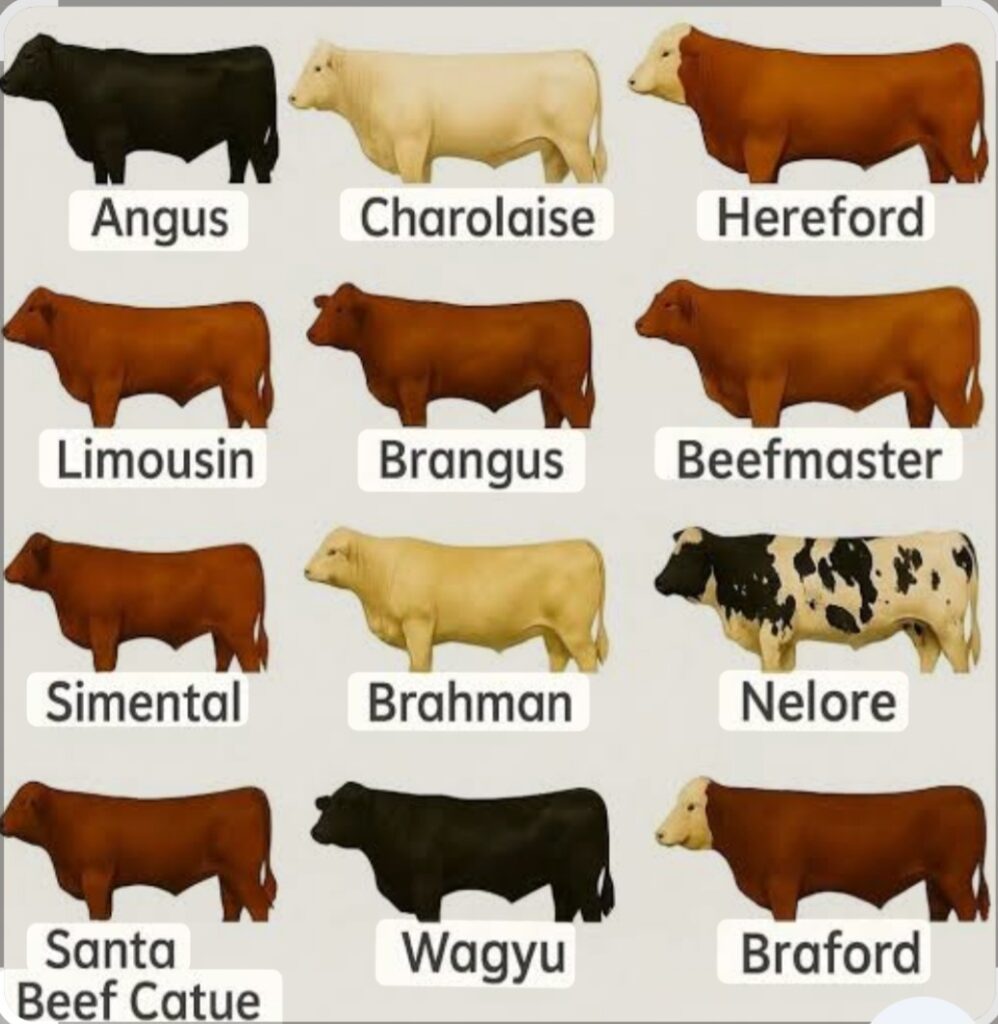
Beef breeds of cattle are cattle bred for their meat called beef. Beef farmers should select breeds that perform well under local grazing and feeding conditions. These breeds should be selected based on; rapid growth, good muscle development, and high-quality meat.
Some of these breeds include:
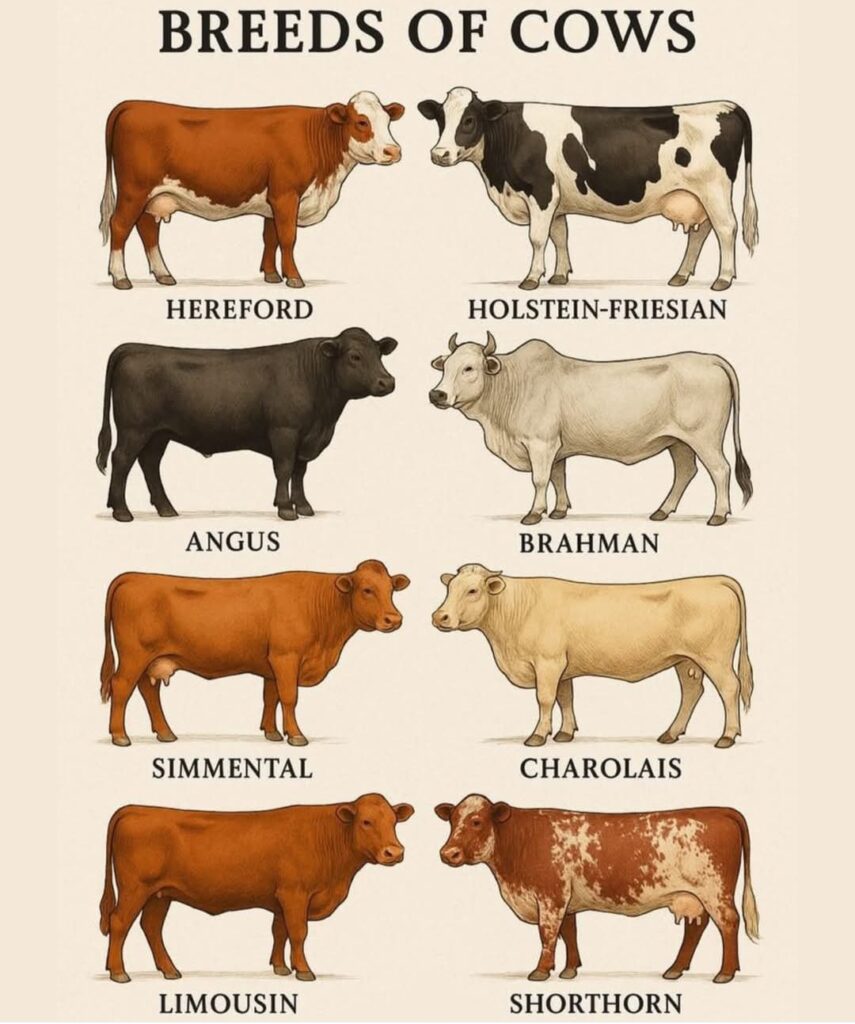
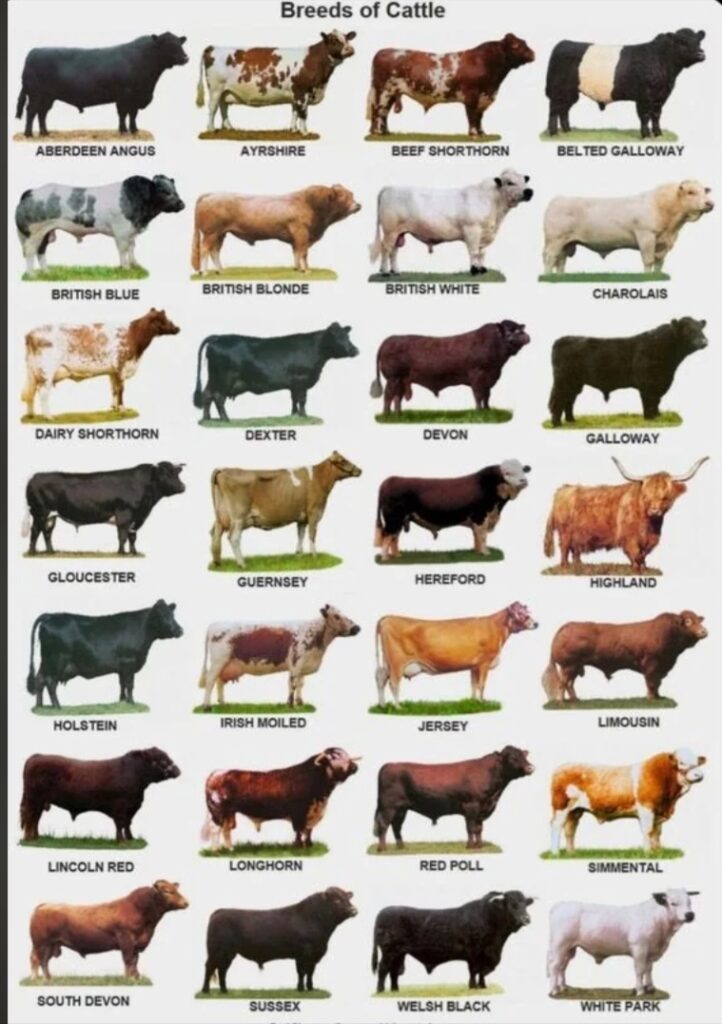
i. ANGUS : Known for excellent meat quality and good feed efficiency
ii. HEREFORD : Hardy breed with good temperament and adaptability
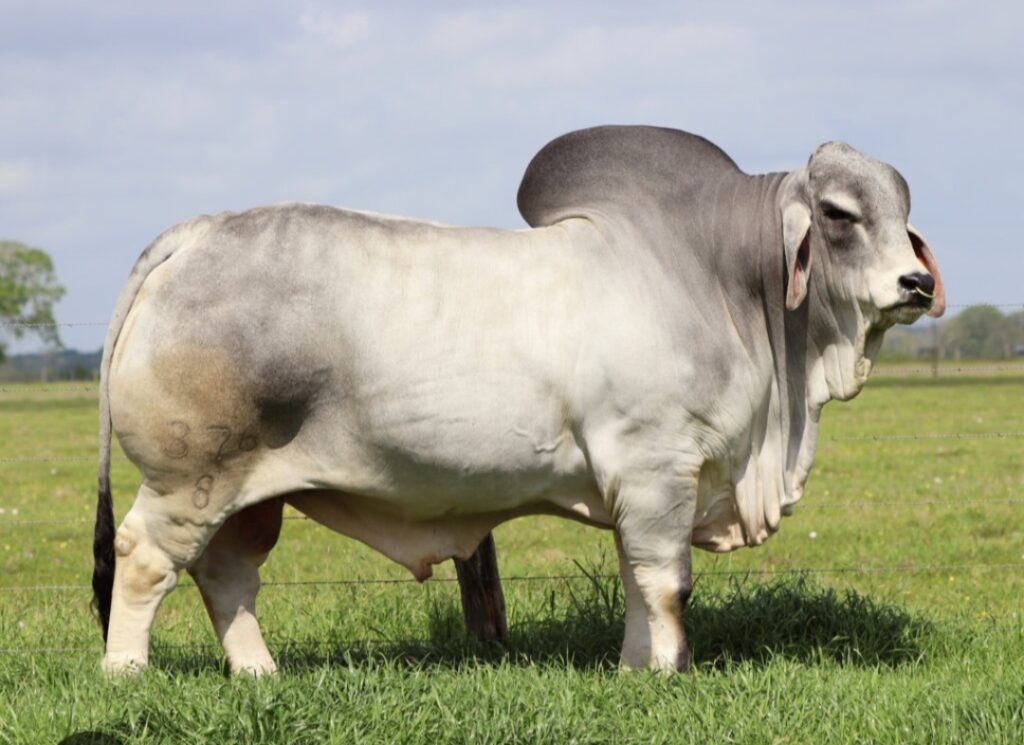
iii. BRAHMAN : Highly tolerant to heat and resistant to parasites
iv. CHAROLAIS : Fast-growing breed with high carcass yield
COMMON DAIRY CATTLE BREEDS
Dairy breeds are chosen for their milk yield, milk quality, and udder characteristics. They require proper nutrition and health care to reach their full potential. Examples include;
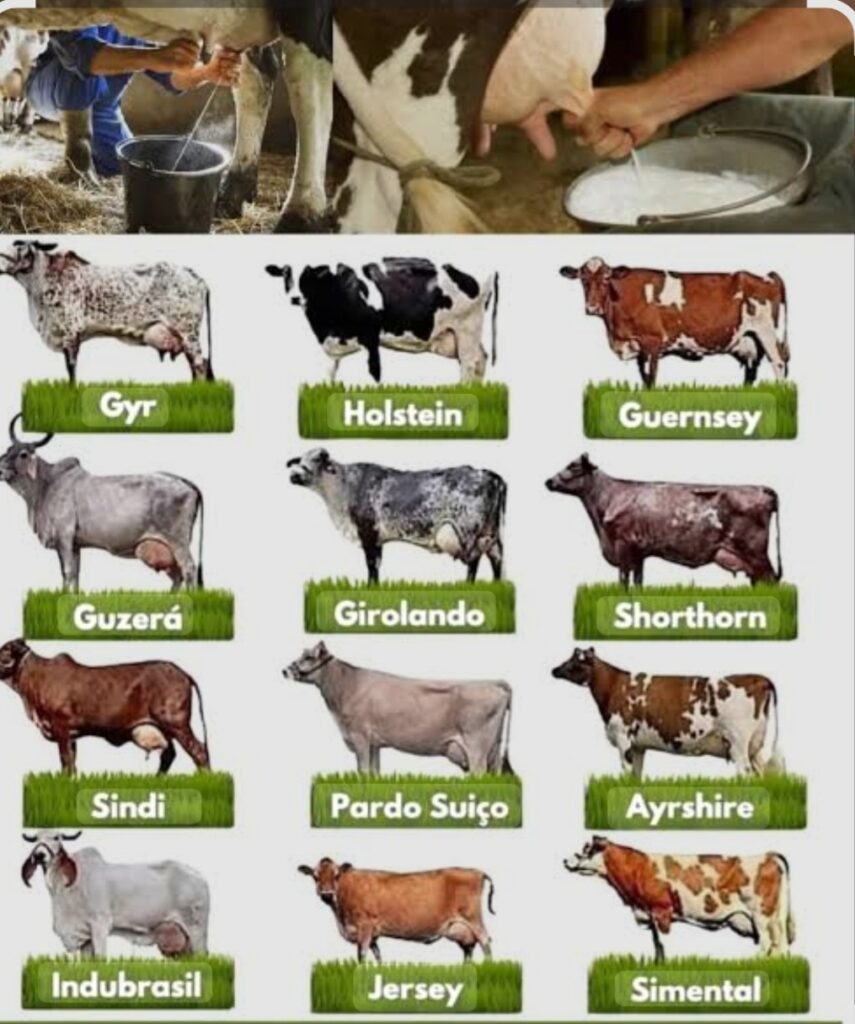
i. HOLSTEIN FRIESIAN: Highest milk producer, requires good management
ii. JERSEY : Produces milk with high butterfat content
iii. BROWN SWISS : Strong, long-living breed with good milk quality
iv. AYRSHIRE : Adaptable breed with balanced milk production
DUAL-PURPOSE CATTLE BREEDS
Dual-purpose breeds are suitable for both milk and meat production, making them ideal for small and medium-scale farmers.
They provide flexibility and reduce economic risk by offering multiple income streams. Examples include:
i. Simmental
ii. Shorthorn
iii. Sahiwal
iv. Red Sindhi
INDIGENOUS vs EXOTIC BREEDS
INDIGENOUS BREEDS: These are breeds originating from their area of origin. They possess certain traits that differentiate them from exotic breeds. Such traits include:
i. Better resistance to local diseases
ii. Tolerant to heat and harsh conditions
iii. Lower feed and management costs
iv. Generally lower milk or meat yield
EXOTIC BREEDS: These are breeds that are not indigenous but imported from another area of its origin. They usually possess traits like
i. High milk or meat production
ii. Require better housing, nutrition, and health care
iii. Less tolerant to heat and diseases
CROSSBREEDING AND ITS BENEFITS
Crossbreeding combines the strengths of two or more breeds to improve productivity and adaptability. Farmers need to carry out proper planning if crossingbreeding will be carried out on his herd. This is essential to avoid poor genetic results.
BENEFITS OF CROSSBREEDING : Benefits of crossbreeding cattle include:
i. Improved milk yield or growth rate
ii. Better disease resistance
iii. Enhanced adaptability to local climates
iv. Improved fertility and survival rates
FACTORS TO CONSIDER WHEN CHOOSING A BREED
Choosing the right breed of cattle ensures better performance and long-term success. But before selecting a breed, farmers should evaluate the following:
i. Climate and environment
ii. Availability and cost of feed
iii. Disease prevalence in the area
iv. Market demand for milk or meat
v. Initial investment and management capacity
SOURCING QUALITY BREEDING STOCK
When farmers want to purchase their breeding stock, they should always purchase their cattle from reputable breeders or certified farms. When selecting animals, check:
i. Physical appearance and body condition
ii. Health records and vaccination history
iii. Age and reproductive status
iv. Milk yield or growth performance (if available)
v. Avoid buying animals without proper health information.
By carefully selecting the right cattle breed, farmers can maximize productivity, reduce losses, and build a strong foundation for a successful cattle farming enterprise.
HOUSING AND FARM SETUP
Proper housing and farm setup are essential for animal comfort, health, productivity, and ease of management. Well-designed cattle housing reduces disease incidence, improves growth and milk yield, and lowers labor costs. The following will be used to describe the housing and farm setup; plan, design, and managment of cattle housing effectively.
IMPORTANCE OF PROPER HOUSING
i. Good housing provides:
ii. Protection from extreme weather (heat, cold, rain, wind)
iii. Reduced stress and injury
iv. Better disease control and hygiene
v. Improved feeding and breeding efficiency
vi. Easier handling and management of animals
When these cattle are comfortable, they become healthier and more productive.
FARM LOCATION AND LAYOUT
Choosing the right location and layout is the first step in farm setup.
Some major considerations in selecting farm locate and layout include:
i. Availability of clean and sufficient water
ii. Good road access for feed supply and product transport
iii. Proper drainage to avoid waterlogging
iv. Distance from residential areas to reduce nuisance and disease risk
v. Access to veterinary and extension services
vi. A well-planned layout should separate housing, feeding, milking, waste disposal, and storage areas.
TYPES OF CATTLE HOUSING SYSTEMS
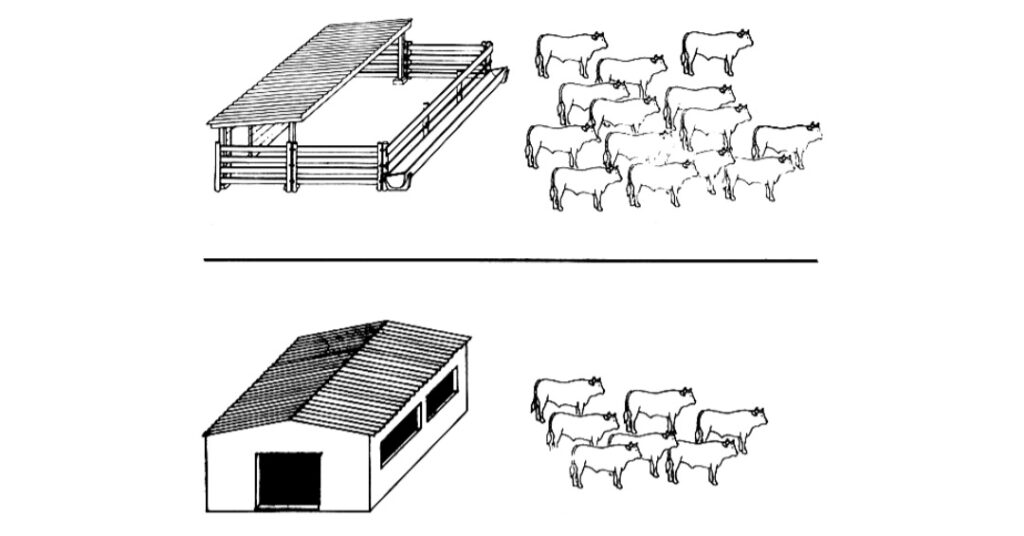
1. OPEN HOUSING SYSTEM
Suitable for warm and moderate climates
Lower construction cost
Good ventilation and natural light
Requires proper roofing for rain and sun protection
2. CLOSED OR SEMI-CLOSED HOUSING SYSTEM
Suitable for cold or extreme climates
Better control of temperature and hygiene
Higher construction and maintenance cost
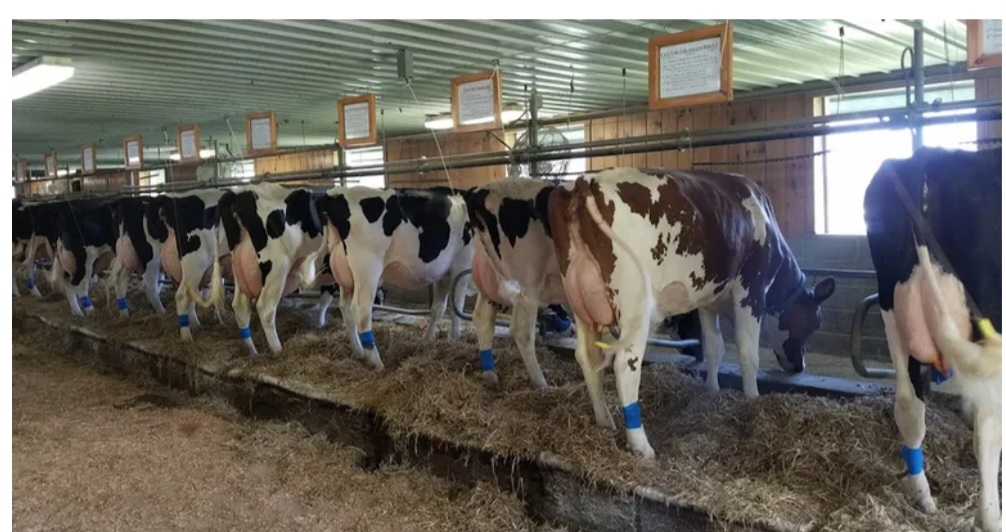
SPACE REQUIREMENTS FOR CATTLE OF DIFFERENT AGE AND PURPOSES: Providing adequate space is critical for animal welfare and performance. In cattle farming, approximate space requirements is based on the age of the animal:
i. Calves: 1.5–2.0 m² per animal
ii. Growing cattle: 2.5–3.0 m² per animal
iii. Adult cattle: 4.0–5.0 m² per animal
iv. Dairy cows (loose housing): 6.0–8.0 m² per animal
Overcrowding cattle can lead to stress, disease, and reduced productivity. Therefore, farmers should provide enough space at the recommended space to achieve a.healthy and productive farming business.
HOUSING DESIGN AND CONSTRUCTION
The cattle pen has different parts made of different materials. Some parts of the housing units include: the floor, roof, lightning section etc.
a. FLOORING: When designing and constructing the cattle pen, the floor should be non-slippery and made of durable material. It should be slightly slopy for ease of drainage. It must also be designed for ease to clean.
b. ROOFING: The roof should be made of heat-resistant materials and must have an adequate height for proper ventilation.
c. VENTILATION: There must be natural airflow to reduce heat and moisture within the housing unit. Well ventilated cattle house will prevent buildup of harmful gases.
d. LIGHTING: Natural light are preferred in the housing units. Artificial lighting is needed for dairy operations
FEEDING AND WATERING FACILITIES
The feeding and watering facilities must be kept clean always. Some of which include
i. FEED TROUGHS: It can be made of wooden or metal materials. Plastic materials may not be referred. These trough must be easy to clean, have adequate space to prevent competition etc.
ii. WATER TROUGHS: This should be made of metal material and must be large enough to provide large quantity of clean water.
There must be constant supply of clean water within the farm to give he animal. The trough must be
located at a convenient area for all animals to have a drink.
Note that poorly designed feeding systems result in feed wastage and uneven intake.
WASTE AND MANURE MANAGEMENT
Effective waste management keeps the farm clean and environmentally friendly. Therefore, to manage the waste and lungs, farmers should:
i. Regularly remove the dung of the animal
ii. Properly store or compost the dung
iii. Use the dung for manure or organic fertilizer
iv. Prevent contamination of water sources by the manure as this may introduce diseases into the herd
Good manure management improves hygiene and soil fertility.
Special Facilities
Depending on farm size and purpose, additional facilities may include:
i. Calving pens
ii. Isolation pens for sick animals
iii. Milking parlor (for dairy farms)
iv. Feed storage rooms
LOW-COST HOUSING OPTIONS
By investing in proper housing and farm setup, farmers create a safe, efficient, and productive environment that supports long-term success in cattle farming. Large scale farmers are opportuned to construct high tech housing units. These are highly expensive.
Small-scale farmers can reduce costs by:
i. Using locally available materials to construct the cattle housing unit.
ii. Adopting open or loose housing systems
iii. Gradually expanding infrastructure as the herd grows
Well-planned low-cost housing can be highly effective in the rearing of cattle.
FEEDING AND NUTRITION
Feeding and nutrition are the foundation of successful cattle farming. Proper nutrition directly affects growth rate, milk production, reproduction, immunity, and overall health. Poor feeding practices lead to low productivity, disease, and economic losses. Therefore, it is important that farmers know and understand the nutritional needs of cattle and how to meet them efficiently.
IMPORTANCE OF BALANCED NUTRITION
Cattle require a balanced diet to:
i. Maintain body condition and health
ii. Support growth and weight gain
iii. Produce milk efficiently
iv. Improve fertility and calving performance
v. Strengthen resistance to diseases
vi. A well-fed animal converts feed into milk or meat more efficiently.
NUTRITIONAL REQUIREMENTS OF CATTLE
Cattle nutrition is based on five main components:
- ENERGY – Needed for maintenance, growth, and production
- PROTEIN – Essential for muscle development, milk production, and reproduction
- MINERALS – Required for bone development, metabolism, and immunity
- VITAMINS – Support growth, reproduction, and disease resistance
- WATER – The most critical nutrient for all body functions
Deficiency in any of these nutrients reduces performance.
TYPES OF CATTLE FEED
1. ROUGHAGES (FODDER)
Roughages are the main feed source and should make up the largest portion of the diet. It can be in different forms. Such forms include:
a. GREEN FODDER: Pasture grass, napier grass, maize fodder, legumes
b. Dry fodder: hay, straw, crop residues
Good-quality roughage improves digestion and rumen health.
2. CONCENTRATES:
These are energy- and protein-rich feeds given to supplement roughages. They include:
i. Grains (maize, barley, sorghum)
ii. Oilseed cakes (soybean, groundnut, cottonseed)
COMMERCIAL FEED MIXES
This feed mixes include addition of concentrates with other types of feed. Concentrates are especially important for dairy cows and fattening cattle.
FEEDING ACCORDING TO AGE AND PRODUCTION STAGE
The different age stages in cattle farming ranges from calves to adult cattle.
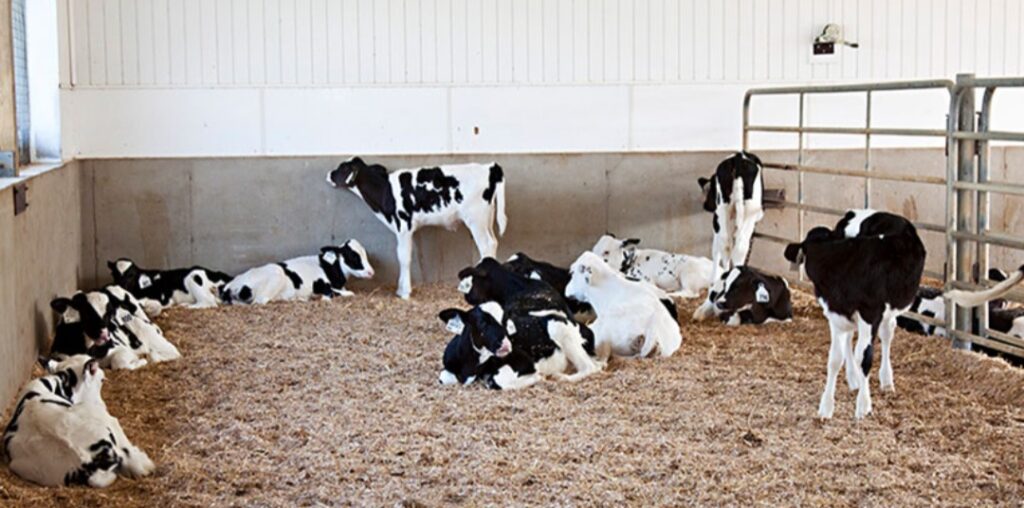
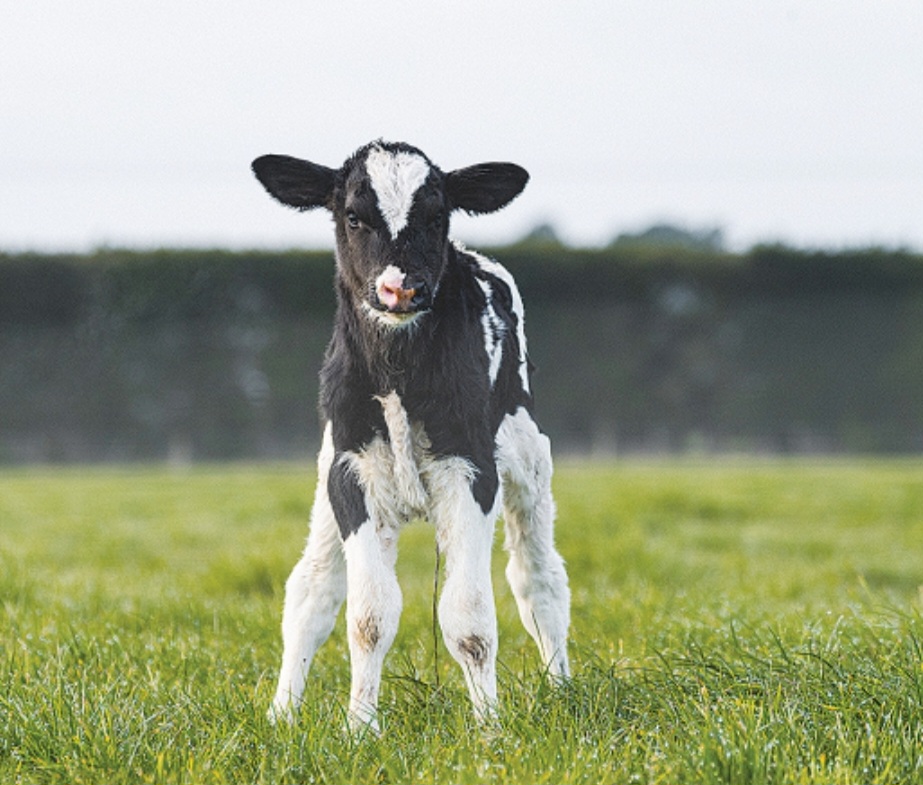
i. CALVES: These are the newly borne or young cattle. The nursing cow gives colostrum within the first 2 hours after birth, after which they continue to buckle on milk or milk replacer.
They should be gradually introduced to calf starter and green fodder
ii. GROWING CATTLE: Growing cattle should adequately be given roughage and moderate concentrates. Their food should be
well balanced with minerals for bone growth and development.
iii. ADULT DAIRY COWS: This type of cattle should be given diet high in energy and high in protein. They can be given extra concentrates during peak lactation.
iv. BEEF CATTLE: They require energy-rich diets for weight gaining and proper finishing rations before marketing.
FEEDING SYSTEMS
Some of the types of feed cattle include:
i. GRAZING SYSTEM: Cattle can graze on two types of pasture. Natural or improved pastures.
Natural pasture are pasture that establish on their own without human growing the grasses and legumes in the pasture.
Artificial pasture on the other hand are man grown pasture. The grasses and legumes in the pasture are grown by man.
ii. STALL FEEDING: In this case, farmers practice a process called “Cut-and-carry fodder system”. The farmer cuts the grasses and leguminous plants from the fodder and carry them to the stall where the animals are to feed them.
iii. MIXED SYSTEM: This system involves combining both grazing system and stall feeding method.
The choice of any feeding system employed by the farmer depends on land availability, climate, and labour.
WATER REQUIREMENTS
Water is essential for digestion, milk production, and temperature regulation. This gives reasons why
clean and fresh water must be made available at all times to the animals.
Dairy cows for example may require 60–100 liters of water per day.
Any form of water shortage may quickly reduce feed intake and milk yield
MINERAL AND VITAMIN SUPPLEMENTATION
Minerals and vitamins are very essential nutrients required in cattle feed at different rate based on the stages of the cattle’s life cycle. Lack of any of these two nutrients result to deficiency signs and disease infection.
Common mineral deficiencies include calcium, phosphorus, and salt. Mineral blocks should be provided for the cattle to lick or mineral mixtures with feeds can be carried out.
Supplement vitamins A, D, and E when needed by the animals. Any form of supplementation based on local deficiencies should be avoided.
FEEDING MANAGEMENT PRACTICES
i. Feed cattle at regular times
ii. Avoid sudden changes in diet
iii. Store feed properly to prevent spoilage
iv. Minimize feed wastage
v. Monitor body condition regularly
Good feeding management improves efficiency and reduces costs.
COMMON FEEDING PROBLEMS AND SOLUTIONS
Some of the problems resulting from poor feeding and feeds include:
i. Low milk yield: Improve energy and protein intake
ii..Poor weight gain: Increase concentrate feeding
iii. Digestive disorders: Provide sufficient roughage and clean water
iv. Feed wastage: Improve feeder design and management
BREEDING AND REPRODUCTION
Efficient breeding and sound reproductive management are key to maintaining a productive and profitable cattle herd. Good reproductive performance ensures regular calving, steady milk production, genetic improvement, and optimal herd replacement.
IMPORTANCE OF REPRODUCTIVE MANAGEMENT
Good reproductive management is an effective breeding management practice. A poorly managed breeding program on the other hand leads to long calving intervals and economic loss. which helps to:
i. Maintain a regular calving interval
ii. Increase lifetime milk and meat production
iii. Improve herd genetics
iv. Reduce infertility and reproductive losses
v. Ensure timely herd replacement
REPRODUCTIVE CYCLE OF CATTLE
It is important for farmers to understand the reproductive cycles of cattle before engaging in its farming. The reproductive cycles also called estrous (Heat) Cycle have an
Average cycle length: 18–24 days (commonly 21 days). Heat duration ranges from 12–24 hours.
The following are signs of heat in cattle.
SIGNS OF HEAT:
i. Standing to be mounted
ii. Restlessness and frequent movement
iii. Swollen or moist vulva
iv. Clear mucus discharge
v. Reduced feed intake and milk yield
Accurate heat detection is critical for successful breeding.
BREEDING METHODS
In cattle rearing, there are two types of breeding methods.
- Natural method
- Artificial method
- NATURAL MATING: Natural mating involves allowing a bull to mate with cows naturally. This method have several advantages.
ADVANTAGES OF NATURAL BREEDING METHOD.
i. Simple and less technical
ii. Useful in small herds
LIMITATIONS OF NATURAL BREEDING METHOD.
i. Higher risk of disease transmission
ii. Limited genetic improvement
iii. Reduces cost of maintaining a bull
- ARTIFICIAL INSEMINATION (AI)
Artificial insemination involves placing semen from a selected bull into the cow’s reproductive tract. This method of breeding have several advantages over natural method of breeding.
Insemination should not be carried out at any time of the day. The best time for AI is 12 hours after first standing heat (AM–PM rule). Poor timing may result to reduction in conception rates
ADVANTAGES OF ARTIFICIAL INSEMINATION:
i. Access to superior genetics
ii. Reduced disease transmission
iii. No need to maintain a bull
iv. Faster genetic improvement
REQUIREMENTS: This method requires the assistant of personel and equipments such as;
i. Accurate heat detection
ii. Skilled technicians
iii. Proper semen storage and handling
PREGNANCY DIAGNOSIS
After carrying out the breeding method, the cow should be diagnosed for conception. Early pregnancy diagnosis helps in better herd planning. The pregnancy should be confirmed 45–60 days after breeding.
Some of the common methods used include:
i. Rectal palpation (by a veterinarian)
ii. Ultrasound scanning
iii. Observation of return to heat
CALVING MANAGEMENT
Proper calving management ensures survival of both cow and calf. Before Calving, the farmer should carry out the following:
i. Provide clean and dry calving pens
ii. Monitor pregnant cows closely
iii. Avoid stress
During Calving, farmers should
observe for signs of difficult birth and should provide assistance only when necessary
After Calving, he/she should ensure the calf receives colostrum within 2 hours. The cow should also be checked for injuries or retained placenta.
POSTPARTUM AND FERTILITY MANAGEMENT
The following should be carried out after birth of the calf:
i. Provide high-quality nutrition after calving
ii. Monitor cows for uterine infections
iii. Resume breeding 45–60 days after calving
iv. Maintain proper body condition score
Common Reproductive Problems
cattle like other livestock also encounter a lot of reproductive problem that can make them not to conceive. Farmers should have a knowledge about this so that they can better manage their animals during breeding. Cows can face the following problems:
i. Delayed heat or silent heat
ii. Repeat breeding
iii. Abortion
iv. Retained placenta
v. Infertility due to poor nutrition or disease
This problems can be overcome by early veterinary intervention. This gives reason why cattle farmers should register with vetenarians and ensure their animals are well cared for before, during and after calving
GENETIC IMPROVEMENT AND SELECTION
Select replacement heifers from high-performing cows
Use proven bulls or AI semen
Avoid inbreeding
Keep detailed breeding records
By applying proper breeding and reproductive management practices, farmers can achieve regular calving, improved productivity, and long-term genetic progress in their cattle herds.
HEALTH CARE AND DISEASE MANAGEMENT
Good health care and effective disease management are essential for profitable cattle farming. Healthy cattle grow faster, produce more milk, reproduce efficiently, and have lower mortality rates. Disease outbreaks can cause severe economic losses, making prevention and early treatment critical. Some of the common cattle diseases, preventive health care practices, and basic disease management strategies are discussed below.
IMPORTANCE OF CATTLE HEALTH MANAGEMENT
Proper health management helps to:
i. Reduce mortality and morbidity
ii. Improve milk yield and weight gain
iii. Enhance reproductive performance
iv. Lower veterinary and treatment costs
v. Ensure food safety and product quality
Prevention is always more economical than treatment.
COMMON CATTLE DISEASES
Cattle diseases can be caused by pathogens infection, Parasite, and nutritional deficiency etc. Such diseases include; foot and mouth disease, anthrax, brucellosis, mastitis, black Quarter (BQ), tuberculosis, milk fever, ketosis, bloat and mineral deficiencies
PATHOGEN INFECTIOUS DISEASES
a. FOOT AND MOUTH DISEASE (FMD): Highly contagious viral disease causing fever and blisters
b. BRUCELLOSIS: Causes abortion and infertility
c. MASTITIS: Udder infection common in dairy cattle
d. BLACK QUARTER (BQ): Bacterial disease causing muscle swelling and sudden death
e. TUBERCULOSIS: Chronic disease affecting lungs and productivity
PARASITIC DISEASES
Cattle Parasitic Diseases can be divided into two groups. Internal or exoparasite disease and external or endoparasite diseases.
EXTERNAL PARASITE
a. Tick infestation
b. Lice and
c. mites
INTERNAL PARASITES : The internal parasites are worms within the intestine.
METABOLIC AND NUTRITIONAL DISORDERS
i. Milk fever
ii. Ketosis
iii. Bloat
iv. Mineral deficiencies
DISEASE PREVENTION MEASURES
a. VACCINATION: Vaccinations aim at preventing diseases from infecting the animals. Farmers should design and follow a regular vaccination schedule. They should vaccinate against common local diseases in their area affecting the animal production and also, they should
maintain proper vaccine storage and handling.
b. BIOSECURITY PRACTICES: Biosecurity measures should be put in place on their farm. For example, new or sick animals should be isolated. Restrict unnecessary farm visitors from entering the farm and even if they enter, water bath, disinfected clothing, shoe wears etc should be provided for them. Farmers should also disinfect equipment and footwear.
c. HYGIENE AND SANITATION: Good hygiene and sanitation practices should be carried out around and in the farm. The housing unit and feeding areas should be kept clean daily. Manure should be properly disposed away from where the housing unit lies.
All materials and bushes that can serve as hide out for pests should be cleared off. Also, the drainage systems around the farm should be well designed for easy water movement and not stagnation.
d. CLEAN WATER SUPPLY: Water should be made readily available on the farm. Not just any water but clean good water for the animals and farm workers to use. Water source should be identified in the case of flowing water.
If any chemicals are used on flowing water like streams, alternative water source should be used as this may affect the animals negatively.
e. PARASITE CONTROL: Parasites, whether endo or wctoparasite reduce productivity and spread diseases. They can be prevented and controlled through regular deworming based on veterinary advice. Tick can be controlled using dips, sprays, or pour-on solutions and
pasture rotation can be done to reduce parasite load on the animals.
f. MASTITIS CONTROL (DAIRY CATTLE): Mastitis affect the udder of the cows, thus, affecting milk yield and quality.
This disease can be prevented and controlled by maintaining udder hygiene, use of clean milking equipment, practice proper milking techniques etc.
When the animals are infected, treat infected cows promptly, dry cow therapy can be recommended.
Effective mastitis control improves milk quality and yield.
g. EARLY DISEASE DETECTION: This is another important disease control and prevention. Farmers should observe cattle daily for signs of illness such as:
i. Loss of appetite
ii. Fever
iii. Lameness
iv. Reduced milk production
v. Abnormal discharge
Early detection allows timely treatment and prevents disease spread.
h. TREATMENT AND VETERINARY CARE: When animals show any sign of illness, first thing to do is to consult a qualified veterinarian for diagnosis.
farmers should use prescribed medicines only and not carry out athodox medication usage. The correct dosage and withdrawal periods of the drugs must be strictly followed. Avoid misuse of antibiotics as this may result to a side effect.
g. HEALTH RECORDS AND MONITORING: Most farmers do not have a heath record. Their major aim is to produce and sell.
A good and reliable farm must
maintain and keep records of the following: Vaccinations, deworming,
disease treatments, mortality and culling etc. Records like health records help track problems and improve farm management decisions.
h. ANIMAL WELFARE AND STRESS MANAGEMENT: These are preventive and control measures that can keep the animals productive. Stress for example weakens immunity and increases disease risk.
Farmers should avoid overcrowding of their herd. The animals should be
handled gently using the proper techniques.
In addition, provide adequate nutrition and water to the cattles and
protect them from extreme weather
conditions.
By adopting strong health care and disease management practices, farmers can maintain a healthy herd, reduce losses, and ensure sustainable and profitable cattle farming.
MILK PRODUCTION AND HANDLING (DAIRY FARMING)
Milk production is the core activity of dairy farming and a major source of regular income for farmers. High milk yield and good milk quality depend on proper animal management, nutrition, hygiene, and efficient milking practices.
IMPORTANCE OF GOOD MILKING PRACTICES
Proper milking management helps to:
i. Increase milk yield
ii. Maintain udder health
iii. Improve milk quality and shelf life
iv. Prevent mastitis and contamination
v. Meet market and consumer standards
vi. Clean milk production adds value and builds buyer trust.
FACTORS AFFECTING MILK PRODUCTION
Milk yield varies from cow to cow and is influenced by several factors. Such factors include:
a. Breed and genetic potential
b. Quality and quantity of feed
c. Stage of lactation
d. Health and udder condition
e. Housing and comfort
f. Milking frequency and regularity
Managing these factors effectively leads to consistent milk production.
LACTATION CYCLE AND MILK YIELD
Lactation typically lasts 305 days. The peak of milk production occurs 4–8 weeks after calving. After which
milk yield gradually declines.
Therefore, to maintain this, proper feeding and care during early lactation are critical to be carried out for high total milk yield.
MILKING METHODS
i. HAND MILKING
Common in small-scale farms
Requires skill and hygiene
Low equipment cost
ii. MACHINE MILKING
This type of milking is suitable for medium and large farms. It is a faster and more efficient method of milking. It has other advantages such as reduced labor and udder stress,
require regular maintenance and cleaning
MILKING ROUTINE AND HYGIENE
Milking Routine practices involve three main practices;
a. BEFORE MILKING: The farm worker must wash hands thoroughly before milking. Clean and dry the udder and teats. Discard first few streams of milk
b. DURING MILKING: At this stage, the cow should be milked gently and completely. The environment must be kept calm without any interruption.
c. AFTER MILKING: Dip the teats in disinfectant solution. Also clean and sanitize all equipment used
By embarking on strict hygiene, bacterial contamination are reduced.
MILK HANDLING AND STORAGE
Proper handling preserves milk quality after milking. The milk should then be filtered immediately.
Cool the milk as quickly as possible. Then store milk at recommended temperatures.
Containers to use must cleaned,
such as, food-grade containers.
Poor handling on the other hand leads to spoilage and financial loss.
MILK QUALITY AND SAFETY
The major quality indicators used to check the quality of milk include:
a. Clean appearance and smell
b. Low bacterial count
c. Absence of antibiotics and contaminants
Note: Farmers should follow withdrawal periods after medication to ensure safe milk.
IMPROVING MILK YIELD
Several methods are used to improve the milk yield. Such include;
a Provide balanced, high-energy rich rations
b. Ensure constant access to clean water
c. Maintain cow comfort and reduce stress
d. Follow consistent milking times
r. Control diseases, especially mastitis
Small improvements in management can result in significant yield increases.
COMMON MILK PRODUCTION PROBLEMS
a. Low milk yield due to poor nutrition
b. Mastitis and udder infections
c. Stress caused by heat or poor housing
d. Irregular milking schedules
Identifying and correcting problems early improves productivity.
RECORD KEEPING IN DAIRY FARMING
Record keeping is a crucial factor needed to carry out by dairy farmers when milking is carried out. Such records presento
a. Maintain records of:
b..Daily milk yield
c. Health treatments
d. Lactation performance
e. Feed intake
Records help evaluate performance and plan improvements.
By adopting proper milking, handling, and management practices, dairy farmers can produce high-quality milk, improve herd performance, and increase profitability.
BEEF PRODUCTION AND MANAGEMENT
Beef production focuses on raising cattle for efficient weight gain, good carcass quality, and profitable meat production. Successful beef farming depends on proper breed selection, nutrition, health care, and market-oriented management. There are several practices involved in beef cattle production from birth to marketing. These practices shall be discussed blow.
OBJECTIVES OF BEEF CATTLE FARMING
The main goals of beef production are to:
a. Achieve fast and efficient weight gain
b. Produce high-quality meat
c. Minimize production costs
d. Reduce stress and health problems
e. Market animals at the right time and weight
A well-managed beef system maximizes returns per animal.
FACTORS THAT DETERMINE QUALITY OF BEEF
A. BEEF PRODUCTION SYSTEMS
1. COW –Calf SYSTEM
Cows are maintained to produce calves annually. These calves produced are either sold after weaning or transferred to growing systems, where they are fed to develop and grow into an adult animal.
The cows require good reproductive management
2. GROWING OR BACKGROUNDING SYSTEM
Weaned calves are raised on pasture or low-cost feed. Farmers focus on raising them for skeletal growth rather than fat deposition
3. FINISHING OR FEEDLOT SYSTEM
Cattle are fed high-energy rations. The aim of this system is rapid weight gain and fattening before slaughter. It requires careful feeding and health management
B. SELECTION OF BEEF CATTLE
When selecting cattle for beef production, farmers do consider the following:
a. Breed and genetic potential
b. Body conformation and muscling
c. Growth rate and feed efficiency
d. Health status and temperament
Healthy, well-built animals perform better and gain weight faster.
C. FEEDING AND NUTRITION FOR BEEF CATTLE
Nutrition plays a critical role in meat production. The following are needed;
-Provision of quality roughage as the base diet.
-Supplementing the roughages with concentrates for faster growth.
- The ration should be adjusted based on age and weight
-Ensure constant access to clean water
During the finishing stage, high-energy diets are essential for good carcass quality.
D. GROWTH MONITORING AND WEIGHT GAIN
Weigh cattle regularly or estimate weight using body measurements is important in cattle farming. Farmers should monitor average daily weight gain of each animal and should
adjust feeding programs when growth is slow.
Consistent monitoring helps achieve target market weights efficiently.
E. HEALTH MANAGEMENT IN BEEF PRODUCTION
Health management should never be joked with in cattle farming. All vaccination and deworming schedules should be strictly followed.
Parasites and external pests should be controlled.
It is therefore important to observe the animals on daily bases for illness or injury. Also, stress should be reduced during handling and transport
It is only healthy cattle that can convert feed into meat more efficiently.
F. ANIMAL WELFARE AND STRESS REDUCTION
Stress negatively affects growth and meat quality. Farmers should therefore;
a. Avoid overcrowding
b. Handle cattle calmly
c. Provide shade and clean water and
d. Minimize transport stress
Good welfare practices improve productivity and meat quality.
MARKETING AND SELLING BEEF CATTLE
Proper marketing decisions greatly influence profitability. Major marketing considerations include:
-Selling at the optimal weight and age
-Understanding local market demand
-Choosing between live animal sale or carcass sale
-Timing sales to favorable market prices
COMMON CHALLENGES IN BEEF PRODUCTION
-High feed costs
-Disease outbreaks
-Poor growth performance
-Market price fluctuations
Effective planning and management help overcome these challenges.
By applying sound beef production and management practices, farmers can produce high-quality beef, improve growth performance, and run a profitable cattle farming enterprise.
FARM MANAGEMENT AND RECORD KEEPING
Effective farm management and accurate record keeping are essential for running a profitable and sustainable cattle farming business. Good management helps farmers plan better, control costs, improve productivity, and make informed decisions.
IMPORTANCE OF FARM MANAGEMENT
A successful cattle farming is both a technical and business activity.
Good farm management enables farmers to:
-Use resources efficiently
-Reduce production costs
-Improve animal productivity and welfare
-Detect problems early
-Plan for future expansion
COMPONENTS OF FARM MANAGEMENT
1. HERD MANAGEMENT: This involves -proper grouping of animals by age and production stage
-Regular health monitoring
-Timely breeding and culling decisions
-Maintaining optimal herd size
2. FEED AND RESOURCE MANAGEMENT
Farmers should;
-Planning feed requirements in advance
-Reducing feed wastage
-Store fodder and concentrates properly
-Managing water resources efficiently
3. LABOR MANAGEMENT
Different laborers assist in cattle farm production. Farm managers should
-Assigning clear roles and responsibilities to the laborers
-Training workers in animal handling and hygiene
-Ensuring worker safety
-Improving labor efficiency through routines
IMPORTANCE OF RECORD KEEPING
Record keeping provides factual information about farm performance.
Keeping have a lot of benefits. These
benefits include:
a. Tracking productivity and costs
b. Identifying high- and low-performing animals
c. Improving breeding and health decisions
d. Supporting loan and insurance applications
Accurate records turn experience into measurable knowledge.
TYPES OF RECORDS TO MAINTAIN IN CATTLE PRODUCTION
a. Production Records
b. Daily milk yield per cow
c. Weight gain in beef cattle
d. Lactation length and peak yield
Other records include:
e. BREEDING RECORDS: This record should contain the following;
-Heat dates
-Insemination or mating dates
-Pregnancy confirmation
-Calving dates
f. HEALTH RECORDS: This record should contain the following;
-Vaccination schedules
-Deworming dates
-Disease treatments
-Mortality and culling
g. FINANCIAL RECORDS; This record should contain the following;
-Feed and labor costs
-Veterinary expenses
-Income from milk or animal sales
-Profit and loss summaries
METHODS OF RECORD KEEPING
i. Notebook or farm diary (small-scale farms)
ii. Printed record sheets
iii. Mobile apps and farm management software
iv. Computer spreadsheets
Farmers should always choose a method that is simple, accurate, and consistent.
Using Records for Decision Making
Farm records are usually used for Decision Making. Farm records help farmers to:
i. Identify unproductive animals for culling
ii. Adjust feeding programs
iii. Improve breeding efficiency
iv. Analyze profitability
These farm records should regularly be reviewed. Regular reviewing of records improves overall farm performance.
PLANNING AND BUDGETING
Planning reduces financial risk and improves stability. Farmers should emback on good planning and yearly foresight budgeting before setting up their cattle farms. They should
i. Prepare annual production plans
ii. Estimate feed, labor, and health costs
iii. Forecast income and cash flow
iv. Set realistic production targets etc.
RISK MANAGEMENT IN CATTLE FARMING
Some common risks in cattle farming include:
i. Disease outbreaks
ii. Feed shortages
iii. Market price fluctuations
iv. Climate-related challenges
Risk management strategies include diversification, insurance, savings, and good health care.
INCOME SOURCES IN CATTLE FARMING
Cattle farms can generate income from multiple sources such as:
i. Milk and dairy products
ii. Sale of beef cattle or calves
iii. Breeding stock sales
iv. Manure and biogas production
v. Value-added products (cheese, yogurt, butter)
SUSTAINABLE AND MODERN CATTLE FARMING
Sustainable and modern cattle farming focuses on increasing productivity while protecting the environment, ensuring animal welfare, and improving long-term farm profitability. With rising production costs, climate change, and growing consumer awareness, adopting sustainable and modern practices is no longer optional—it is essential for the future of cattle farming.
IMPORTANCE OF SUSTAINABLE CATTLE FARMING
Sustainability in cattle farming aims to:
Protect natural resources such as soil and water
Reduce environmental pollution
Improve animal health and welfare
Increase long-term farm profitability
Ensure food safety and consumer trust
Sustainable farms are more resilient to economic and environmental challenges.
WASTE AND MANURE MANAGEMENT
Cattle Farming gnerate a lot of wastes that must be properly managed. Some of the management practices for cattle Wastes include:
i. Composting manure for organic fertilizer
ii. Using manure for biogas production
iii. Preventing runoff into water sources
Proper waste management improves hygiene and reduces environmental impact.
USE OF MODERN TECHNOLOGIES
Cattle Farming practices of today have employed the use of improved modern technique so as to increase production, profitability and make the farming practices more efficient and reduce drudgry.
Technology plays a key role in modern cattle farming.
Examples include:
i. Artificial insemination and genetic improvement tools
ii. Mobile apps for record keeping and herd management
iii. Automated or semi-automated milking systems
iv. Precision feeding and health monitoring tools
v. Climate smart cattle practices etc
Technology improves efficiency, accuracy, and decision-making.
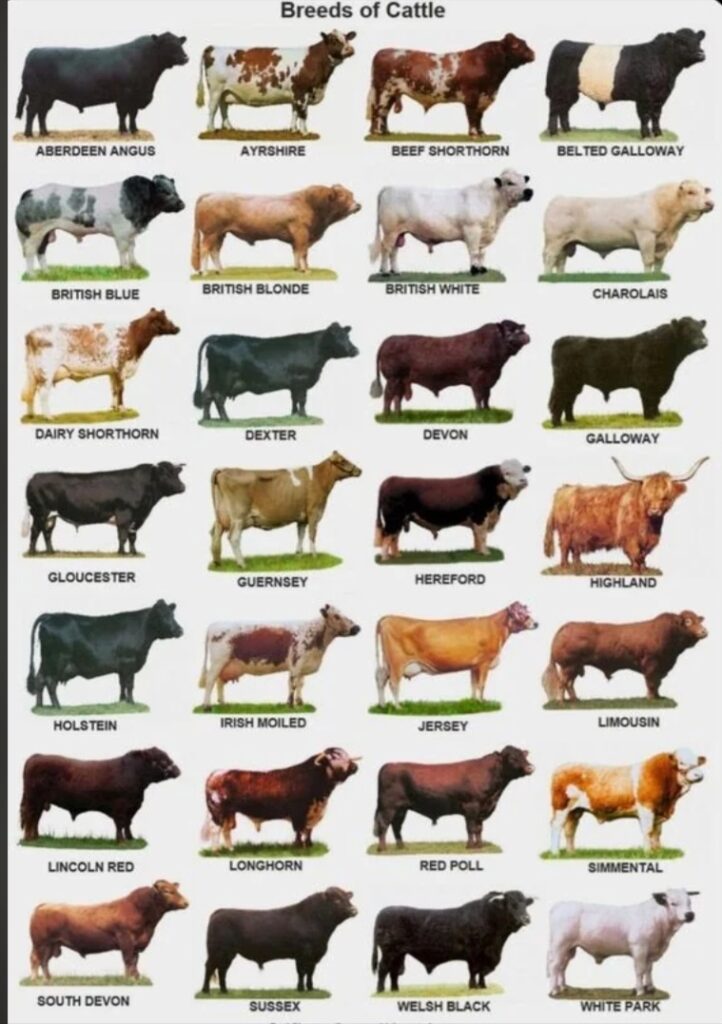
CATTLE BREEDS OF THE WORLD ACCORDING TO THEIR PURPOSE
1. DAIRY CATTLE BREEDS (MILK PRODUCTION)
These breeds are developed mainly for high milk yield and milk quality.
Holstein-Friesian – Netherlands/Germany
Jersey – Channel Islands (UK)
Guernsey – Channel Islands (UK)
Brown Swiss – Switzerland
Ayrshire – Scotland
Milking Shorthorn – United Kingdom
Red Dane – Denmark
Norwegian Red – Norway
Swedish Red – Sweden
Dutch Belted – Netherlands
Montbéliarde – France
Normande – France
Canadienne – Canada
Sahiwal – Pakistan/India
Red Sindhi – Pakistan
Gir – India
Rathi – India
Tharparkar – India/Pakistan
Kankrej – India
2. BEEF CATTLE BREEDS (MEAT PRODUCTION)
These breeds are raised mainly for high-quality beef and rapid weight gain.
Angus (Aberdeen Angus) – Scotland
Hereford – England
Charolais – France
Limousin – France
Simmental – Switzerland
Belgian Blue – Belgium
Shorthorn (Beef type) – England
Santa Gertrudis – USA
Brangus – USA
Brahman – India/USA
Beefmaster – USA
Chianina – Italy
Gelbvieh – Germany
Romagnola – Italy
Salers – France
Texas Longhorn – USA
Wagyu – Japan
Bonsmara – South Africa
Afrikaner – South Africa
Ankole-Watusi – East Africa
3. DUAL-PURPOSE CATTLE BREEDS (MILK AND MEAT)
These breeds are useful for both milk production and beef.
Simmental – Switzerland
Brown Swiss – Switzerland
Shorthorn – England
Devon – England
Red Poll – England
Normande – France
Montbéliarde – France
Pinzgauer – Austria
Tarentaise – France
Friesian – Netherlands
Fleckvieh – Germany/Austria
Marchigiana – Italy
Piedmontese – Italy
4. DRAUGHT CATTLE BREEDS (WORK AND FARM POWER)
These breeds are used mainly for ploughing, transportation, and farm labor.
Ongole – India
Hallikar – India
Kangayam – India
Khillari – India
Amrit Mahal – India
Nagori – India
Dangi – India
Bachaur – India
Bali Cattle – Indonesia
Madura Cattle – Indonesia
Siri Cattle – Bhutan/Nepal
5. TROPICAL ADAPTED CATTLE BREEDS
These breeds are heat tolerant and resistant to tropical diseases.
Brahman – India/USA
N’Dama – West Africa
Muturu – West Africa
White Fulani (Bunaji) – West Africa
Sokoto Gudali – Nigeria
Kuri – Lake Chad region
Borgou – Benin/Nigeria
Adamawa Gudali – Nigeria
Kenana – Sudan
Butana – Sudan