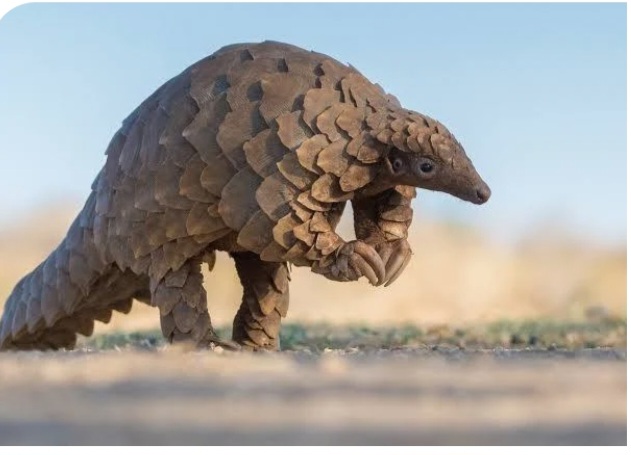
“Pangolin” also known as scaly anteaters, are mammals. The name comes from the Malay word pengguling meaning “one who rolls up” from guling or giling “to roll”; it was used for the Sunda pangolin (Manis javanica). However, the modern name is tenggiling. In Javanese, it is terenggiling, and in the Philippine languages, it is goling, tanggiling, or balintong (with the same meaning).
In ancient India, according to Aelian, it was known as the phattáges (φαττάγης).
Pangolins belong to the order Pholidota. This name of order Pholidota comes from an Ancient Greek word Φολιδωτός – “clad in scales” from φολίς pholís “scale”. The Family is Manidae and has three genera: Manis, Phataginus, and Smutsia.
The genus “Manis”- comprises four species found in Asia. Genus Phataginus and Smutsia include two species each. These two species are found in sub-Saharan Africa. Thus, numbering about eight species of these armoured placental mammals .They range in size from 30 to 100 cm (12 to 39 in or 1 to 3 feet) long exclusive of the tail and weigh 5 to 27 kg (10 to 60 pounds). Across all eight species, adult tail length ranges from about 26 to 70 cm (approximately 10 to 28 inches). The whole of their body is covered with scales except for the sides of the face and underside of the body .
When threatened, they either curl into a ball or use other protective methods to deterent the enemy.
They are nocturnal and have poor eyesight, they rely on hearing and sense of smell to locate their prey.
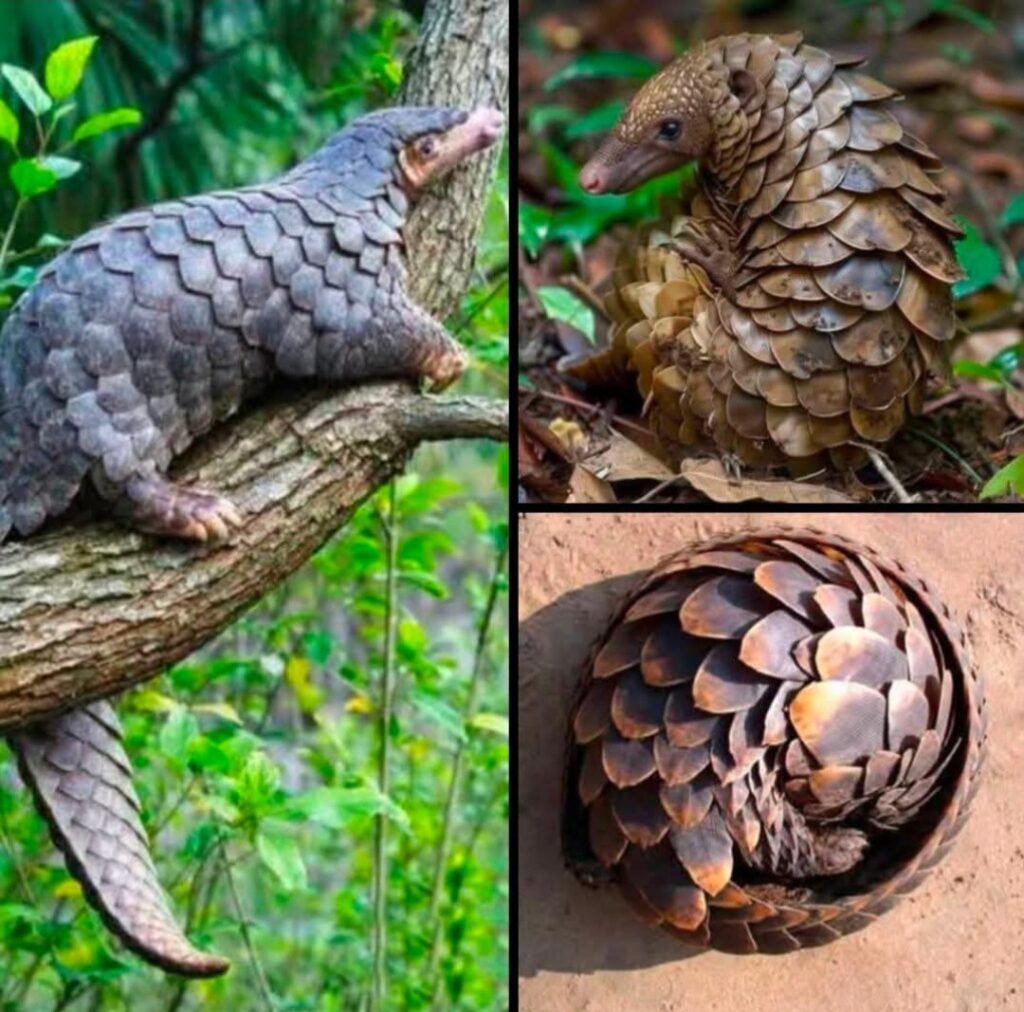
They are found in tropical Asia and Africa. Some like the African black-bellied pangolin (P. tetradactyla, also classified as M. longicaudata) and the Chinese pangolin (M. pentadactyla), are almost entirely arboreal; others, such as the giant ground pangolin (Smutsia gigantea, also classified as M. gigantea) of Africa, are terrestrial. All are nocturnal and able to swim a little. Terrestrial forms live in burrows. They feed mainly on termites but also eat ants and other insects. They locate prey by smell and use their forefeet to rip open nests.
SCIENTIFIC CLASSIFICATION
Kingdom: Animalia
Phylum: Chordata
Class: Mammalia
Mirorder: Ferae
Clade: Pholidotamorpha
Order: Pholidota
Genus: In the classification and phylogeny, there are three genus earlier mentioned: Manis, Phataginus, and Smutsia.
SPECIES OF PANGOLIN
Pangolins are most hunted by poachers especially for their meat and scale. Several species of this animal had gone extinct as at date. As of January 2020, there are eight species of pangolin whose conservation status is listed in the threatened tier. Four of the eight species are found in south Asia and four in Africa
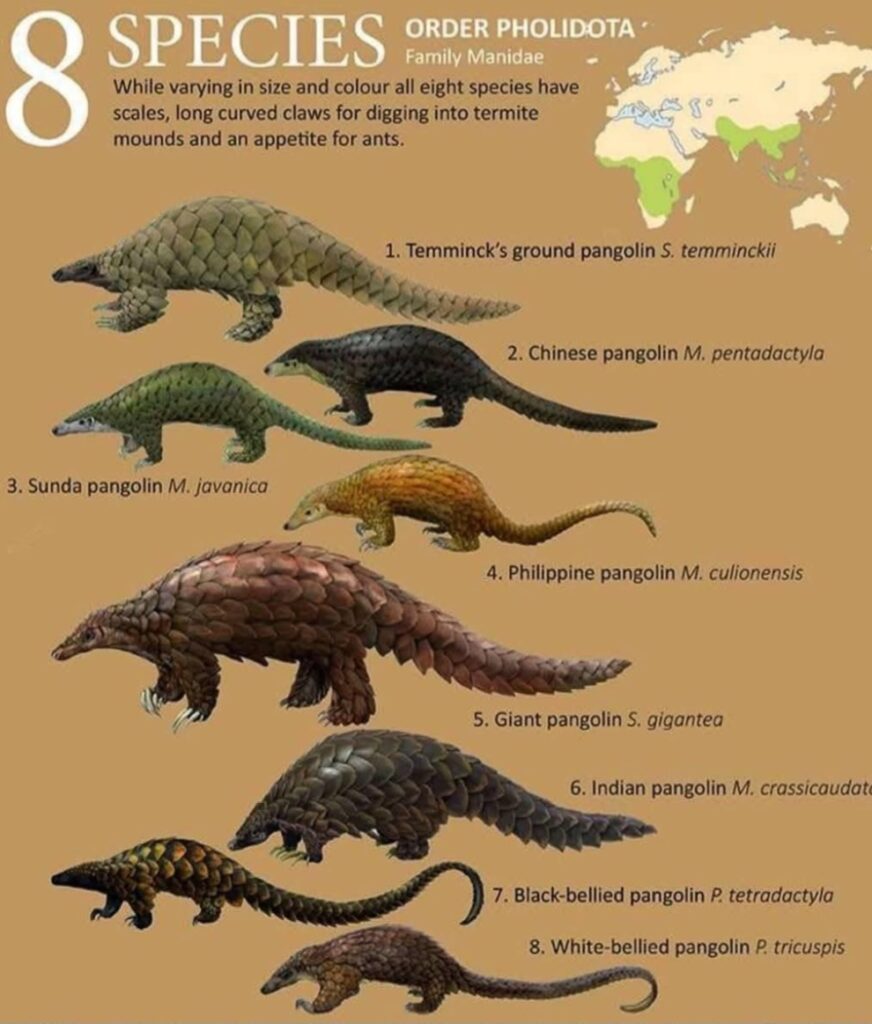
-Sunda pangolin (Manis javanica), -Temminck’s or ground pangolin (Smutsia temminckii),
-Philippine pangolin (Mania culionensis), giant ground pangolin (Smutsia gigantea),
-White-bellied or tree pangolin (Phataginus tricuspis), -African black-bellied or long-tailed pangolin (Phataginus tetradactyla),
-Indian pangolin (Manis crassicaudata),
-Chinese pangolin (Manis pentadactyla)
Chinese, Sunda and Philippine pangolins are Critically Endangered, giant ground, white-bellied and Indian pangolins are Endangered and Temminck’s, and black-bellied pangolins are Vulnerable ( Refer to fig 11 below)
ENDANGERED SPECIES
Out of the eight species of pangolin,
Three (Manis culionensis, M. pentadactyla and M. javanica) are critically endangered, three (Phataginus tricuspis, Manis crassicaudata and Smutsia gigantea) are endangered and two (Phataginus tetradactyla and Smutsia temminckii) are vulnerable on the Red list of Threatened Species of the International Union for Conservation of Nature.
In September 2023, nine species were reported to have not gone extinct.
Major reasons for their extinction include hunting and illegal wildlife, trade and habitat loss.
DIFFERENCE BETWEEN PANGOLIN AND OTHER SCALY MAMMALS
Pangolins were once grouped with the true anteaters (scaly anteater), sloths, and armadillos in the order Edentata, mainly because of superficial likenesses to South American anteaters. Pangolins differ from edentates, however, in many fundamental anatomic characteristics.
DESCRIPTION
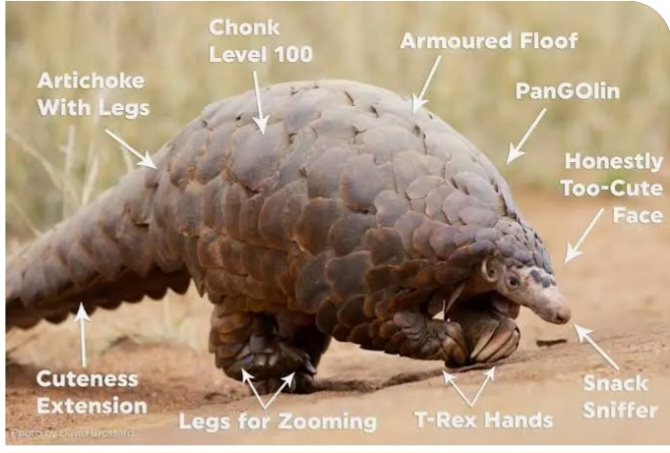
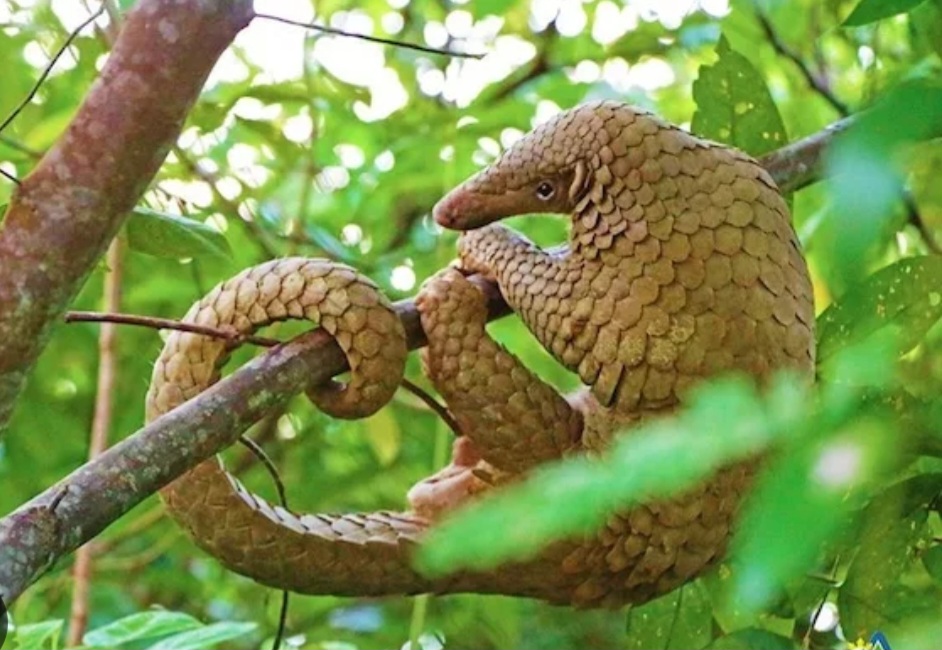
i. SCALE: Pangolins are mammals with large, protective keratin scales, similar in material to fingernails and toenails and are structurally and compositionally very different from the scales of reptiles. The plate-like scales are found all over their bodies, except their faces and underbelly. They overlap and are brownish in colour. Inbetween the scales are composed of cemented hairs. They are the only known mammals with this feature. The hardened, overlapping, plate-like scales are soft on newborn pangolins, but harden as the animal matures. The scaled body is comparable in appearance to a pine cone.
HEAD: The head is short and conical, with small thickly lidded eyes and a long toothless muzzle; the tongue is wormlike and can extend up to 25 cm (10 inches) in length. They have very poor vision and also lack teeth. They rely heavily on smell and hearing, and they have other physical characteristics to help them eat ants and termites.
THE LEG: Their skeletal structure is sturdy and they have strong front legs used for tearing into termite mounds. These legs are short, and with five-toes. Each has sharp claw.
They use their powerful front claws to dig into trees, soil, and vegetation to find prey, then proceed to use their long tongues to probe inside the insect tunnels and to retrieve their prey.
They also possess a prehensile tail, and, with the hind legs, it forms a tripod for support.
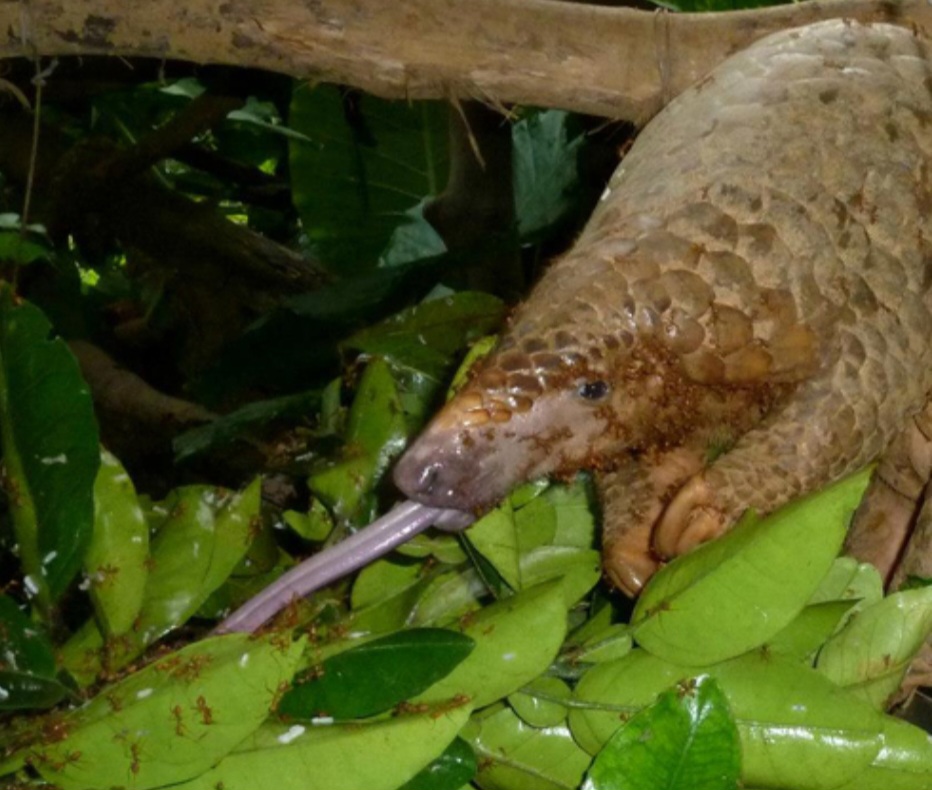
The structure of their tongue and stomach is key to aiding pangolins in obtaining and digesting insects. The tongues are extremely long, and like those of the giant anteater and the tube-lipped nectar bat, the root of the tongue is not attached to the hyoid bone but is in the thorax between the sternum and the trachea. Large pangolins can extend their tongues as much as 40 cm (16 in), with a diameter of only about 0.5 cm (1⁄5 in).
Their saliva is sticky, causing ants and termites to stick to their long tongues when they are hunting through insect tunnels. Without teeth, pangolins also cannot chew; but while foraging, they ingest small stones (gastroliths), which accumulate in their stomachs to help to grind up ants. This part of their stomach is called the gizzard, and it is also covered in keratinous spines. These spines further aid in the grinding up and digestion of the pangolin’s prey.
TAIL: Some species, such as the tree pangolin, use their strong, prehensile tails to hang from tree branches and strip away bark from the trunk, exposing insect nests inside.
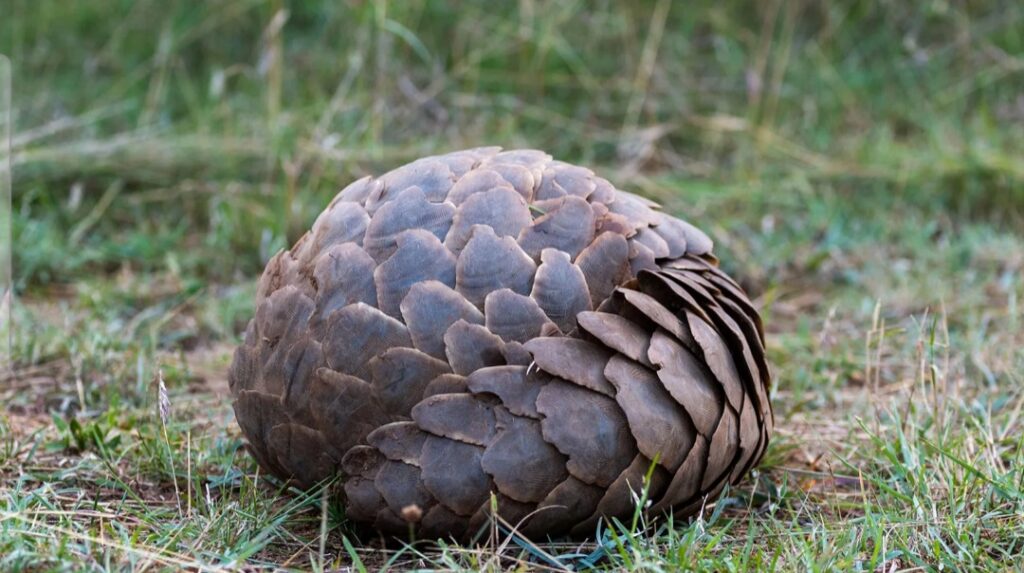
When pangolins are threatened, they curl up into a ball, with their overlapping scales acting as armor, while it protects its face by tucking it under its tail. The scales are sharp, providing extra defense from predators. They can also emit a noxious-smelling chemical from glands near the anus, similar to the spray of a skunk to protect themselves from enemy. The secreted foul-smelling odour is released to mark their territory as a deterrent.
Among all the 8 species, the giant ground pangolin is the largest and heaviest of the eight species, and the Indian pangolin is the smallest and lightest. Males are generally larger and heavier than females.
BEHAVIOUR
Most pangolins are nocturnal animals which use their well-developed sense of smell to find insects. The long-tailed pangolin is also active by day, while other species of pangolins spend most of the daytime sleeping, curled up into a ball (“volvation”).
Arboreal pangolins live in hollow trees, whereas the ground-dwelling species dig tunnels to a depth of 3.5 m (11 ft).
Some pangolins walk with their front claws bent under the foot pad, although they use the entire foot pad on their rear limbs. Furthermore, some exhibit a bipedal stance for some behavior, and may walk a few steps bipedally. Pangolins are also good swimmers.
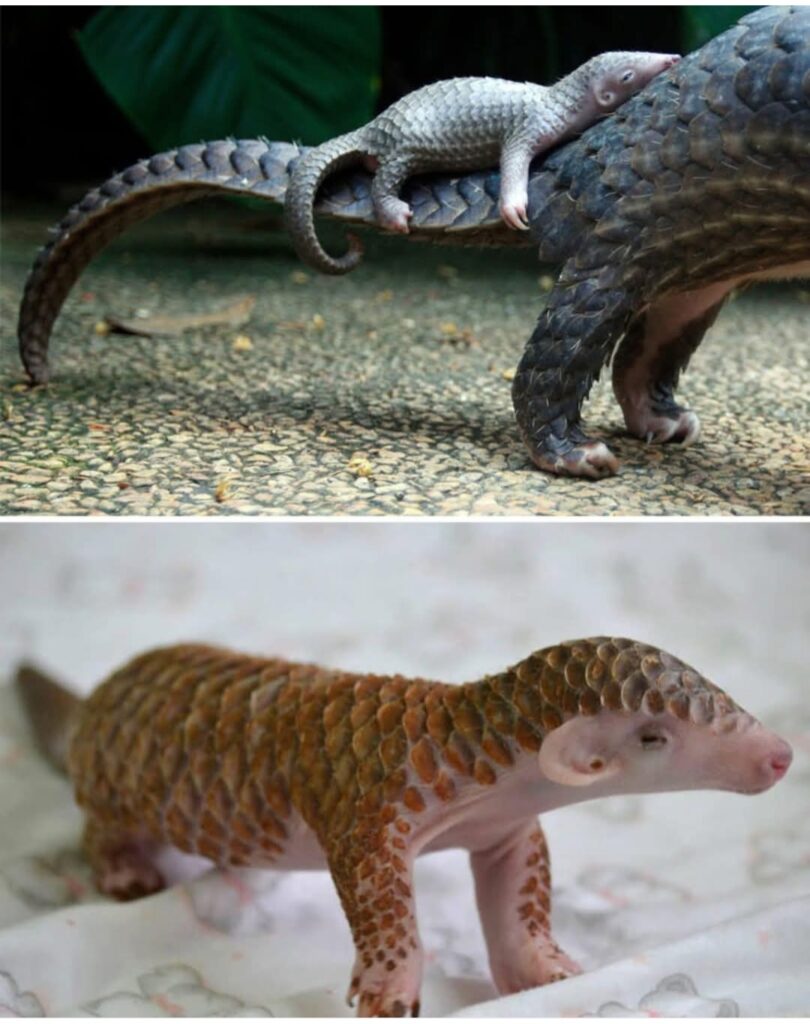
As solitary animals, they meet only to mate. The gestation period depends on the species, but all give birth to a single offspring. A young pangolin stays with its mother for around three to four months and grips onto her tail while foraging for insects.
Pangolins live and give birth in hollow trees, the spaces between large rocks, or in underground burrows, depending on the species.
HABITAT
Pangolins can be found in tropical and sub-tropical forests, thick bush, grasslands and open savannah, semi-arboreal. Some species of pangolin live in hollow trees, while some in burrows. They are nocturnal, and their diet consists of mainly ants and termites, which they capture using their long tongues. They tend to be solitary animals, meeting only to mate and produce a litter of one to three offspring, which they raise for about two years. Pangolins superficially resemble armadillos, though the two are not closely related; they have undergone convergent evolution.
DIET
Pangolins are carnivorous/insectivorous mammal with very poor vision. Most of their diet consists of various species of ants and termites and may be supplemented by other insects, especially larvae. They lack teeth. They are somewhat particular and tend to consume only one or two species of insects, even when many species are available. A pangolin can consume 140–200 g (5–7 oz) of insects per day. They use their sense of smell and hearing, and they have other physical characteristics to help them search and eat ants and termites. Their strong front legs is used for tearing into termite mounds. They also use their powerful front claws to dig into trees, soil, and vegetation to find prey, then proceed to use their long tongues to probe inside the insect tunnels and retrieve the prey.
Pangolins are an important regulator of termite populations in their natural habitats.
FOOD DIGESTION BY PANGOLIN
The structure of their tongue and stomach is key to aiding pangolins in obtaining and digesting insects preys. They possess a sticky saliva and used when feeding. Ants and termites get sticked to their long tongues using the saliva. They penetrate the insect tunnels using their long tongue to hunt insects.
They use both teeth and small stones in their guts to break down insects in their mouth and stomach respectively. They use the teeth in their mouth to chew the insects. While foraging, they ingest small stones (gastroliths), which accumulate in their stomachs. These stones are further used to help grind up ants as it gets digested in the stomach. This takes place in part of their stomach called the gizzard. The gizzard is also covered in keratinous spines. These spines further aid in the grinding up and digestion of the pangolin’s prey.
Apart from the tongue used for feeding in insect tunnels, some species, such as the tree pangolin, use their strong, prehensile tails to hang from tree branches and strip away bark from the trunk, exposing insect nests inside the tree, then uses their tongue to feed on their preys.
DEFENCE MECHANISM
Their means of defense are the emission of an odorous secretion from large anal glands and the ploy of rolling up, presenting erected scales to the enemy. Still, larger predators such as leopards, lions, tigers, and hyenas are sometimes strong enough to penetrate the pangolin’s armour. Pangolins are timid and live alone or in pairs. In most species, only one young is born at a time, though broods of two or three offspring have been observed in some Asian species. Young pangolins are soft-scaled at birth and are carried on the female’s back for some time. Life span in the wild is unknown; however, some captive animals have lived as long as 20 years.
FACTORS BEHIND PANGOLIN FARMING AND TRADE ( BENEFITS)
The factors behind pangolin farming are the benefits it offers making farmers to have interest in its production:
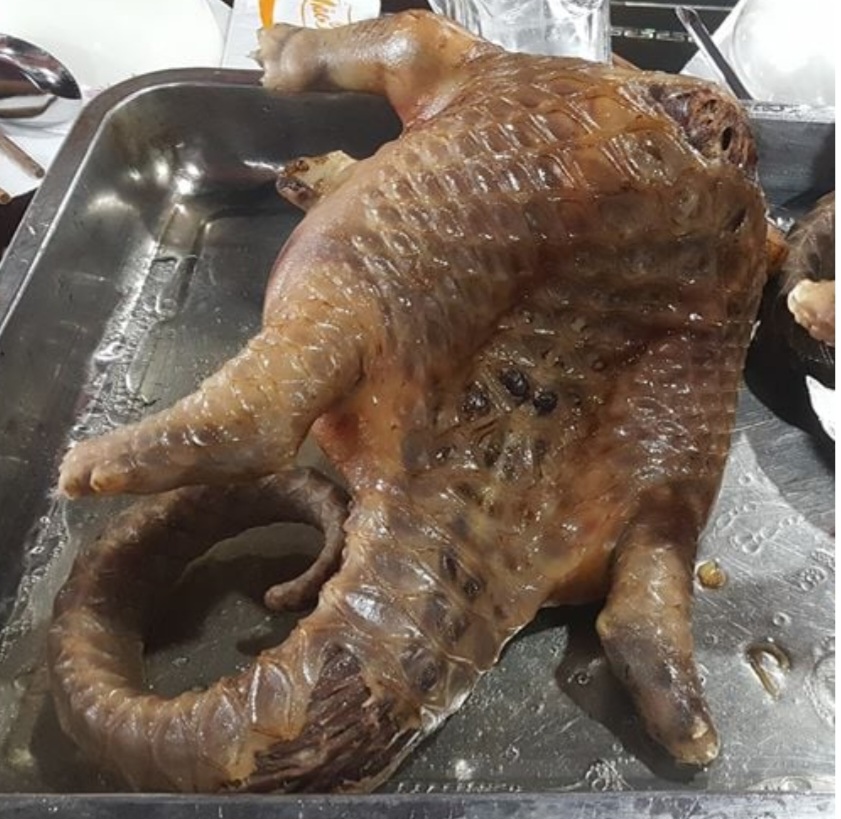
i. DEMAND FOR MEAT: Pangolins are hunted for their meat, which is consumed in some communities.
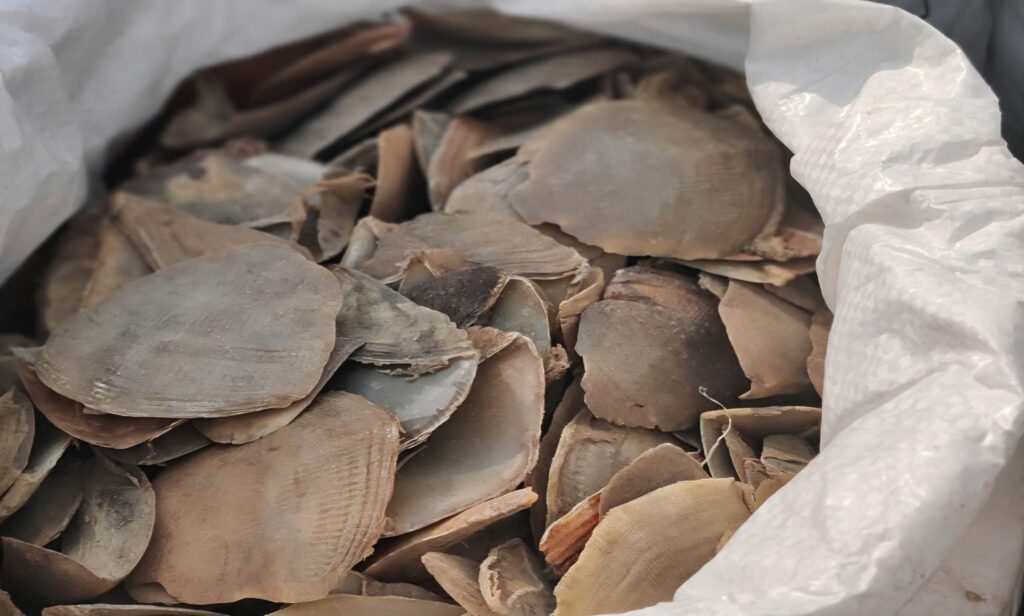
ii. DEMAND FOR MEDICINAL USE: Scales are highly sought after in traditional medicine, particularly in Asia, for their perceived medicinal properties. The local healers use them as a source of traditional medicine. Scientific evidence shows the scales are made of keratin, the same substance as human fingernails and hair.
For example, Pangolins are in high demand in southern China and Vietnam because their scales are believed to have medicinal properties in traditional Chinese and Vietnamese medicine.
iii. CONSERVATION CHALLENGES: The combination of high demand, the pangolin’s natural defense of curling into a ball, and habitat loss has made them the most trafficked mammal in the world.
iv. A Philippine pangolin pup and its mother, a critically endangered species endemic to the Palawan island group. It is threatened by illegal poaching for the pangolin trade to China and Vietnam, where it is regarded as a luxury medicinal delicacy.
v. Pangolins are also hunted and eaten in Ghana and are one of the more popular types of bushmeat, .
vi. A 2025 study in Nature Ecology and Evolution found that opportunistic hunting for meat, rather than hunting for scales used in traditional medicine, is the primary driver of pangolin population declines in countries like Nigeria.
vii. Though pangolins are protected by an international ban on their trade, populations have suffered from illegal trafficking due to beliefs in East Asia that their ground-up scales can stimulate lactation or cure cancer or asthma.
viii. In November 2010, pangolins were added to the Zoological Society of London’s list of evolutionarily distinct and endangered mammals. All eight species of pangolin are assessed as threatened by the IUCN, while three are classified as critically endangered. Thus, they are now protected and their population now increasing due to people farming them.
ix. It serves as a clothing material. For example, in 1875–1876, a coat of armour made of gilded pangolin scales from India, was presented to the then Prince of Wales, the later Edward VII.
x. Pangolins have significantly decreased immune responses due to a genetic dysfunction, making them extremely fragile.

xi. Used in movies like that in 2017, where Jackie Chan made a public service announcement called WildAid: Jackie Chan and Pangolins (Kung Fu Pangolin).
xii. In December 2020, a study found that it is “not too late” to establish conservation efforts for Philippine pangolins (Manis culionensis), a species that is only found on the island province of Palawan.
benefits
xiii. Pangolin scales and flesh are used as ingredients for various traditional Chinese medicine preparations
While no scientific evidence exists for the efficacy of those practices, and they have no logical mechanism of action, their popularity still drives the black market for animal body parts, despite concerns about toxicity, transmission of diseases from animals to humans, and species extermination. The ongoing demand for parts as ingredients continues to fuel pangolin poaching, hunting and trading.
xiv. The first record of pangolin scales occurs in Ben Cao Jinji Zhu (“Variorum of Shennong’s Classic of Materia Medica”, 500 CE), which recommends pangolin scales for protection against ant bites
xv. The scales can be burnt and used as a cure for people crying hysterically during the night.
xvi. During the Tang dynasty, a recipe for expelling evil spirits with a formulation of scales, herbs, and minerals appeared in 682, and in 752.
Pangolin scales where used.
xvii. In Asia, pangolin scales where used to stimulate milk secretion in lactating women, one of the main uses today, was recommended in the Wai Tai Mi Yao (“Arcane Essentials from the Imperial Library”).
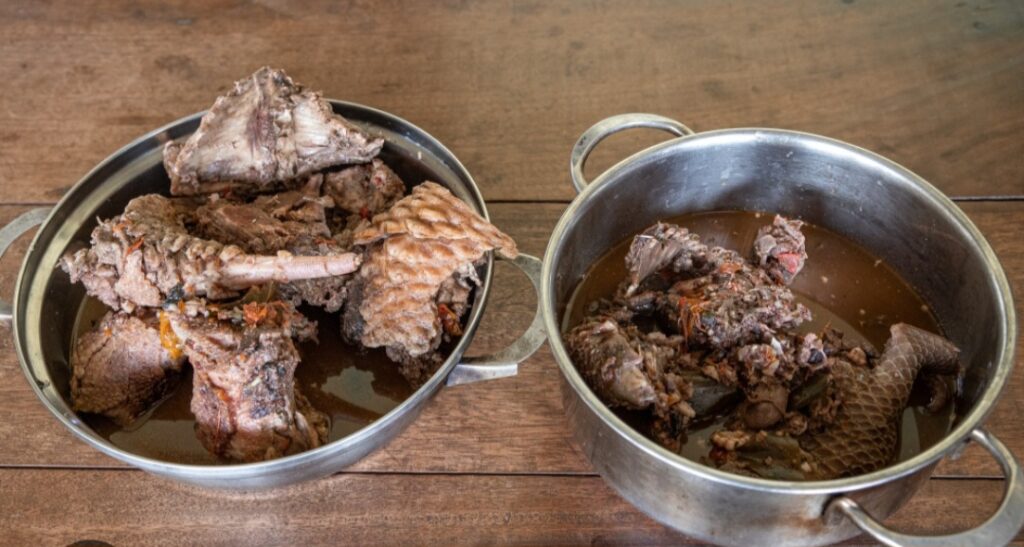
xviii. In the Song dynasty, the notion of penetrating and clearing blockages was emphasized in the Taiping sheng hui fan (“Formulas from Benevolent Sages Compiled During the Era of Peace and Tranquility”), compiled by Wang Huaiyin in 1992. This was achieved using pangolins.
xix. In the 21st century, the main uses of pangolin scales are quackery practices based on unproven claims the scales dissolve blood clots, promote blood circulation, or help lactating women secrete milk.
xx. The supposed health effects of pangolin meat and scales claimed by folk medicine practitioners are based on their consumption of ants, long tongues, and protective scales.
xxi. The Pharmacopoeia of the People’s Republic of China included Chinese pangolin scales as an ingredient in traditional Chinese medicine formulations. Pangolins were removed from the Pharmacopoeia starting from the first half of 2020. Although pangolin scales have been removed from the list of raw ingredients, the scales are still listed as a key ingredient in various medicines.
xxii. Pangolin parts are also used for medicinal purposes in other Asian countries such as India, Nepal and Pakistan. In some parts of India and Nepal, locals believe that wearing the scales of a pangolin can help prevent pneumonia. Pangolin scales have also been used for medicinal purposes in Malaysia, Indonesia and northern Myanmar. Indigenous people in southern Palawan, Philippines, have held the belief that elders could avoid prostate illnesses by wearing belts made with the scales.
xxiii. BIOLOGICAL PEST CONTROL AGENTS: Pangolins eat termites and ants so they contribute to the regulation of insect populations which if not kept in check can cause damage to vegetation and crops.
xxiv. IMPROVE SOIL FERTILITY: Because they spend so much time digging – either for food or to excavate underground burrows to sleep and give birth in – they play an important role in mixing and moving soil around, which releases nutrients and helps maintain the fertility of the soil.
CONCERNS ABOUT PANGOLIN FARMING
Pangolin farming is controversial and likely counterproductive to conservation due to concerns about illegal laundering, its inability to meet demand, and potential negative impacts on wild populations. The practice is seen by some as a way to profit from the illegal trade, but experts warn it could incentivize poaching, fail to reduce pressure on wild populations due to low survival rates, and introduce diseases. The high demand for pangolin parts for traditional medicine, even though their scales are just keratin, drives this illegal trade and is a major reason for the species’ critically endangered status.
1. A COVER FOR ILLEGAL TRADE: Farming operations can be used to launder wild-sourced scales, making them appear to be legally farmed and fueling further poaching and trafficking.
2. INCENTIVIZES POACHING: The high value of pangolin parts incentivizes both wild harvesting and the capture of animals to start captive breeding programs, adding pressure on wild populations.
3. LOW SURVIVAL RATES: Pangolins have a low survival rate in captivity, which means that farming operations would need to continuously source animals from the wild to maintain their stock.
4. DISEASE RISK: High-density breeding of pangolins could increase the risk of spreading and mutating diseases, including coronaviruses, to both other pangolins and humans.
5. INTERNATIONAL TRADE BANS: Commercial trade is already banned under international law, making any large-scale farming for export illegal and impractical.
REPRODUCTION
Pangolins are solitary and meet only to reproduce. Their mating typically taking place at night after the male and female pangolin meet near a watering hole. Males are larger than females, weighing up to 40% more. While the mating season is not defined, they typically mate once each year, usually during the summer or autumn. Rather than the males seeking out the females, males mark their location with urine or feces and the females find them. If competition over a female occurs, the males use their tails as clubs to fight for the opportunity to mate with her.
GESTATION PERIODS: This differ by species, ranging from roughly 70 to 140 days.
African pangolin females usually give birth to a single offspring at a time, but the Asiatic species may give birth to from one to three.
BIRTH OF THE BABY PROGOLIN
WEIGHT AT BIRTH: The baby at birth do weigh about 80 to 450 g (2+3⁄4 to 15+3⁄4 oz), and the average length is 150 mm (6 in).
At the time of birth, the scales are soft and white. After several days, they harden and darken to resemble those of an adult pangolin. During the vulnerable stage, the mother stays with her offspring in the burrow, nursing it, and wraps her body around it if she senses danger. The young cling to the mother’s tail as she moves about, although, in burrowing species, they remain in the burrow for the first two to four weeks of life. At one month, they first leave the burrow riding on the mother’s back. Weaning takes place around three months of age, when the young begin to eat insects in addition to nursing. At two years of age, the offspring are sexually mature and are abandoned by the mother.
CHALLENGES DURING FARMING AND IN THE WILD
i. The overexploitation of pangolins come from hunting pangolins for game meat and the reduction of their forest habitats due to deforestation caused by timber harvesting.
ii. They are susceptible to diseases such as pneumonia and the development of ulcers in captivity, complications that can lead to an early death.
iii. Pangolins rescued from illegal trade often have a higher chance of being infected with parasites such as intestinal worms, further lessening their chance for rehabilitation and reintroduction to the wild.
iv . 100,000 are estimated to be trafficked a year to China and Vietnam, amounting to over one million over the past decade. This makes them the most trafficked animal in the world.
v. The trafficking coupled with deforestation, has led to a large decrease in the numbers of pangolins. Some species, such as Manis pentadactyla have become commercially extinct in certain ranges as a result of overhunting.
vi. China had been the main destination country for pangolins until 2018, where it was surpassed by Vietnam. In 2019, Vietnam was reported to have seized the largest volumes of pangolin scales, surpassing Nigeria that year.
vii. In the past decade, numerous seizures of illegally trafficked pangolin and pangolin meat have taken place in Asia.
In one such incident in April 2013, 10,000 kg (22,000 pounds) of pangolin meat were seized from a Chinese vessel that ran aground in the Philippines.
viii. In another case in August 2016, an Indonesian man was arrested after police raided his home and found over 650 pangolins in freezers on his property. The same threat is reported in Nigeria, where the animal is on the verge of extinction due to overexploitation.
ix. The nucleic acid sequence of a specific receptor-binding domain of the spike protein belonging to coronaviruses taken from pangolins was found to be a 99% match with SARS coronavirus 2 (SARS-CoV-2), the virus which causes COVID-19 and is responsible for the COVID-19 pandemic.
Researchers in Guangzhou, China, hypothesized that SARS-CoV-2 had originated in bats, and prior to infecting humans, was circulating among pangolins. The illicit Chinese trade of pangolins for use in traditional Chinese medicine was suggested as a vector for human transmission. However, whole-genome comparison found that the pangolin and human coronaviruses share only up to 92% of their RNA. Ecologists worried that the early speculation about pangolins being the source may have led to mass slaughters, endangering them further, which was similar to what happened to Asian palm civets during the SARS outbreak. It was later proved that the testing which suggested that pangolins were a potential host for the virus was flawed, when genetic analysis showed that the spike protein and its binding to receptors in pangolins had minimal effect from the virus, and therefore were not likely mechanisms for COVID-19 infections in humans.
x. In 2020, two novel RNA viruses distantly related to pestiviruses and coltiviruses have been detected in the genomes of dead Manis javanica and Manis pentadactyla. To refer to both sampling site and hosts, they were named Dongyang pangolin virus (DYPV) and Lishui pangolin virus (LSPV). The DYPV pestivirus was also identified in Amblyomma javanense nymph ticks from a diseased pangolin.
xi. In addition to pestiviruses and coltiviruses, genomic surveys of healthy pangolins have revealed the presence of multiple potentially zoonotic viruses, including coronaviruses, flaviviruses, and circoviruses, indicating that pangolins naturally harbor diverse viral communities without showing disease symptoms.
SOLUTIONS TO THE CHALLENGES
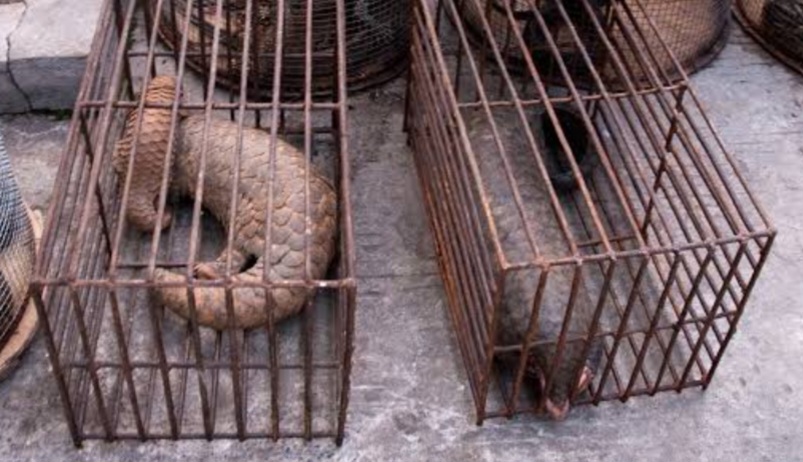
1. As a result of increasing threats to pangolins, mainly in the form of illegal, international trade in pangolin skin, scales, and meat, these species have received increasing conservation attention in recent years. As of January 2020, the IUCN considered all eight species of pangolin on its Red List of Threatened Species as threatened. The IUCN SSC Pangolin Specialist Group launched a global action plan to conserve pangolins, dubbed “Scaling up Pangolin Conservation”, in July 2014. This action plan aims to improve all aspects of pangolin conservation with an added emphasis on combating poaching and trafficking of the animal while educating communities on its importance.
2. Another suggested approach to fighting pangolin (and general wildlife) trafficking consists in “following the money” rather than “the animal”, which aims to disrupt smugglers’ profits by interrupting money flows. Financial intelligence gathering could thus become a key tool in protecting these animals, although this opportunity is often overlooked.
3. In 2018, a Chinese NGO launched the Counting Pangolins movement, calling for joint efforts to save the mammals from trafficking. Wildlife conservation group TRAFFIC has identified 159 smuggling routes used by pangolin traffickers and aims to shut these down.
3. Many attempts have been made to breed pangolins in captivity, but due to their reliance on wide-ranging habitats and very particular diets, these attempts are often unsuccessful.
4. STEPS TAKEN IN TAIWAN
Taiwan is one of the few conservation grounds for pangolins in the world after the country enacted the 1989 Wildlife Conservation Act. The introduction of Wildlife Rehabilitation Centers in places like Luanshan (Yanping Township) in Taitung and Xiulin townships in Hualien became important communities for protecting pangolins and their habitats and has greatly improved the survival of pangolins. These centers work with local aboriginal tribes and forest police in the National Police Agency to prevent poaching, trafficking, and smuggling of pangolins, especially to black markets in China. These centers have also helped to reveal the causes of death and injury among Taiwan’s pangolin population. Today, Taiwan has the highest population density of pangolins in the world.
5. In 2016, a treaty of over 180 governments announced an agreement that would end all legal trade of pangolins and further protect the species from extinction. However, illegal trade of the species continues. WWF works to protect species from wildlife crime. In Asia, work were on going to reduce consumer demand for illegal wildlife products with campaigns and partnerships with governments and businesses.
6. In June 2020, China increased protection for the native Chinese Pangolin (Manis pentadactyla) to the highest level, which closed an important loophole for consumption of the species in-country. Additionally, the government would no longer allow the use of pangolin scales in traditional medicine, a big win given that an estimated 195,000 pangolins were trafficked in 2019 for their scales alone (Challender, et. al, 2020).
7. You can help report pangolin products for sale online through the Coalition to End Wildlife Trafficking Online’s reporting form or Coalition member companies’ reporting links.
8. In a conference held in 2016 in Johannesburg, South Africa, Dire was a persecutor of the 8 group of animals that delegates at the 17th meeting of the Conference where Parties to the Convention on International Trade in Endangered Species (CITES) of Wild Fauna and Flora , all parties at the conference voted to impose a ban on the international trade of all pangolins and their parts in that year.
In conclusion, the idea of farming pangolins to reduce the number being illegally trafficked is being explored with little success. The third Saturday in February is promoted as World Pangolin Day by the conservation NPO Annamiticus. World Pangolin Day has been noted for its effectiveness in generating awareness about pangolins.