As technology continues to advance, different smart devices continue to flood the market for better processing of data. As Internet of Things (IoT) continues to grow too, satellite connected devices have also continue to penetrate every aspect of plant, livestock and human lives, from health and fitness, livestock and crop management, smart farming equipments, home automation, automotive, and logistics, to smart cities and industrial IoT.
Technology of today has made most electronic objects such as phones, TVs, laptops, computers, refrigerators, etc to be connected to the Internet.
IoT refers to the collection of all these devices that connects to the Internet, collect and share data.
Or, IoT is the collection of all those devices that has the ability to connect to the Internet and collect and share data. Hence, the name Internet of things (IoT).
These devices uses sensors and actuators, and send these collected data to the Internet where the processing of the data takes place.
With IoT, farmers can make smarter, data driven decisions and move beyond guess work and usual inspection. For example, sensors installed in the soil monitor moisture, temperature, and nutrient levels in the soil. The farmer receives information instantly on their phones or computers, knowing exactly when and where to irrigate plant, apply nutrients or even harvest the crops.
In the case of machinery, they are equipped with smart sensors that track performance, fuel consumption and even detect mechanical issues before they become costly breakdown.
Drones and remote sensors scan the fields, creating precise maps, identify pests, detecting problem areas and optimizing the use of fertilizers, pesticides and water.
With these, IoT has brought a lot of transformation to the global world.
CLASSES OF DEVICES THAT FORMS IoT
Laptops, phones, watches, DVS, refrigerators, washing machines, cars, cities and even houses etc.
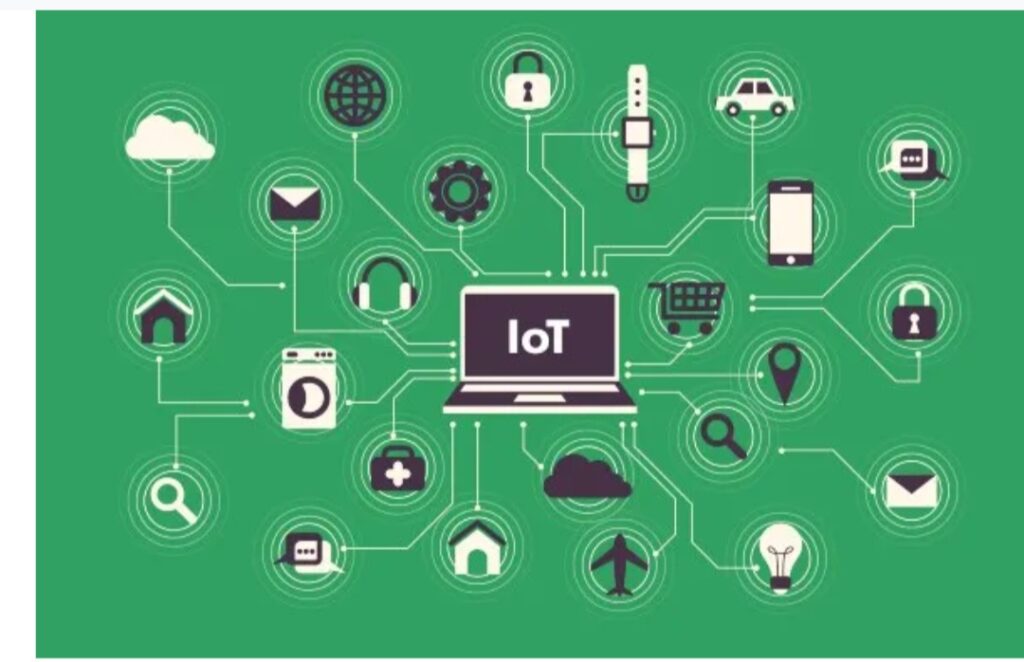
Most IoT devices have the word “SMART” at the start of their names. For example, smart phones, smart cars, smart refrigerators, smart DVS, smart houses, smart TVs and smart city etc. This word smart indicate that these devices are IoT devices.
REASONS WHY PEOPLE NEED IoT
1. IoT makes people’s life easier and more comfortable. For example,
a. Smart phones have several use cases than ordinary hand phone. It can be used to download and watch movies, make calls, send messages, connect to internet for browsing, download apps etc.
b. Smart houses have many different features to make it comfortable. It can have automatic lights that detect people when they are in a room in the building. The light switch on automatically when people are inside and switch off as they leave. The light can be programmed to switch on only when the owner is inside the house or he/she gives a sign like tap the fingers. It can also have a voice activated sensors. It can have next generation security to keep the house safe, It can allow only authorized people to enter the house and lock up everything when the owner leaves or when unauthorized people enter the building. Such house can have entertainment management devices, fair using Google home, echo to keep track of our daily chores, to watch movies or play songs etc.
2. It can keep track of temperature management. That is, it can keep the house temperature in an hospitable climate especially during unfriendly weather conditions.
3. IoT brings luxury to our lives and makes it comfortable to live in.
4. In industries and institutions, such has healthcare, it can be used for remote doctor to patient interraction. For example, in a case of a deadly disease outbreak like EBOLA or COVID-19, where doctors must not come in contact with the patients, IoT devices is employed to interract between both parties without infection.
5. It is also used in fast decision making. For example, Doctors make amazing decisions based on the time and the data collected from patients. Computers can help make such better decisions.
6. In farming, IoT helps improve on traditional farming methods and shift into modern farming to provide food for the countries growing population.
7. IoT create a sustainable and profitable farming practices.
8. IoT helps increase the productivity through new devices like smart tractors and analysis devices for soil and plant analysis, blood test analysis etc.
9. In the manufacturing industry, IoT has provided automation to replace many mental jobs.
10. It has increased interactivity and boost efficiency, as well as production.
11. In educational sector, IoT has helped implement better teaching methods through computers, use of projectors, augmented realities, smart phones etc.
HOW IoT WORKS
IoT has four architectural layers or aspect that brings about the full workability potential of IoT.
1. The sensing or device layer
2. Connecting layer
3. Data processing layer
4. User interface or application layer
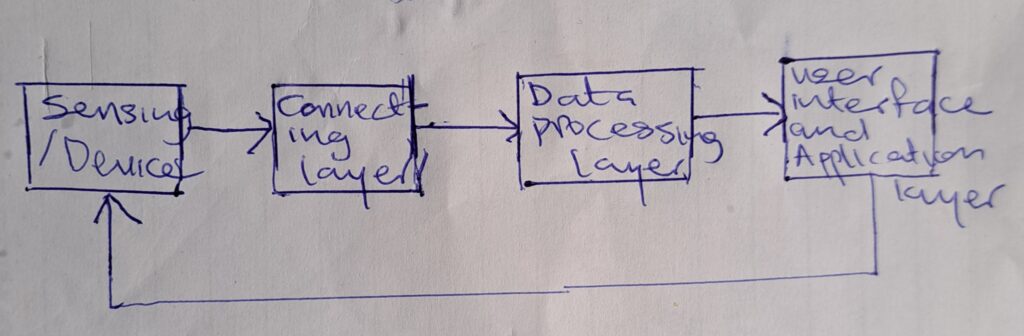
1. SENSING/DEVICE: This are the things that collect the data. They have sensors and can store data. For example, smart phones, smart houses etc.
2. CONNECTING LAYER: This layer collects the data from the device and send it to the cloud or internet. Examples include: Wifi, Bluetooth, cellular, NFC etc.
3. DATA PROCESSING LAYER: After the data had being sent to the cloud or internet or satellite, the data are subjected to real interpretation of the process. Different types of algorithms are used up to interprete the data. The algorithm used are based on the data collected to get meaningful insight.
4. INTERPRETATION INTERFACE OR APPLICATION LAYER: This is the layer people see. It is used to interact with the IoT devices on the screen. For example, a smart freezer that receives information from satellite that the freezer should operate at 35°C due to the fruits stored in it not to become frozen.
IoT in AGRICULTURE
IoT in agriculture is also known as precision farming or smart agriculture. It leverage the Internet of Things (IoT) to enhance various farming practices. This involves using sensors, software, and connectivity to collect and analyze real-time data about soil conditions, weather, and crop health, enabling farmers to optimize resource use, increase yields, and improve overall efficiency.
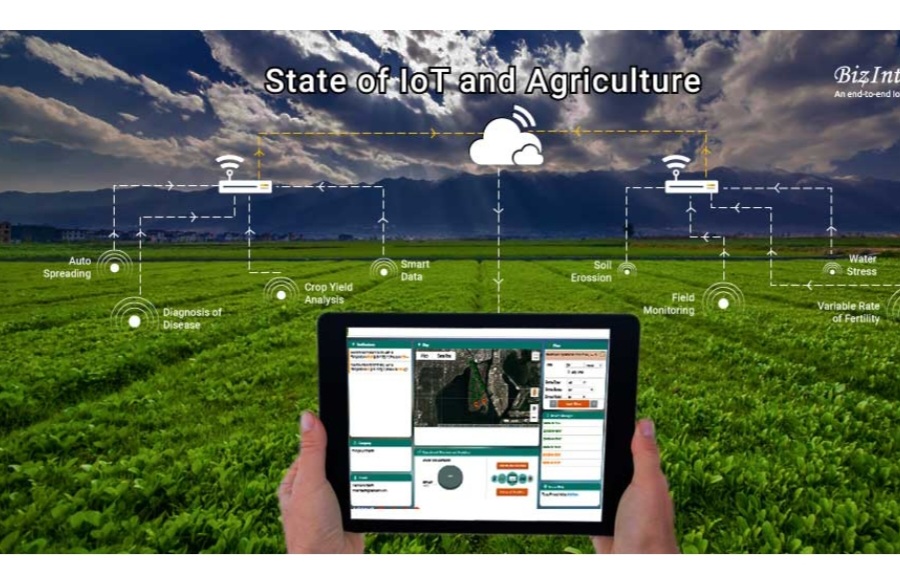
IoT enables farmers to monitor and manage crops with greater accuracy. It involves the use of sensors to track soil moisture, temperature, nutrient levels, optimize irrigation, fertilization, and pesticide application based on real-time data collected by various kinds of devices.
Today, for example, weather condition on farms can easily be accessed and prediction made through weather station app inputed on smart phones or tablets etc.
IoT sensors can also be used to track the location, health, and behaviour of livestock on the field. This allows early detection of illness or distress, improved feeding strategies, locate missing animals, and optimized grazing patterns.
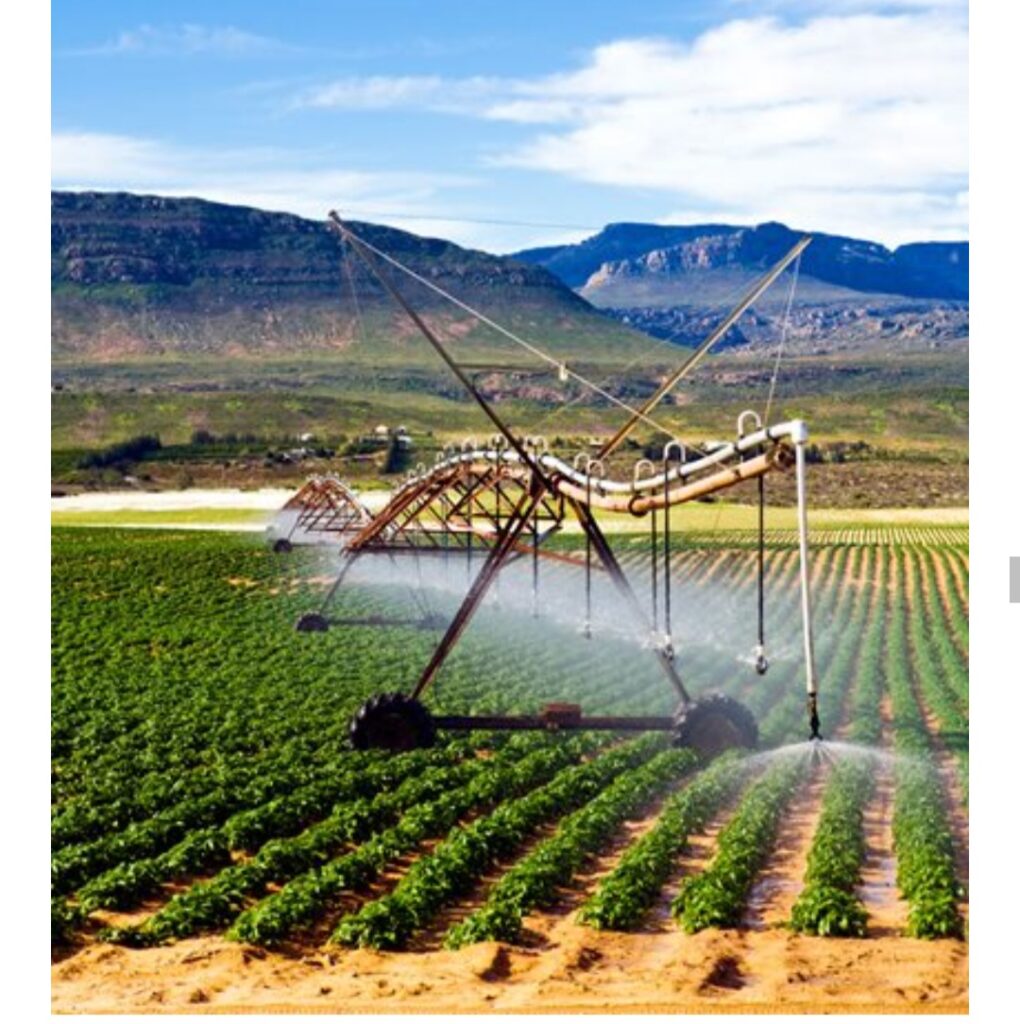
Automate irrigation are now being installed on farms based on weather conditions, soil moisture levels, and plant water needs, reducing water wastage and optimizing crop growth through enablement of IoT. Apart from these, greenhouses are now being automated through the use of IoT sensors and actuators to control the environment in the greenhouses. Farmers can now make decisions on the health of their soils using IoT sensors to provide real-time data on soil health. This enables decision making about fertilization and soil management.
BENEFITS OF IoT IN AGRICULTURAL PRODUCTION
Farmers are often faced with various challenges ranging from climate change to resource scarcity etc. And as the global population continues to grow, more is expected from the agricultural sector to feed these population.
IoT in agriculture as emerged as a powerful solution to these challenges. It has improved agricultural productivity, sustainability, and profitability.
Other benefits of IoT include:
1. PEST AND DISEASE MANAGEMENT : IoT can help monitor pest and disease outbreaks. This will allow for timely and targeted interventions and control of the pests and diseases. Also, application of pesticides and treatment of diseases can be achieved through IoT like drones, smart spraying machines etc.
2. CLIMATE MONITORING:
IoT weather stations can provide real-time data on temperature, rainfall, wind speed, and other climate factors. This will help farmers access informations about weather pattern and make decisions about planting, harvesting, rearing of livestock and carry out other farming activities.
3. FARM EQUIPMENT MANAGEMENT:
IoT sensors installed or inbuilt in farm equipments can track the location, performance, and maintenance needs of farm equipment, optimizing its utilization and reducing downtime. It also help in minimizing the effect of pollution that comes from these equipments.
3. BETTER DECISION-MAKING:
Real-time data and insights from IoT sensors empower farmers to make more informed decisions about their farming practices.
4. IMPROVED TRACEABILITY AND FOOD SAFETY:
IoT can be used to track the movement of agricultural produce and products from farm to market. And hence, enhancing traceability, feasibility and ensuring food safety and security.
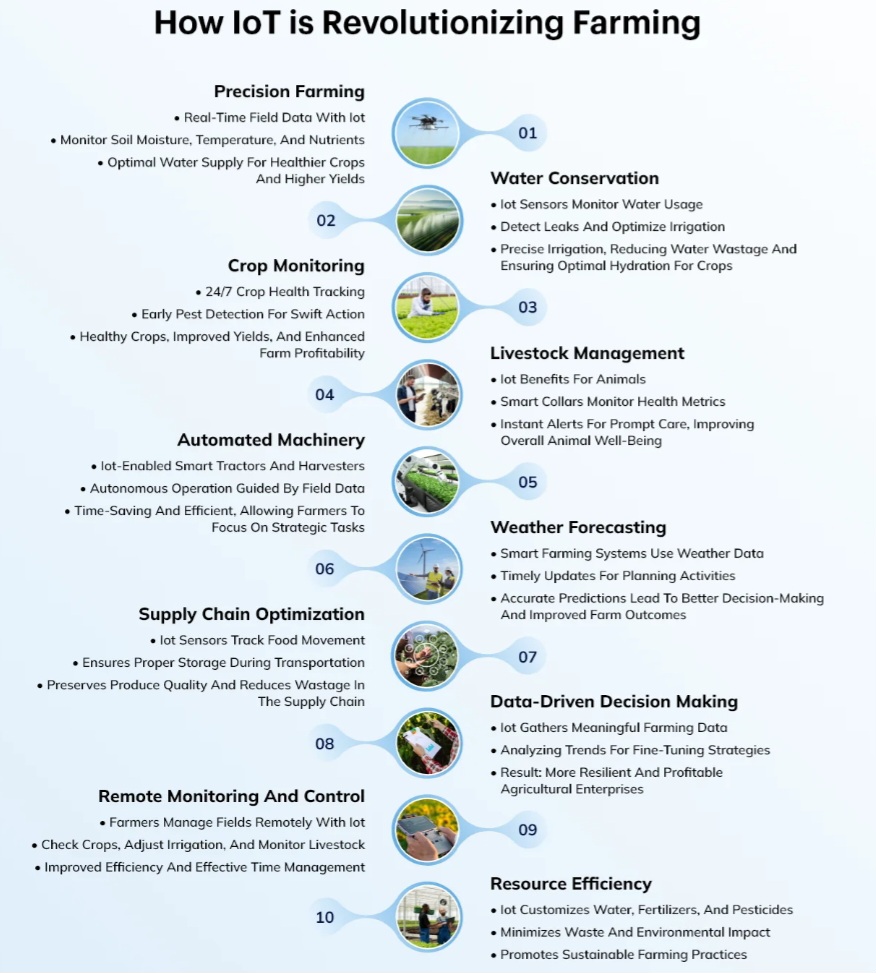
5. BOOSTING EFFICIENCY AND PRODUCTIVITY :
The Internet of Things smart farming approach increases farm productivity as many processes are automated and resources are used appropriately. It increases efficiency and optimize resource use to promote environmentally sustainable practices
For example, IoT irrigation systems help to control water supply to crops with a high level of accuracy to meet demand without wasting water.
Automated livestock monitoring, has helped farmers to identify changes in the health of their livestock in time and thus can take appropriate action more quickly.
In general, IoT makes farming easier for farmers by reducing the amount of manual work while increasing agricultural production.
6. PRECISION AGRICULTURE AND RESOURCE MANAGEMENT
IoT and agriculture work together to continuously monitor fields using sensors and drones, facilitating better decisions about soil conditions, and crop health.
7. IRRIGATION AND FERTILIZATION: These two farming operation are also becoming more efficient through the use of SMPS (soil moisture sensors) and VRI (Variable Rate Irrigation ) systems. This level of precision minimizes unnecessary consumption of resources and minimize wastage. Thus, ensures sustainable and profitable IoT in farming.
8. REAL-TIME MONITORING AND DATA-DRIVEN DECISIONS
Agriculture IoT devices are capable of recording, storing and processing large amounts of environmental data, such as humidity, temperature and soil quality. These information can be accessed anywhere using a mobile device or a farmer’s computer, and decisions made.
9. CONTROLLED WEATHER CONDITION: Controlling the temperature and other weather parameters in the greenhouse to using fertilizers based on crop needs, these insight improves crop management and reduces losses.
IoT APPLICATION IN AGRICULTURE
Smart agriculture is mostly used to denote the application of IoT solutions in agriculture.
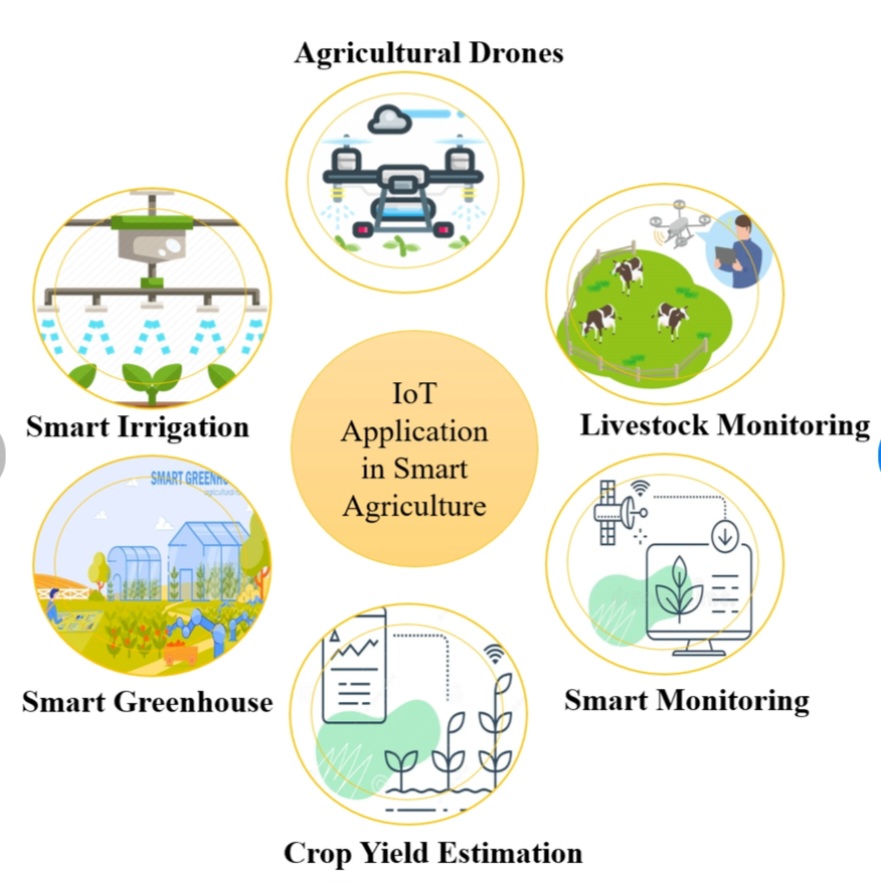
IoT sensors have being used to collect environmental and machine metrics which farmers use to make decisions and improve every aspect of their work – from livestock to crop farming. For example, by using smart agriculture sensors to monitor the state of crops, farmers can define exactly how many pesticides and fertilizers they have to use to reach optimal efficiency.
Hence, it is only IoT connected devices, and automation that can find their application in agriculture. Farmers now use various smart agriculture gadgets to gain better control over the process of raising livestock and growing crops, making it more predictable and improving its efficiency.
ADVANTAGES OF SMART FARMING
IoT can shaping agriculture technologies because it has the potential to transform agriculture in many aspects.
1. Data collection by smart agriculture sensors on weather conditions, soil quality, crop growth progress, or cattle health can be used to track the state of farmer’s business, staff performance and equipment efficiency, etc.
2. It assist farmers in lowering their production risks. Farmers can now foresee the output of their production, allowing them to plan for better product distribution.
3. It help farmers in cost management and waste reduction on their farms.
4. INCREASED BUSINESS EFFICIENCY THROUGH PROCESS AUTOMATION: Smart devices can automate multiple processes across the production cycle, for example, irrigation, fertilizing, or pest control.
5. ENHANCED PRODUCT QUALITY AND VOLUMES: Automation can assist farmers in gaining better control over the production process and maintain higher standards of crop quality and growth capacity.
6. REDUCED ENVIRONMENTAL FOOTPRINT: Automation also carries environmental benefits. Smart farming technologies can cut down on the use of pesticides and fertilizer by offering more precise coverage and, thus, reduce greenhouse gas emissions.
As a result, all of these factors can eventually lead to higher revenue.
SMART AGRICULTURE SYSTEM USING IoT
IoT device includes every object that can be controlled through the Internet. IoT devices have become commonplace which consumer markets can wear, such as wearable IoWT (Internet of Wearable Things). Examples of such wearable IoWT are; smartwatches, and home management products, like Google home etc.
In agriculture, IoT uses robots, drones, remote sensors, and computer imaging etc, combined with continuously progressing machine learning and analytical tools for monitoring crops, surveying, and mapping the fields, and providing data to farmers for rational farm management plans to save both time and money.
1. REMOTE SENSING IN AGRICULTURE
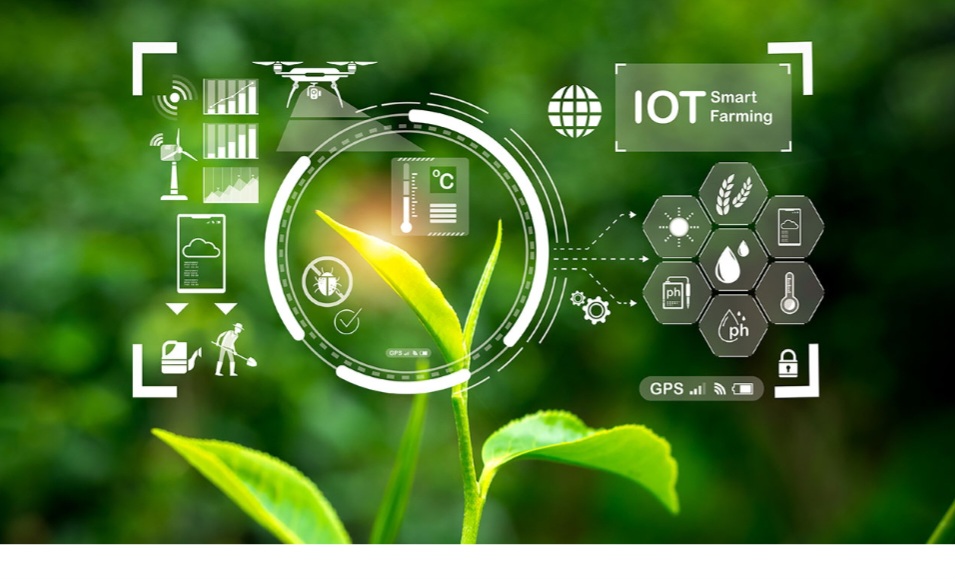
Remote sensing in agriculture utilizes sensors placed along the farms like weather stations for gathering data, which is transmitted to analytical tools for analysis. Sensors are devices sensitive to anomalies. Farmers can monitor the crops from the analytical dashboard and take action based on insights.
a. MONITORING OF CLIMATE CONDITIONS
The most popular smart agriculture gadgets for monitoring climatic conditions include: weather stations, weather forecast apps on smart phones etc. The weather station is combined with various smart farming sensors to collect data. The station is located across the field, collecting various data from the environment and send it to the cloud. The provided measurements can be used to map the climate conditions, which the farmer uses to choose the appropriate crops, and take the required measures to improve their capacity ( that is, precision farming).
In addition to the above, data collected by sensors in terms of humidity, temperature, moisture precipitation, and dew detection helps in determining the weather pattern in farms so that cultivation is done for suitable crops.
Some examples of such agriculture IoT devices used include : allMETEO, Smart Elements, and Pycno.
b. CROP MONITORING
Sensors placed along the farms monitor the crops for changes in light, humidity, temperature, shape, and size. Any anomaly detected by the sensors is analyzed and the farmer is notified. Thus remote sensing can help prevent the spread of diseases and keep an eye on the growth of crops.
c. SOIL QUALITY
Soil health analysis helps in determining the nutrient value and drier areas of farms, soil drainage capacity, pH and salinity etc. This analysis assist in the adjustment of the amount of water needed for irrigation and opting for the most beneficial type of cultivation. The soil health data can also help leverage regenerative agriculture by providing insights into how and when to increase organic matter and therefore achieve a better soil structure and eventually pave a path for climate-smart agriculture
2. GREENHOUSE AUTOMATION:
Initially, farmers uses manual intervention to control the greenhouse environment. But today, the use of IoT sensors enables more accurate real-time information on greenhouse conditions such as lighting, temperature, soil condition, and humidity.
In addition, greenhouse automation systems use a similar principle as the weather stations which automatically adjust the conditions in the greenhouse to match that of the environmental weather conditions needed for the crop growth. For instance, Farmapp and Growlink are also IoT agriculture products offering such capabilities, among others.
3. CROP MANAGEMENT
A type of IoT product that monitor precision farming are crop management devices. Just like weather stations, they are installed in the field to collect data specific on crop farming, from temperature and precipitation to leaf water potential and overall crop health. They allow the monitoring of crop growth and any anomalies such as pest and disease outbreak. They effectively prevent any diseases or infestations that can reduce yield.
4. CATTLE MONITORING AND MANAGEMENT
Just like crop monitoring, there are IoT agriculture sensors that can be attached to the animals on a farm to monitor their health and log performance. Livestock tracking and monitoring help collect data on stock health, well-being, and physical location.
For example, these sensors can identify sick animals so that farmers can separate them from the herd and avoid contamination. Drones can also be used for real-time cattle tracking, to helps farmers reduce staffing expenses. This works similarly to IoT devices for pet care. For example, IoT devices like SCR by Allflex and Cowlar use smart agriculture sensors (collar tags) to deliver temperature, health, activity, and nutrition insights on each individual cow as well as collective information about the herd.
5. PRECISION FARMING
Precision farming also known as precision agriculture, is all about efficiency and making accurate, data-driven decisions. It is also one of the most widespread and effective applications of IoT in agriculture.
IoT sensors can be used by farmers to collect a vast array of metrics on every facet of the field microclimate and ecosystem. Such matrics could be ;lighting, temperature, soil condition, humidity, CO2 levels, and pest infections. This data enables farmers to estimate optimal amounts of water, fertilizers, and pesticides that the crops need, reduce expenses, and raise better and healthier crops.
For examples; CropX builds IoT soil sensors that measure soil moisture, temperature, and electric conductivity, enabling farmers to approach each crop’s unique needs individually. Combined with geospatial data, this technology helps create precise soil maps for each field. Mothive offers similar services, helping farmers reduce waste, improve yields, and increase farm sustainability.
6. AGRICULTURAL DRONES
One of the most promising agritech technology used in agriculture is the agricultural drones. It is also known as UAVs (unmanned aerial vehicles). The drones are better equipped than airplanes and satellites to collect agricultural data. They are equipped with sensors and cameras, used for imaging, mapping, and surveying farms. Apart from surveillance capabilities, drones can also perform a vast number of tasks that previously required human labour; planting crops, fighting pests and infections, spraying agrochemicals, crop monitoring, broadcast seeds, soil analysis, and mapping etc.
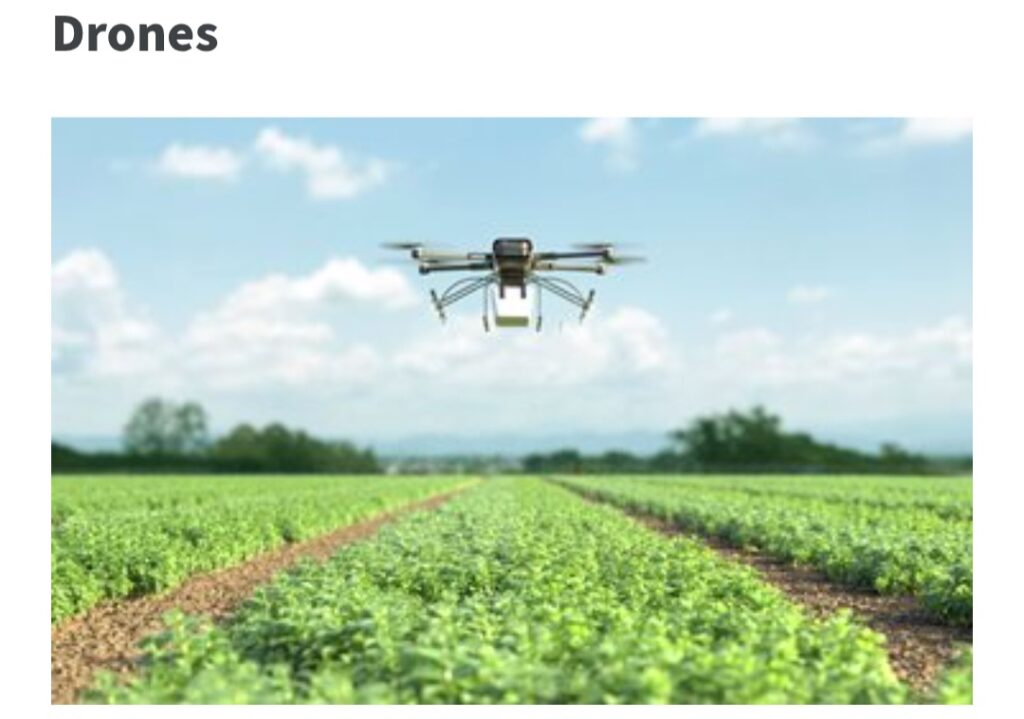
Some special types of drones called DroneSeed assist foresters in planting trees in deforested areas. The use of such drones is six times more effective than human labour. Other drones like the Sense Fly agriculture drone eBee SQ uses multispectral image analyses to estimate the health of crops and comes at an affordable price.
TYPES OF DRONES IN AGRICULTURE
There are ground-based drones and aerial drones. Ground drones are robots that survey the fields on wheels. Aerial drones, formally known as unmanned aerial vehicles (UAVs) or unmanned aircraft systems (UAS), are flying robots.
Drones can be controlled remotely or they can fly automatically through software-controlled flight plans in their embedded systems, working in coordination with sensors and GPS. From the drone data, insights can be drawn regarding crop health, irrigation, spraying, planting, soil and field, plant counting, yield prediction, and much more.
Drones can either be scheduled for farm surveys (drone as a service) or can be bought and stored near farms where they can be recharged and maintained. After the surveys, the drones need to be taken to nearby labs to analyze the data that has been collected, thereby helping leverage IoT in agriculture better.
7. PREDICTIVE ANALYTICS FOR SMART FARMING
Precision agriculture and predictive data analytics go hand in hand. IoT and smart sensor technologies are used to collect real-time data. The data analytics helps farmers make sense of their farming practices and come up with important predictions like crop harvesting time, the risks of diseases and infestations, yield volume, etc. Data analytics tools help make farming, which is inherently highly dependent on weather conditions, more manageable and predictable.
For example, the Crop Performance platform helps farmers access the volume and quality of yields in advance, as well as their vulnerability to unfavorable weather conditions, such as floods and drought. It also enables farmers to optimize the supply of water and nutrients for each crop and even select yield traits to improve quality.
8. END-TO-END FARM MANAGEMENT SYSTEMS
This is the use of IoT products in farm productivity management systems. Agriculture IoT devices and sensors are used in this case. These devices are installed on the farm premises, as well as a powerful dashboard with analytical capabilities, which also have in-built accounting/reporting features.
The devices are used for remote farm monitoring capabilities, which allows the streamlining of most business operations in the production line. Examples of such devices are; FarmLogs and Cropio.
Also included are IoT agriculture equipments, such as vehicle tracking (or even automation), storage management, logistics equipment etc.
9. ROBOTS AND AUTONOMOUS MACHINES
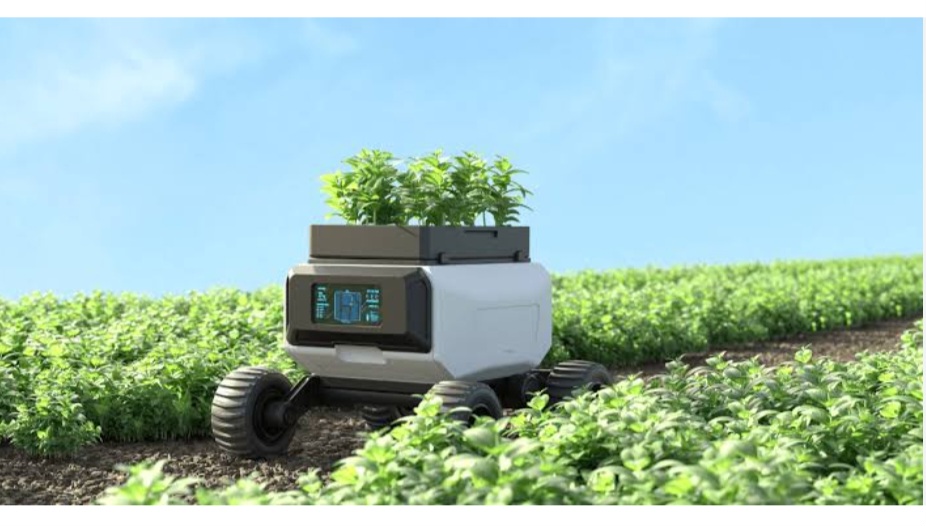
Robotic innovations inform of autonomous machines are also used for agricultural purposes. Such smart machines include; automated harvesters, tractors, and other machines and vehicles that can operate without a human controlling them. Such robots are more efficient, can complete their task within minutes, are challenging, and can carry out labour-intensive tasks.
For example, modern automated tractors that are driverless and can work on assigned routes, send notifications, start work at planned hours, etc. They are more efficient and cut labour costs.
Apart from these robots being used in tilling the ground, others also perform other tasks like planting seeds, weeding, and watering. These farming operations are very demanding and labour-intensive. Examples of such robots are the Eco Robotics, which can detect weeds or plant seeds using computer vision and AI technology. These agricultural robots work delicately, drastically reducing harm to the plants and the environment.
a. WEEDING ROBOTS
These smart Agri robots use digital image processing to scan through the images of weeds in their database to detect the similarities between crops and weed, so that only the weeds will be taken care off without harming the crops. The weeds are sprayed directly with their robotic arms.
b. HARVESTING ROBOTICS
Utilizing agribots to pick crops is solving the problem of labour shortages. Fruits and vegetables are now being picked through these new innovative machines on a 24/7 operation with ease. These machines operate through combination of image processing and robotic arms to determine the riped fruits to pick without damage. Hence, controlling the quality. Examples of those crops that have an early focus on agribot harvesting are orchard fruits like apples, oranges, avocado etc.
Also, greenhouse harvesting has being made possible using this harvesting Robots. Such high-value crops like tomatoes and strawberries can easily be picked through this means. These robots can work in greenhouses to aptly determine the stage of crops and harvest them at the right time.
c. MATERIAL HANDLING
Robots can also work alongside with manual labours especially in material handling. They can lift heavy materials packages and perform tasks like sowing seeds at the right plant space with high accuracy, therefore optimizing the space and plant quality and reducing production costs.
10. MACHINE NAVIGATION
Nowadays, remote-controlled toy cars are enabled with a controller, Smart cars are developed that can fly, move on top of water bodies, smart trains moving at high speed automatically. Tractors and heavy plowing equipment can be run automatically from the comfort of home through GPS. Smart airplane are under test without a flight pilot flying the planes etc. These integrated automatic machines are highly accurate and self-adjust when they detect differences in terrains, simplifying labour-intensive tasks. Their movements as well as work progress can be easily checked on smartphones and smart navigating devices. With advancements in IoT in Agricultural and machine learning, these tech-driven motors are enabling Advanced farming using IoT independently with features such as automatic obstacle detection.
11. COMPUTER IMAGING IN AGRICULTURE
Computer imaging are made with sensor cameras installed at different corners of the farm or drones equipped with cameras to produce images that undergo digital image processing. Digital image processing is the basic concept of processing an input image using computer algorithms. Image processing views the images in different spectral intensities such as infrared, compares the images obtained over a period of time, and detects anomalies, thus analyzing limiting factors and helping a better management of the farms.
SMART FARMING
With all these uses of IoT in agriculture, it can be said that the uses are endless.
THE ROLE OF IoT IN AGRICULTURE
Conventional farming has not being able to meet the food demand of the world populace. Most operations in conventional farming causes pollution, wastage, low yield, low profit etc thus, cannot meet the increasing demands of people due to decrease production losses.
Agriculture of today, through precision agriculture implements IoT through the use of robots, drones, sensors, and computer imaging integrated with analytical tools for getting insights and monitoring the farms. It also involve the placement of physical equipment on farms monitors and records data, which used to get valuable insights.
IoT helps farmers to:
i. Monitoring soil conditions
ii. Automation of irrigation
iii. Tracking weather conditions
iv. Animal health monitoring
v. Monitoring of plant growth
vi. Optimization of fertilizer and protection products use
vii. Tracking of machinery and equipment
viii. Warehouse management
ix. Yield forecasting
x. Smart farm management
xi. Market Trends and Future Outlook
LIMITATIONS OF IoT
1. Requires high skilled field staff to implement and manage bots and insights of IoT lingua. Hence, a sound technical knowledge of robotics and computer-based intelligence is a prerequisite for operating, maintaining, and understanding the insights of this valuable equipment.
2. Equipment are expensive and fragile
3. Recurring maintenance costs for hardware is high
4. Heavy initial investments
5. Not scalable as each farm data has to be managed separately. Integrating and scaling IoT for several farms in a single platform is not possible, unlike SaaS agritech such as Cropin, which allows the integration and management of multinational operations through a single platform.
6. No log information
7. Difficult to integrate with already implemented devices
8. Each equipment has a defined set of operation and not one can show all stats
CHALLENGES OF IoT IN AGRICULTURE
IoT has brought a lot of transformation to the agriculture industry. None the less, they also come with their own unique challenges. These are barriers that farmers and agricultural enterprises face when implementing IoT systems.
a. HIGH INITIAL INVESTMENT AND COST BARRIERS
Lack of funds is one of the key barriers to adopting IoT in smart agriculture, as it requires a lot of capital as upfront investment in hardware, software, and infrastructure to start with. Most IoT systems require sophisticated equipment, including smart sensors, drones, and unmanned vehicles, and such tools are expensive for most small scale farmers.
In addition, these equipments and infrastructures need regular maintenance. These maintenance comes with certain costs that regularly reappear occationally. It also require software subscriptions, and system upgrades. Due to thus high cost, a significant barrier can be created, limiting the application of IoT across the entire agricultural value chain.
These significant high initial investment required for purchasing IoT devices, sensors, and connectivity infrastructure, has prohibited small-scale farmers from adopting this innovation.
b. INFRASTRUCTURE AND CONNECTIVITY LIMITATIONS
The effective implementation of the IoT in agriculture relies mainly on reliable connectivity technologies. This is a very big challenge, as many agricultural regions, especially rural areas, have poor or even no internet connectivity. This is a significant system challenge that inhibit and prevent the full development of IoT systems within such areas.
IoT applications in agriculture require instantaneous data transmission, so the quality of the telecommunications infrastructure, which requires meeting deadlines, can lead to data loss or system failure. Even today, with the ongoing development of 5G networks, rural farming areas remain blocked and this is a major challenge for agriculture IoT solutions. These challenges highlight the need for ongoing support, financial models, and technical solutions to ensure that IoT can transform agriculture efficiently and inclusively
c. DATA MANAGEMENT AND SECURITY:
The risk of data privacy and cybersecurity is increasing as more and more farms adopt IoT for smart farming practices. Due to the nature of agriculture IoT devices, they collect huge amounts of data in every category from soil moisture to livestock health monitoring results, and this data is vulnerable to hacking.
Also, managing and securing these vast amounts of data generated by these devices can be complex.
In addition, few robust and standardized protocols are available for storing and using the data in agricultural organizations, making IoT systems more vulnerable to attack.
d. FARMER ADOPTION:
Farmers may be hesitant to adopt new technologies due to their adamant nature. Most of these farmers in rural areas are old with less agile young fellows diving into farming. IoT requires training and support to ensure successful implementation. Few of these old fellows would channel their interest in the use of IoT compared to young farmers due to their tired arms and legs.
e. TECHNICAL COMPLEXITY AND REQUIRE EXPERTISE
IoT solutions usually require full control over the physical devices used on the farm. It’s usage requires a thorough understanding of the IoT device management and the applications that process data from IoT agriculture sensors and automation tools. Some farmers, even commercial farmers cannot use these tools because they require technical expertise. Although it is relatively easy to implement the systems and maintain them, but the aspects of calibration and connectivity can be a big challenge especially with non-experience users.
FUTURE OF IoT
Today, movies like star war shot many years back, still have fictions of the modern day and future time due to usage of IoT. Everything used in the movie is connected to the Internet. Therefore, it can be stated that IoT is automated and it allows for growth through data collection, processing, and visualization.
Conclusion
The role of IoT in agriculture is transformative. Through leveraging of connected devices and data analytics, farmers can optimize their operations, increase productivity, and reduce environmental impact.
Today, we can say that the future of agriculture is here and connected. It is a network for competitive, sustainable and profitable farming system. The agricultural production system is now connected intelligently and productive farming has now made the future a secured one. Through IoT human individually and also the society can now benefits from the vast advantages it brought to sustain and creat a profitable agricultural practices.
