
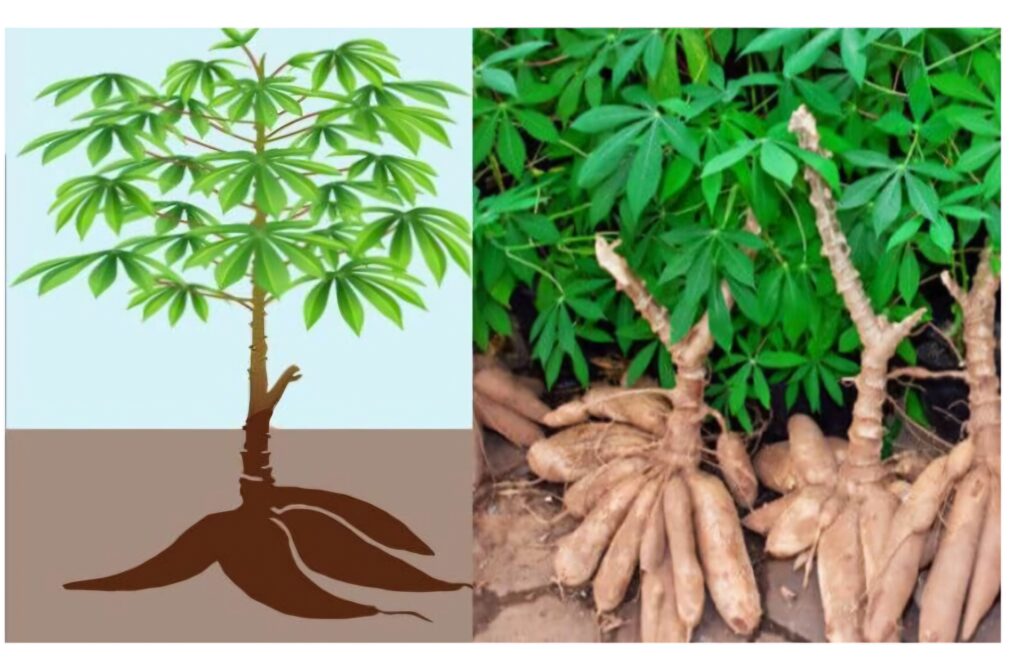
Cassava (Manihot esculenta) is a dicotyledonous plant. It belongs to the family Euphorbiaceae. The plant originated from Brazil with central America as a likely additional centre of origin.
Its consumption is increasing worldwide since it can now be used to replace most crops used in feeding livestock.
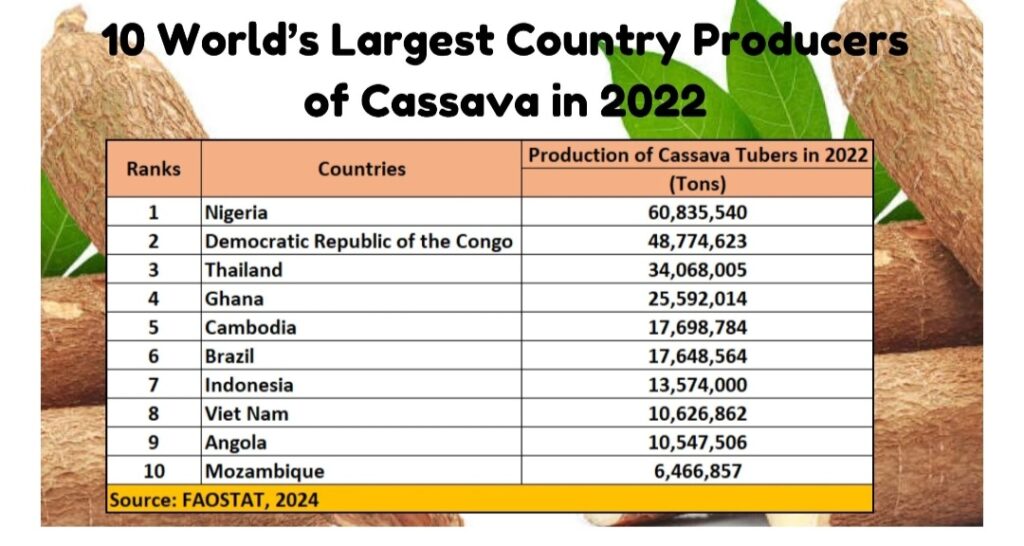
Most countries now produce cassava for feeding livestock with African countries taking the lead among others. Cassava production in Africa has increased by 15-20% between 2017 -till date with Nigeria becoming the largest cassava producer in the world . This achievement has been attributed to the numerous improved varieties released through the collaboration efforts of various institutions in the country.
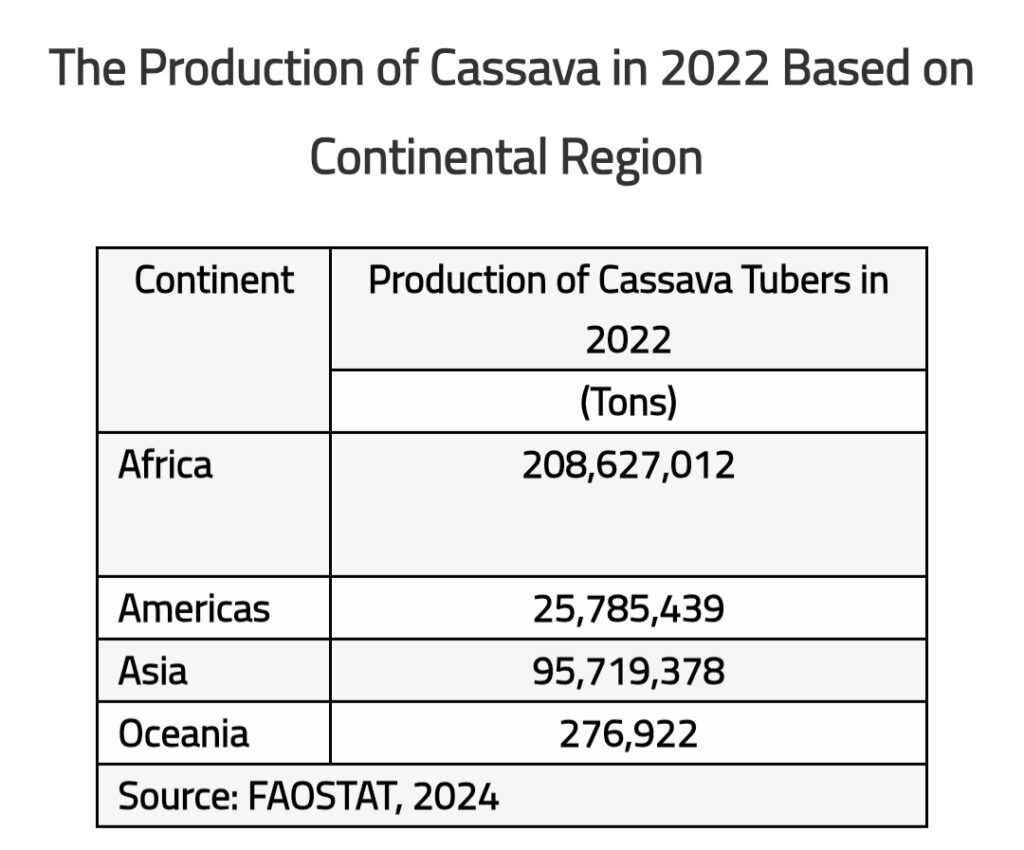
According to FAO, about 95% of cassava product is used for human consumption. The remaining 5% for feed, industrial raw material and exportation .
DESCRIPTION OF CASSAVA
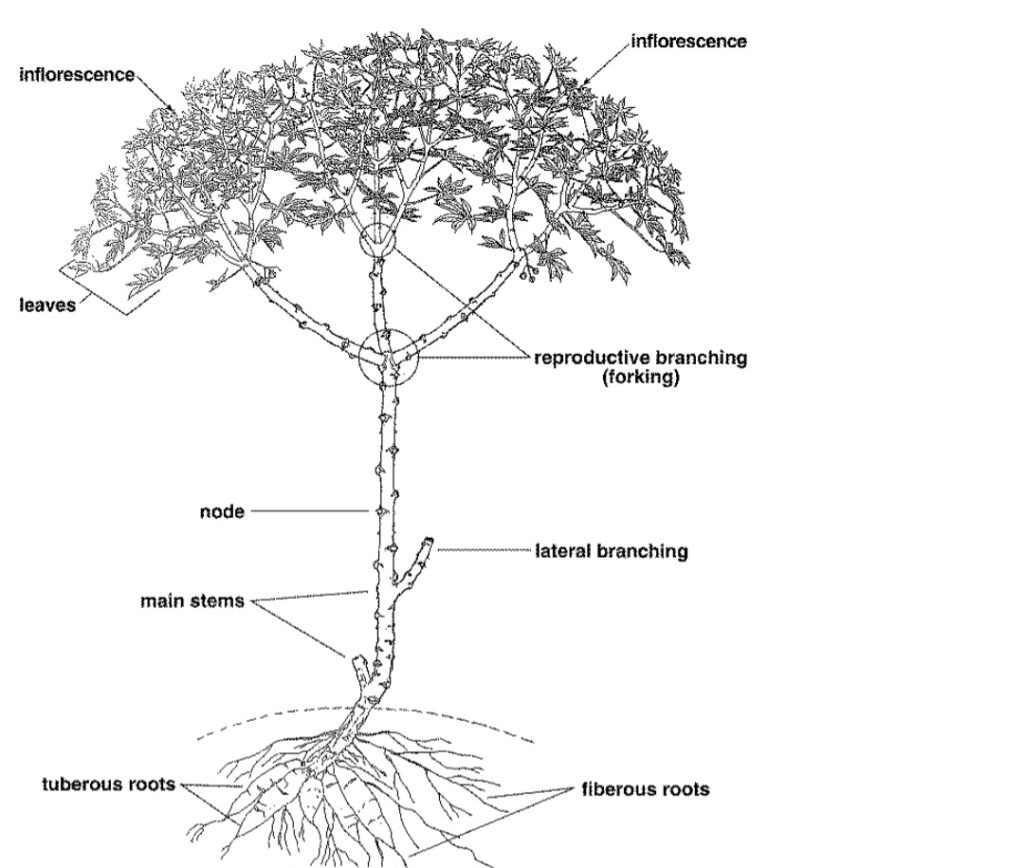
Cassava is a perennial plant with conspicuous, almost palmate (fan-shaped) leaves. The leaves is parted into 5-9 lobes.
The stem is slender about one metre long with various nodes along its length.
The root develops to form a tuber where photosyntates are stored to form the edible pulp.
VARIETIES OF CASSAVA
Different varieties of cassava exist, ranging from low herbs, those with much branching, tall, shubs, slender, unbranched etc varieties. The pots mature in 10-14 months, but are not harvested until required. The roots deteriorate 1-3 days of exposure to air in the tropics. The average yield of cassava worldwide as at 2024 (all over the continent), is about 83 million tons ( that is, 82,602,187.75 tons) which is less than that of sweet potatoes and yam but greater than that of cocoyam.
Cassava tuberous roots are major source of carbohydrate in human diet and are processed by various methods into numerous products such as cassava flour, cassava chips, cassava root meal etc. It can also be boiled and eaten with various source . In some varieties, the leaves are consumed as a favourite green Vegetable. However, cassava roots have lots of protein content, the leaves are good source of protein on the other hand and are rich in vitamins which can provide a valuable supplement to the predominantly starch diet and feed.
Cassava can also be used as a source of energy in animal feed in the form of peels, pulp, pellets or chips.
A major problem with cassava is its cyanide content in bound form. Cultivars of cassava may contain between 1 to > 100mg HCN/100g in fresh peeled tubers. But there are large amount of HCN present in the peels and the leaves. Cassava contains two major cyanogenic glucosides which are linamarin and lotaustralin. After tissue damage, these two cyanides are hydrolysed by endogenous enzymes linamarase to the corresponding cyanohydrins. Further hydrolysis result to hydrogen cyanide which is responsible for the chronic toxicity of the poorly processing of the cassava tubers. Therefore, good processing procedures must be embacked upon to reduce the cyanide effect for those and livestock that consume the products. Some of the processing methods include; grating, sundrying, boiling, and fermetation methods.
NUTRITIONAL VALUES OF CASSAVA.
Cassava is essentially a starch. The chemical composition varies but the edible portion typically comprises of 38% dry matter content.
Among all the vitamins, only vitamin C is found in appreciable amount in the raw roots. The protein content is very low and deficient in essential amino acids ( methionine and cystine). It is rich in lysine and tryptophan.
About 35mg/100g of ascorbic acid is found in cassava which is consumable by those that consume cassava products . But fortunately, a large proportion of these ascorbic acid is lost during processing of the cassava tubers.

The normal range of the cyanide content is 15 to 400 mgHCN/kg cassava fresh weight. The concentration varies among the different varieties, evironmental and with cultural conditions .
The concentration of the cyanogenic glucosides have been found to increase from the centre of the tubers to outer part of the tuber skin (peel). This means that the hydrocyanic acd (HCN) content of the peel is substantially higher than that of the inner pulp.
CLASSIFICATION OF CASSAVA
Traditionally, cassava can be classified into sweet and bitter cassava. The sweet cassava has low cyanide content. The low cyanide varieties contain less than 50mg HCN/kg of fresh weight and requires a minimum amount of processing and processing time . It can either be boiled, roasted, grated and made into different dishes. The vitamins are seriously affected by processing. Most of the B vitamins and some of the mineral content found in the raw roots are lost during washing and soaking. Notable exceptions are calcium and iron which have been found in higher quantities in some products than in the raw produce.
The cyanide varieties require 3 to 5 days of processing to reduce the HCN content.
THE TOXICITY AND DETOXIFICATION OF CASSAVA
The two cyanogenic glucosides in cassava ( linamarin and lotaustralin) are synthesized and stored inside the cells of the plant while the enzyme responsible for their hydrolysis -linamarase, is stored in the cell wall of the organs. There is no free HCN, only when the cells are raptured do the enzyme come in contact with the linamarin. The latter compound is then hydrolysed to acetone cyanohydrins which may spontaneously or upon the action of a second enzyme be decomposed into acetone and HCN separately .
a. TOXICITY OF CASSAVA
The ability of cassava to produce cyanide is the basis for the toxicity of cassava. However, it is important to know that HCN is a gas with boiling point of 25.7°C that easily dissipate into the air at ambient temperature once produced.
The presence of these cyanogenic glucoside in most cultivars of cassava necessitate why certain degree of detoxification of the cassava is required before it is consumbed.
In general, three methods of detoxification are required.
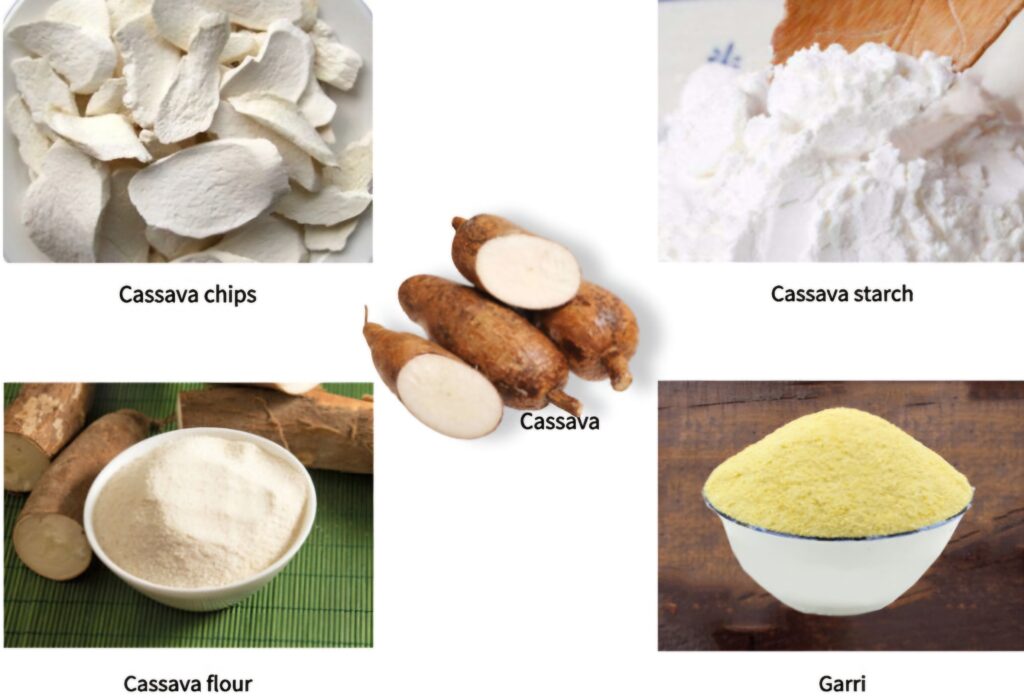
METHODS OF DETOXIFICATION OF CASSAVA
1. Microbial detoxification which occurs through fermentation
2. Decomposition of the glucosides especially by heating to a temperature of above 150°C
3. Rupture of the cells to allow intimate interaction between linamarase and the glucosides.
After these methods of detoxification, then is the volatilization of the resulting hydrolating product .
It is important to note that cassava processing only decrease the quntity of the cyanogenic glucoside to a less toxic level in the final products. Therefore, it is difficult to produce cassava products that is absolutely free of HCN.
POTENTIAL OF CASSAVA AS LIVESTOCK FEED
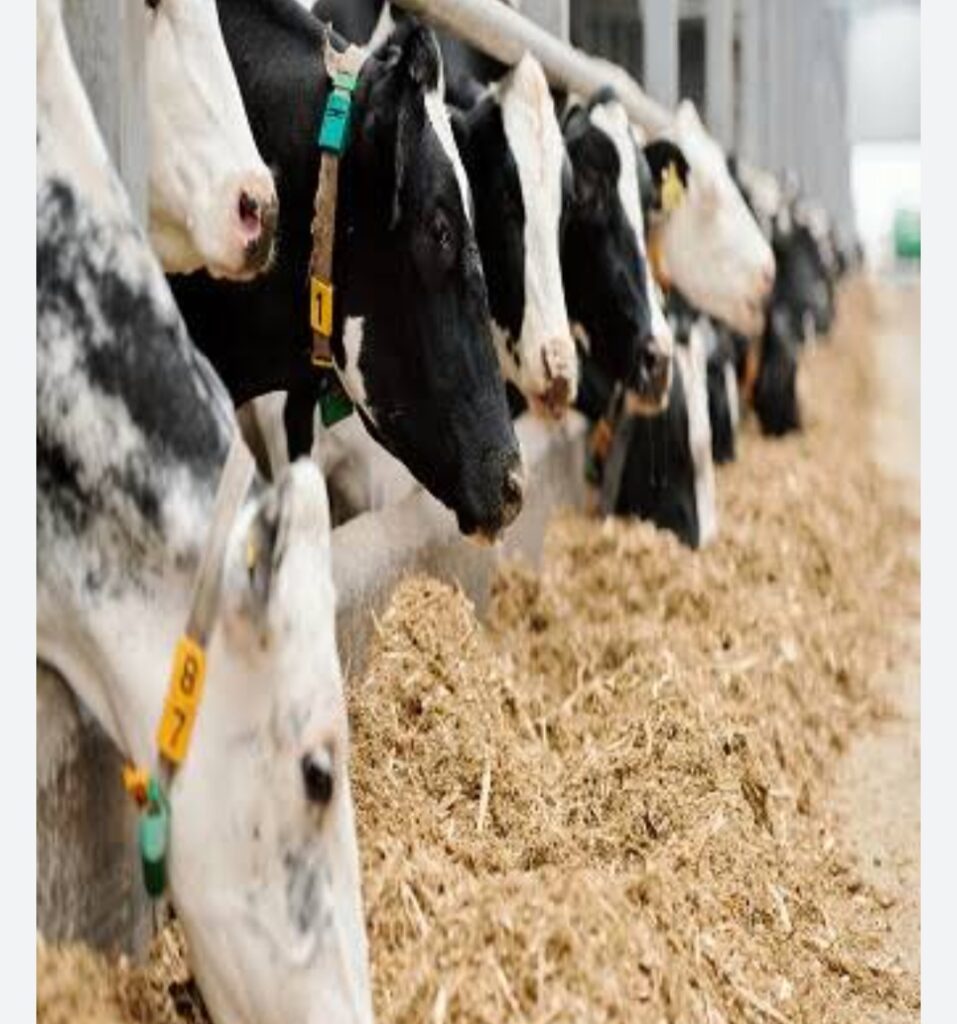
The major future market for increasing production of cassava is as livestock feed. The crop has long been recognised by researchers as an appropriate animal feed and it has been used as an important and cheap feed in many European countries . Both the roots and leaves are usable as livestock feed . The peels, leaves, promace from starch and the tubers can be feed to cattle, grass cutter, poultry, pig, sheep and goat etc. It offer tremendous potential as a cheap source of energy food source for animals, provided it is well balanced with other nutrients .
CASSAVA BYPRODUCTS AND THEIR UTILISATION
Cassava byproducts include cassava root meal, cassava chips, cassava tubers, cassava peels, cassava leaf meal etc.
CASSAVA ROOT MEAL
Cassava is very rich in carbohydrate and low in protein. The peel contains higher nitrogenous constituents than the pulp. But the pulp has more total nitrogenous substances due to its bigger size. The mineral and amino acid levels are low especially in the root meal . Cassava contains low amount of thiamine, riboflavin, a fair quantity of niacin, phosphorus and iron with minimum amount of calcium and low methionine, lysine, tryptophan, phenylalanine and tyrosine amino acids . It also contain high amount of arginine.
Cassava root, whether cooked or raw is widely used for feeding swine, sheep, goat and cattle in countries like Nigeria. It is quite palatable to pigs compared to other livestock . It is used for fattening cattle, horses, swine, and poultry . But for this purpose to be achieved, it must be well balanced with feed rich in proteins, minerals and vitamins. Its proportion must not be higher than 40% of the dry matter content of the ration.
The raw cassava do stimulates the growth of young pig better than guinea corn with no adverse effect on the carcass quality.
Properly dried whole cassava tuberous roots can replace maize in non-ruminant ration if the hydrogen cyanide (HCN) content does not exceed 100ppm in the finished feed ration.
It has been discovered that high cyanide levels and the presence of microorganisms in sundried cassava, particularly in humid environment, reduces performance and prevent hematological changes of growing pigs fed on sundried cassava based ration .
Since cassava is low in protein, it is necessary to supplement the base rations with animal proteins for the supply of methionine and lysine. Also, if not supplemented, it can affect the mineral balance, thus resulting in parakeratosis in pig which can be prevented by including zinc salts in their diet.
Dustiness of cassava based ration can be removed by adding molasses, suitable oil, or by pelletizing to make the feed acceptable by pigs . Dustiness of cassava chips can also reduce intake in poultry which adversely affect productivity of the birds . It should be noted that without pelletizing cassava chips for poultry, the powdered starch can produce ulcerogenic effect in the gastric mucosa .
Some cassava varieties containing low cyanide content, need little or no processing before being used compared with those with higher cyanide content that need elaborate processing to reduce the cyanide before being used in animal feed . So, processing will help convert the cassava into chips or pellet form.
CASSAVA PEEL MEAL
Peels can be from roots or tuber crops. Peels of cassava root are much rich in protein, either extract or ash than the edible portion. Cassava peels contain 27% dry matter, 5.3% crude protein, 1.2% ether extract, 20.97% crude fibre, 5.93% ash, and 66.6% nitrogen free extract. It also contain higher hydrogen cyanide ( HCN) content than the pulp. It is a valuable waste product for feeding ruminants especially in areas of high cassava production.
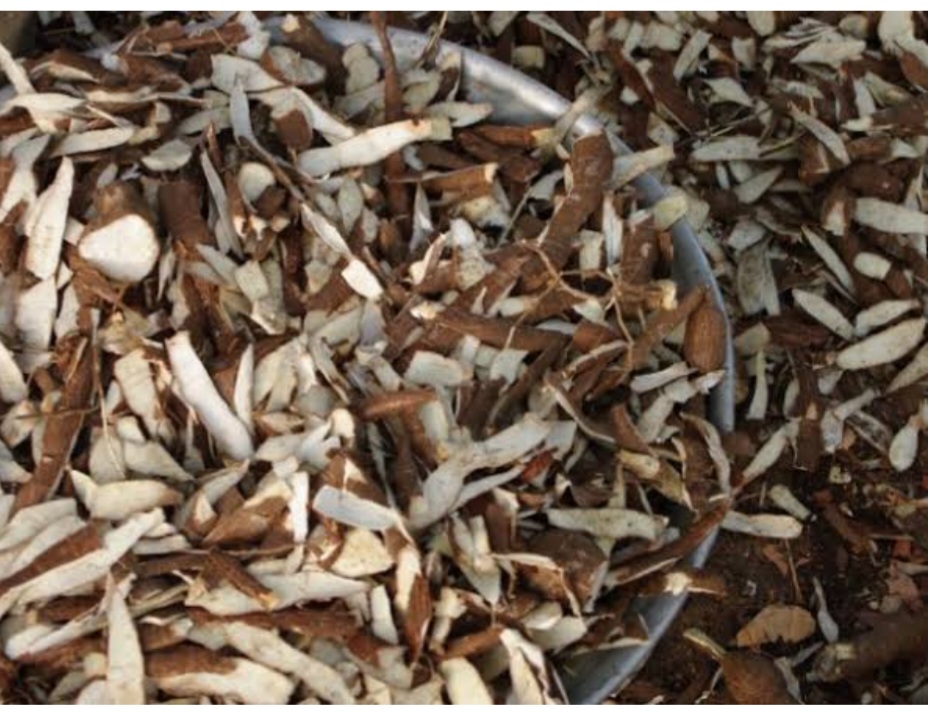
It is a good source of energy, serves either as a main basal diet or as supplement in livestock feeds especially ruminants. It is readily fed fresh due to the high level of HCN content. Therefore, it can be sundried, ensiled or fermented to reduce the concentration of the glucosides to tolerable levels .
Cassava peels can be well degraded in rumen of ruminants. It can be used n preparation of good quality silage. Its moisture content should be reduced from 70/75% to about 40% by wilting ( air drying) for two days before ensiling .
A reduction of the moisture content will ensure good fermentation even if the peels are chopped to uniform length . It should be noted that sheep do utilizes cassava ensiled peels better than sundried peels .
Researches had proven that 10% cassava peel meal inclusion in pig ration induced the fastest rate of weight gain and highest feed conversion efficiency.
Though cassava root meal and peel based diet has low energy content, dustiness and low protein content, they must be supplemented with rich protein sources and oil to improve their palatability and digestibility. The supplements also supply better profiles of amino acids and essencial fatty acids.
CASSAVA LEAF MEAL
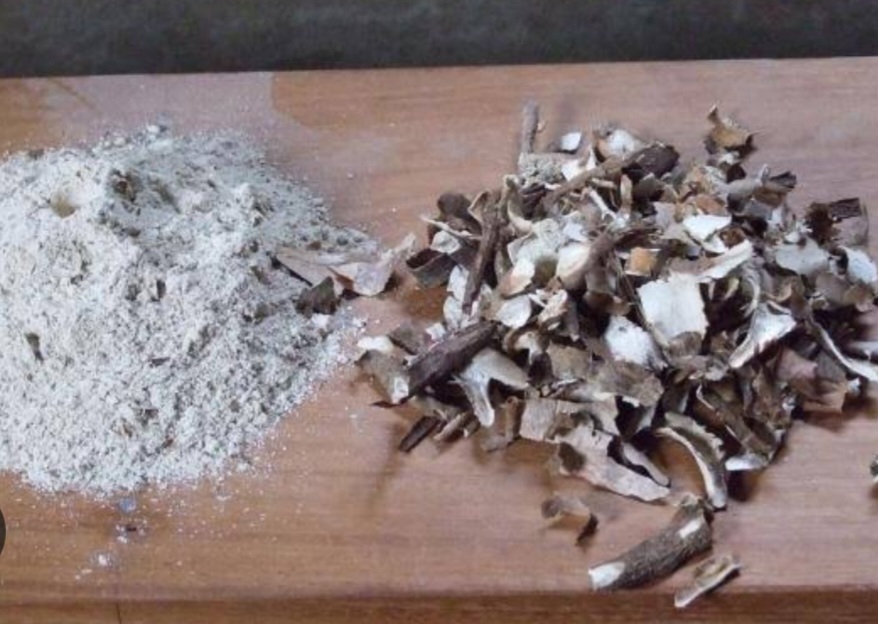
Cassava leaves are richer than other parts of the plants. It is richer in protein, oil, ash and ascorbic acid and are fair source of carbohydrate. Researches had shown that the leaf contains approximately 25.8 -27.3% crude protein ( CP), 7.6-10.5% fat, 5.7-8.8% ash, 4.8-7.6% crude fiber (CF ) and 50.1-51.9% nitrogen free extract on dry matter basis. It is deficient in methionine, isoleucine, threonine and tryptophan but the lysine content is considerably high. It has also been discovered that cassava leaf meal have a nutritional value similar to that of alfalfa. The leaf is high in protein and the amount of protein depends on the stage of growth which means that the feed value apparently decreases with age. Therefore, the foliage should be best harvested at 3-4months to ensure high nutrient content and to ensure reduction in tuber yield.
ABBREVIATIONS
CF– Crude Fiber
CP– Crude Protein
°— Degree
°C– Degree Celsius
g– Grams
HCN–Hydrogen Cyanide
kg– Kilograms
mg— milligrams
%— Percentage

I was looking at some of your posts on this site and I think this website is real informative ! Retain posting.
Hi blacklinks
How are you. Thank you for the commendation of the website. Supremelights appreciate it. If you have any aspect of agriculture you want supremelights to address, contact us.
Thank you once again.
Bye
Solid article! Thinking about bankroll management & game selection is key in tournaments. Seeing platforms like wjevo casino offer easy GCash deposits is a big plus for Filipino players – accessibility matters! Good read.
Hi Wjevo,
Thank you for reading through supremelights post. And thank you for your commendation of the articles. We are grateful to you. And thank you also for introducing your product to us. We will surely check it out to see how it can benefit us. Please, if you have any aspect of agriculture you want supremelights to address, contact us.
Thank you once again.
Bye
That’s a great point about accessibility in music creation! I recently stumbled upon Sprunki Incredibox – it’s surprisingly easy to make beats right in your browser, even on mobile. Fun & inspiring! ✨
Hi esprunki,
Thank you for reading through supremelights post. We are grateful to you. And thank you for introducing your product to us.Music is one thing that inspire the mind and soul. We will surely check it out to see how it can benefit us. Please, if you have any aspect of agriculture you want supremelights to address, contact us.
Thank you once again.
Bye
Really insightful post! Thinking about how quickly visuals are evolving – tools like Sora 2 Video Generator are game-changers. It’s amazing how accessible AI content creation is becoming, even on mobile! Definitely helps streamline things.
Hi Al generator,
Thank you for reading through supremelights post and your commendation. We are grateful to you. And thank you for introducing the AI generator product to us. We will surely check it out to see how it can benefit us. Please, if you have any aspect of agriculture you want supremelights to address, contact us.
Thank you once again.
Bye